Show summary Hide summary
A unique find: secrets beneath Lincolnshire’s soil
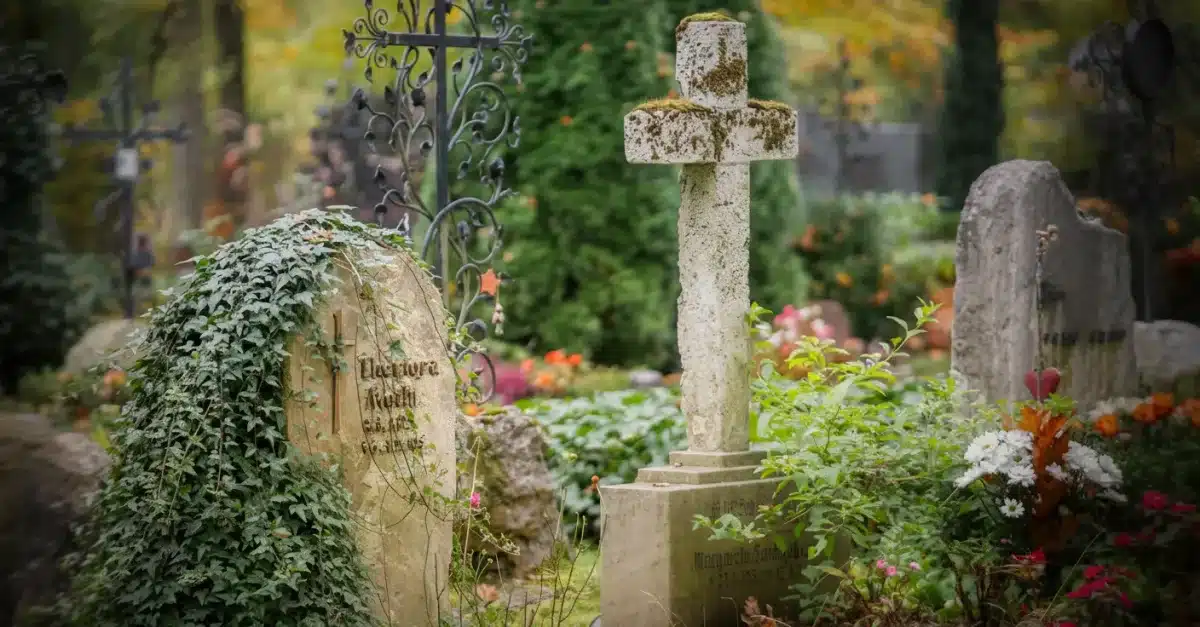
Recently, a team of archaeologists made a remarkable discovery: an Anglo-Saxon cemetery that offers a fresh look at this mysterious medieval era. At the heart of the site, the remains of a teenage girl and a child were unearthed, buried together in what’s known as the “spooning” position—yes, just like you might snuggle up on the couch! Specialists are intrigued by this unusual posture, as it’s not common in graves from the period.
Carefully placed on their heads and chests were precious pieces of jewelry. Among these treasures were two gold pendants set with garnets, a silver pendant mounted with amber, blue glass beads, and a ring-shaped brooch. If there’d been an award for tomb bling in the 7th century, this pair would undoubtedly have been in the running.
Anglo-Saxon burial reveals “unprecedented” secrets: experts stunned by 1,400-year-old grave mysteries
What Your Instinctive Tree Choice Reveals About Your Personality—Experts Explain
Shifting perspectives: from grave goods to human stories
According to Jacqueline McKinley, an osteoarchaeologist at Wessex Archaeology, this discovery has particular value for the field. She explains:
“Many Anglo-Saxon cemeteries in Lincolnshire were excavated decades ago, at a time when the focus was on funerary objects rather than the individuals themselves.”
This site is helping to shift attention from just the artifacts to the people buried with them—breathing new life into the stories behind the skeletons.
Layers of history: a site rich in artifacts and meaning
Excavations at the cemetery have revealed the remains of more than 20 individuals, along with around 250 Anglo-Saxon objects—jewelry, knives, and pottery vessels among them. The style of these items has helped archaeologists date the site to between AD 410 and 1066.
One particularly striking detail: these Anglo-Saxon graves were found directly above a circular ditch dating back to the Bronze Age (between 2300 and 800 BC). This unusual overlap suggests that the location had been a significant burial ground long before the Anglo-Saxon era. It’s living proof (well, almost) of the fascinating continuity of funerary practices in the region.
Science meets mystery: DNA, isotopes and family ties
The story doesn’t end with shovels and trowels. Now, scientists are keen to determine whether the two people buried together were related. Genetic and isotopic analyses are planned to help answer that question. As McKinley explains:
“Isotopes found in human tissues can reveal information about individuals’ movements and their health.”
These techniques can also teach us more about the buried population’s diet and origins—shedding new light on ancient lives that, until now, were largely silent.
Advancements in technology, such as DNA analysis, play a crucial role in this research. With these tools, scientists hope to gain unprecedented insight into Anglo-Saxon daily life, social structures, and funeral beliefs.
This site, like others recently excavated, highlights the importance of archaeological research in deepening our understanding of early British cultures. The abundance of artifacts found, along with the excellent condition of human remains, gives us a unique window onto a distant era. These ongoing investigations are helping unravel the mysteries of past civilizations—bit by bit, piecing together humanity’s rich and complex history.