Show summary Hide summary
Just when you thought Renaissance secrets had all been unearthed, Milan has delivered a new twist. The legendary Leonardo da Vinci, known for enigmatic smiles and iconic sketches, is at the center of a fresh historical revelation: the tunnels beneath Sforza Castle, long whispered about, have now been proven real thanks to his lost drawings—and a bit of technological magic.
Leonardo’s Hidden Passages Come to Light
Leonardo da Vinci, that perennial overachiever of human history, continues to surprise us centuries after his time. Recently, a team of researchers confirmed the existence of clandestine tunnels running under Sforza Castle in Milan. These mysterious passages had tantalized historians for generations, described in sketches by da Vinci but never actually discovered—until now.
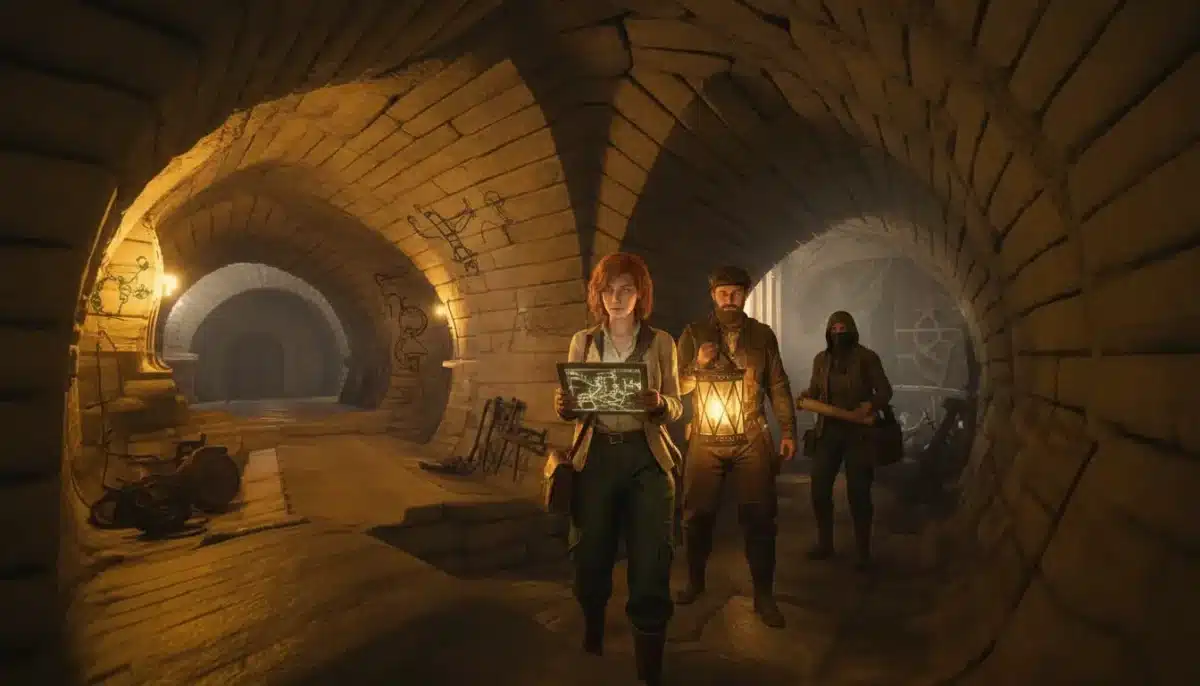
What finally dragged these tunnels into the daylight wasn’t a secret society or a code, but solid 21st-century science. Using ground-penetrating radar and laser scanning (take that, Indiana Jones), researchers mapped the subterranean maze, revealing previously unknown corridors. Not only does this confirm what da Vinci documented with his famously meticulous quill in the Codex Forster I, but it also opens a new chapter for Renaissance studies and Leonardo’s already spectacular legacy.
Anglo-Saxon burial reveals “unprecedented” secrets: experts stunned by 1,400-year-old grave mysteries
What Your Instinctive Tree Choice Reveals About Your Personality—Experts Explain
From Fortress to Marvel: The Castle and Its Secrets
The story of Sforza Castle is nearly as layered as the tunnels beneath it. Originally transformed in the 15th century by Francesco Sforza, Duke of Milan, this once humble spot became an imposing fortress—complete with towers, vast courtyards, and fresco-adorned chambers. In 1494, his successor Ludovico Sforza didn’t just hire anyone to decorate; he brought in Leonardo da Vinci himself, ensuring the castle’s ornamentation would be nothing short of legendary.
Leonardo’s sketches from this era long hinted at a concealed network running below the castle. The tunnels, now confirmed, likely served more than one master. Yes, their primary purpose was likely military (escape routes, strategic passages—Renaissance drama at its best), but the truth underneath is even more multifaceted.
- Military utility: providing defensible routes and mystery aplenty for would-be attackers.
- Personal and symbolic uses: One passage reportedly connected the castle to Santa Maria delle Grazie, the church housing Leonardo’s iconic “Last Supper.” For the ruling Sforza family, this route offered not only swift access to sacred ground, but also a tangible link between temporal power and spiritual reassurance, possibly even leading to family tombs.
Thus, the tunnels reveal not just a story of fortress walls, but also the private paths of a Renaissance dynasty balancing sword and soul.
Modern Technology Meets the Renaissance
The confirmation of these tunnels is a victory lap for new technology. Ground-penetrating radar and laser scanning didn’t just find empty spaces—they revealed never-before-seen corridors and greatly enriched our historical knowledge. Francesca Biolo of the Polytechnic University of Milan highlighted how these advances allow researchers to access formerly unreachable spaces, setting the stage for future investigations into even more secret passages (go ahead, get your torches ready, but maybe bring a scientist instead of a treasure map).
Even better, the digital mapping of these discoveries isn’t only for specialists. Franco Guzzetti, professor of geomatics at the same university, explained that researchers aim to create a “digital twin” of Sforza Castle. Imagine a replica, not just of the castle’s current appearance, but of its historical evolution over centuries. Visitors may soon wander the depths of the castle virtually, thanks to augmented reality elements in the upcoming digital model. The immersive museum experience could allow anyone to explore previously inaccessible underground routes or lost architectural wonders—without the risk of getting lost for, say, a few centuries.
These state-of-the-art methods don’t just visualize existing structures, but promise to revive elements that have vanished over time, introducing fascinating new perspectives for historians and amateur sleuths alike.
The Impact: From Cultural Heritage to Curious Tourists
Today, Sforza Castle is a cultural cornerstone, home to:
- The Pinacotheca of Castello Sforzesco
- The Museum of Pietà Rondanini
- The Museum of Ancient Art
The revelation of its hidden tunnels could have a profound impact on Milan’s cultural tourism, as history buffs and curious visitors flock to discover this “new” side of the city’s heritage. The prospect of virtual exploration, powered by the latest technology, could transform the typical museum trip—making it possible for visitors to explore both celebrated halls and shadowy corridors in ways previously reserved for historians or figures from suspense novels.
This breakthrough exemplifies how technological advances can redefine not just our knowledge of the past, but our very relationship with it. By turning the invisible into the visible, new and thrilling perspectives open up for both experts and everyday visitors. As progress continues on the digital twin project, one can only wonder: what else lies beneath our feet, waiting for someone (or something with a laser scanner) to finally uncover it?
The adventure around Sforza Castle’s secrets is only just getting started. Stay curious, and maybe consider brushing up on your Renaissance history—or your digital navigation skills!