
Show summary Hide summary
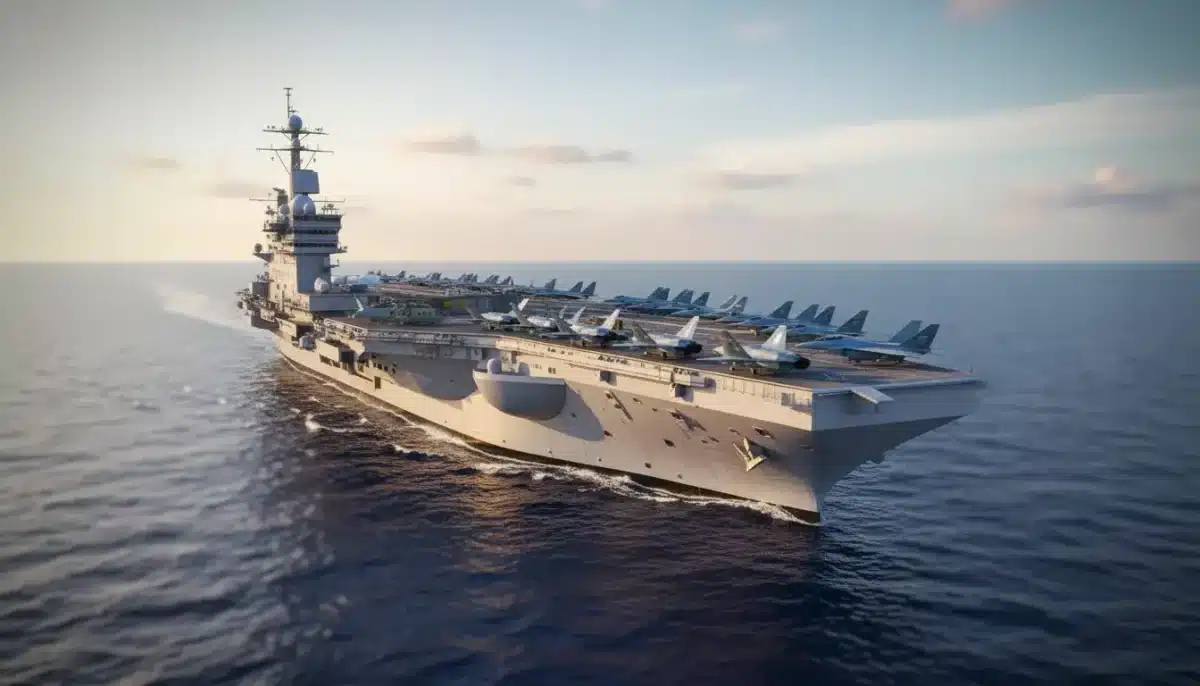
France has just set sail (metaphorically, for now) on a bold new adventure with the reveal of its Next Generation Aircraft Carrier (PA-NG), slated to be Europe’s largest warship and a true heavyweight in the global naval arena. But is this the pivotal shift that rivals feared, or just a really big—albeit impressive—addition to the fleet? Let’s dive into the nuts, bolts, and plenty of steel plates that make the PA-NG stand out in the crowded sea of military megaprojects.
The Making of a Giant: A Franco-French Collaboration
- Project partners: Naval Group (65%) and Chantiers de l’Atlantique (35%)
- Construction site: Saint-Nazaire, France’s shipbuilding heartland
- Nuclear expertise: TechnicAtome leads the nuclear propulsion systems
PA-NG is not just another ship; it’s a milestone in the evolution of the French Navy. Designed specifically to meet today’s maritime challenges, it promises to be the largest warship in Europe and one of the world’s most imposing vessels. The epic collaborative effort is firmly anchored in France, with Saint-Nazaire once again proving its unshakable importance for naval engineering. TechnicAtome, the mastermind behind the nuclear boiler rooms, is just as vital to this ambitious venture as the shipwrights hammering away at kilometers of hull.
Ambitious Timelines and Strategic Stakes
- Order expected: End of 2025
- Scheduled delivery: 2038
Why the sense of urgency? This meticulously tight schedule speaks volumes about the project’s strategic importance—not just from a military standpoint, but for the economy too. France is steering clear of delays, determined to deliver the PA-NG on time and reinforce its global naval presence at a pivotal moment in maritime politics.
Anglo-Saxon burial reveals “unprecedented” secrets: experts stunned by 1,400-year-old grave mysteries
What Your Instinctive Tree Choice Reveals About Your Personality—Experts Explain
Colossal by Every Metric
Let’s talk size, and we’re not exaggerating. The PA-NG isn’t just stretching its legs beyond the Charles de Gaulle—it’s running laps around smaller European warships.
- Length: 310 meters
- Flight deck width: 85 meters
- Full load displacement: 78,000 tonnes
- Crew: 1,100 members
- 600 air group personnel
- 100 command officers
- 200 additional specialists
The vessel is powered by two K22 nuclear reactors, each clocking in at 220 MW. This duo propels France’s seaborne behemoth to a maximum speed of 50 km/h, ensuring not only remarkable propulsion power but operational flexibility—a must in modern seascapes.
Weapons, Tech, and Aerial Arsenal
Of course, the PA-NG wouldn’t be much of a game-changer if all it brought to the fight was raw tonnage. Its true edge comes from an array of advanced systems.
- Will carry roughly 40 aircraft, including:
- Rafale Marine fighter jets and their future successors
- Three E-2D Advanced Hawkeye early warning aircraft
- NH90 Caïman Marine and H160 Guépard Marine helicopters
- Three sets of vertical launchers for Aster surface-to-air missiles, grouped on the port side (that’s the left, for the landlubbers)
- Four 40 mm Bofors cannons bring close-range protection
- Simbad-RC surface-air systems with Mistral 3 missiles for extra anti-air punch
As for innovations, the inclusion of Electromagnetic Aircraft Launch System (EMALS) catapults pushes the PA-NG firmly into next-level tech territory. These catapults, stretching a full 105 meters longer than classic C13-3 steam types, can launch aircraft up to a weight of 35 tonnes. Detection capability isn’t left behind either—the Thales Sea Fire active antenna radar system, with its four fixed panels, will be always on the lookout.
Transitioning from Charles de Gaulle: A Seamless Handover
No major project exists in a vacuum. Enter Charles de Gaulle, France’s long-serving flagship since 2001. The transition to the PA-NG will be gradual but carefully coordinated.
- PA-NG is scheduled to reach Toulon in 2035 to be loaded with nuclear fuel
- Sea trials are set for 2036
- Ongoing upgrades are planned for Charles de Gaulle to maintain operational continuity
Conclusion: A Beacon on the Horizon?
The PA-NG isn’t just France flexing its muscles or showing off a shiny new toy; it is a strategic statement in steel and circuitry. Whether it truly shifts the balance on the world’s oceans remains to be seen—but with its size, firepower, and ambitious tech suite, it certainly has all the ingredients to make waves. For now, one thing is clear: European naval rivalry just got a formidable new chapter. Stay tuned—by 2038, sea power could have a whole new flagship.