
Show summary Hide summary
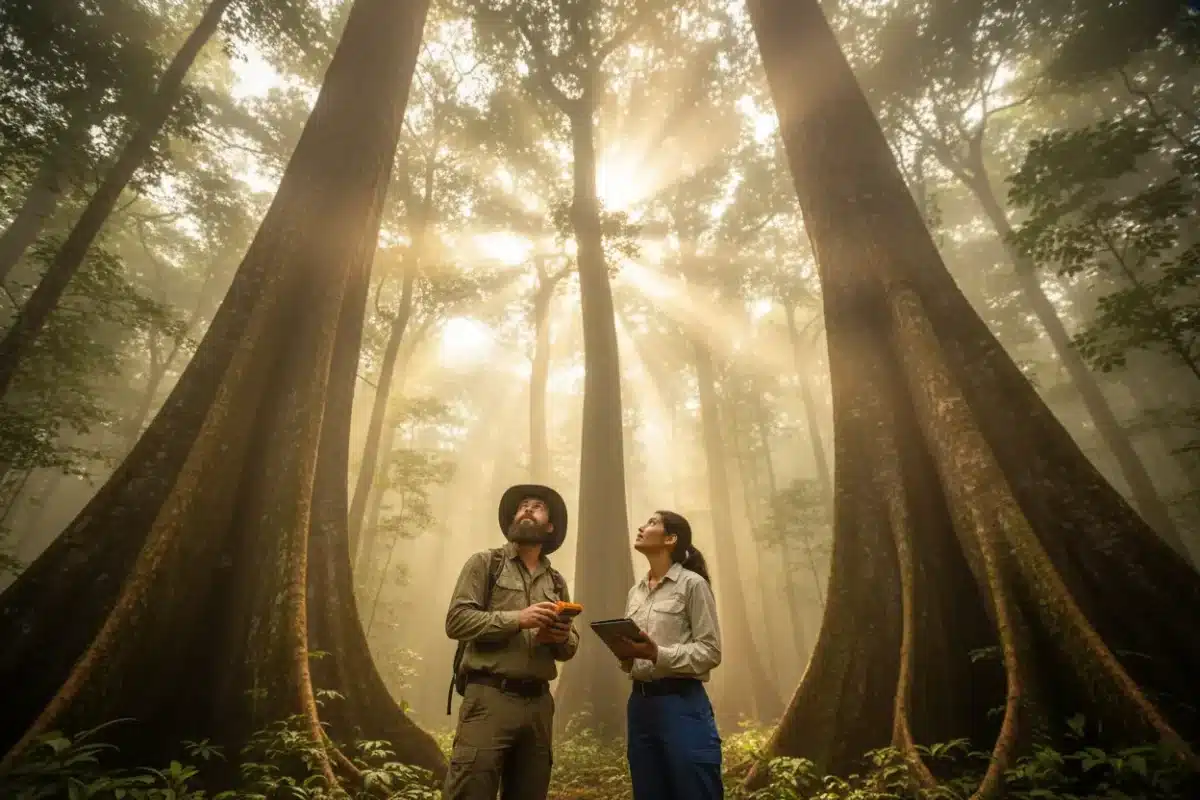
For fifty years, we’ve braced ourselves for the worst: the slow transformation of the Amazon rainforest into barren savannah, driven by climate change. But as we were steeling ourselves for doom and gloom, something truly astonishing was brewing in the shade of those legendary trees—every single tree in the Amazon, big or small, has started getting bigger. Scientists are floored, the rulebook is being torn up, and the world’s biggest tropical forest is showing us just how wrong our worst fears can be.
A Giant Undertaking: Tracking the Forest’s Pulse
- Nearly 100 researchers across South America
- 188 discreet forest plots
- Over forty years of meticulous observation
The scale of the international study that flipped the narrative is nothing short of epic. Launched in 1971 and wrapped up in 2015, scientists orchestrated a continent-spanning operation, measuring the “ground surface” of trees (that’s scientist-speak for trunk girth at soil level). Regular check-ups—on some plots for a whopping thirty years—have given us an unprecedented zoom-in on the forest’s evolution over decades.
The Numbers Don’t Lie: A Growth Spurt Like Never Before
Hold onto your hats (or your machete): since the 1970s, Amazonian tree circumference has ticked up by an average of 3.3% every decade. That’s right, a continent-wide, unrelenting upswing. In the annals of modern forestry, it’s a phenomenon with no precedent. What’s even crazier? This isn’t just about a few species or fat, sun-loving giants. The growth is universal. From scrappy saplings jostling for a sliver of sunlight to canopy-dwelling elders that have seen centuries go by, every tree is joining the expansion party.
Anglo-Saxon burial reveals “unprecedented” secrets: experts stunned by 1,400-year-old grave mysteries
What Your Instinctive Tree Choice Reveals About Your Personality—Experts Explain
Conventional ecological logic would have us believe only the tallest, resource-guzzling trees would take advantage in a shifting climate, elbowing out the underdogs. But reality, it seems, has a sense of irony. The entire forest is on the up.
CO2: From Culprit to Fertilizer?
Let’s talk about the elephant—or rather, the invisible gas— in the room. The researchers found the secret to this mystery not beneath the roots but floating through the air. The steady rise of carbon dioxide in the atmosphere (typically cast as the global villain) is, in the Amazon at least, acting as a natural fertilizer. Excess CO2 becomes plant food, creating what’s known as the “CO2 fertilizing effect.” And, plot twist, this effect turns out to be both more potent and more long-lasting than climate models initially predicted.
What does this mean? Amazonian trees are master adapters, tapping into environmental changes and—at least for now—using them to turbocharge their own growth. They aren’t just sitting idly, succumbing to whatever the climate throws at them; they’re turning challenges into opportunity. Clever trees!
Three Scenarios, One Surprising Reality
The scientists considered three possible outcomes for this atmospheric windfall:
- “Winners-take-all”: Only the big trees benefit, squashing the smaller fry.
- “Limited carbon benefit”: Young, resource-starved trees get the boost, leaving old giants in the lurch.
- “Sharing the benefits”: Every tree, regardless of size, shares the bounty equally.
Guess which scenario is playing out? The last—and most optimistic—one! Every tree is getting a slice of the carbon-fueled pie, exceeding even the most ambitious hopes of the researchers. This harmony is transforming the Amazon into an even more effective carbon-eating machine.
Every tree that fattens up locks away a bit more atmospheric CO2 in its biomass, setting up a virtuous cycle of carbon capture. Out of the 188 plots, not a single one showed any sign of decline so far—indicating that right now, at least, the benefits of extra CO2 far outweigh downsides like drought and rising temperatures.
But—and there’s always a but—climate models warn that if droughts intensify, fires become more frequent, or heat stress worsens, this good news train could turn around. Tree deaths could rise and the forest’s growth might slow dramatically.
Why This Discovery Matters Today
This revelation puts a glaring spotlight on the urgent need to protect the Amazonian forests in their entirety. Here’s an ecosystem showing extraordinary resilience—flipping a looming climate crisis into a window for growth. But this resilience isn’t self-perpetuating or guaranteed. The future of this irreplaceable ecosystem rests squarely in our collective hands. Will we step up to shield the Amazon, or watch its newfound strength wither away? The choice, as they say in the rainforest, is not just ours—it’s everyone’s.
Brice is a science journalist with a passion for space and paleontology. He has been collaborating with Sciencepost for nearly a decade, bringing you the latest discoveries and the most captivating features.