Show summary Hide summary
On October 18, 2025, the United States witnessed a truly electric moment as the “No Kings Day” protests filled streets from coast to coast. With tensions running high and unity on display, the day became a powerful – and occasionally turbulent – testament to democracy in action.
From Festive Resistance to Fierce Clashes in Portland
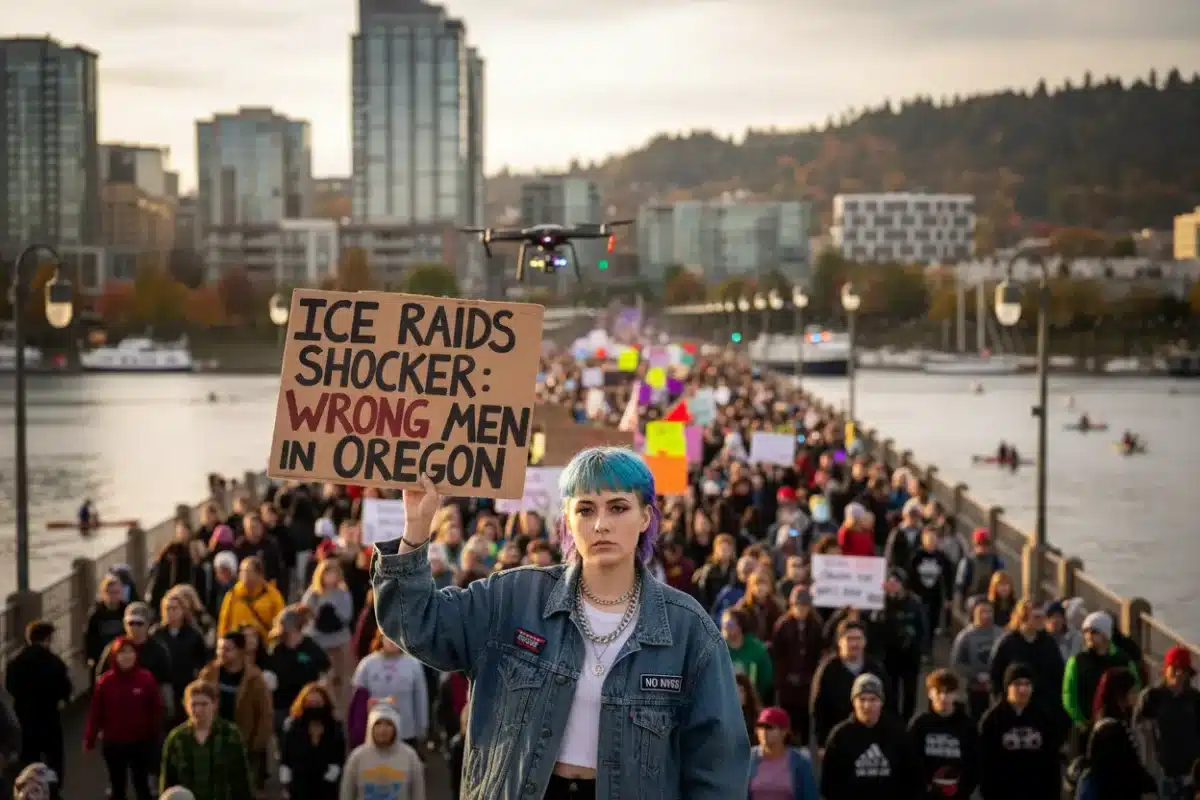
Portland, Oregon, often dubbed the epicenter of American protest, lived up to its reputation with gusto. According to The Oregonian, at least 40,000 gathered in Tom McCall Waterfront Park, transforming the area into a sea of inflatable costumes and witty signage. The melodious defiance of the Unpresidented Brass Band (unbowed even though its clarinetist had just recently been detained by federal agents) and the ever-spirited Portland Frog Brigade provided the day’s soundtrack. Protesters united in calling for immigration reform, better healthcare, and a reoriented U.S. policy toward Palestine—while, of course, giving major bridges a much-deserved impromptu pedestrian parade.
But nothing gold can stay. The festive air soured near the U.S. Immigration and Customs Enforcement (ICE) facility in South Portland. Federal agents responded to mounting crowds by deploying tear gas and pepper spray—first in the late afternoon, and then once again after darkness fell. The drama was heightened by sparks from canisters igniting several small fires, but Oregon’s rain put a quick damper on any would-be infernos. By midnight, Portland police had arrested three people on various charges, including assault, harassment, and bias crime.
Anglo-Saxon burial reveals “unprecedented” secrets: experts stunned by 1,400-year-old grave mysteries
What Your Instinctive Tree Choice Reveals About Your Personality—Experts Explain
- 40,000 protestors at Portland’s Tom McCall Waterfront Park
- Two tear gas incidents at ICE facility
- Three arrests by day’s end
No Kings, No Silence: Nationwide Protest on a Historic Scale
This wasn’t just a Portland phenomenon. The second wave of “No Kings” demonstrations swept the country, with 2,500 events planned compared to 1,800 back in June. The June 14 launch had already drawn a jaw-dropping 2 to 4.8 million people, according to organizers and USA Today. This October’s protests set out to be even bigger and bolder, embodying not just resistance to the Trump administration, but also a broad celebration of First Amendment rights and a clarion call for humane immigration reform.
Advocacy groups like Public Citizen and Indivisible were front and center. Robert Weissman, Public Citizen’s co-president, mused to reporters that protest is “what made our country stronger for 250 years”—casting protest not as a national threat but as an essential act of freedom.
Yet, not all was peaceful. Experts quoted by USA Today warned that with intense law enforcement, simmering anger, organizational chaos, and counter-protesters in the mix, the risk of unrest was ever-present. Brian Higgins, a John Jay College of Criminal Justice professor, grimly compared it to “setting fire to tinder.” There were worries too, as the White Lives Matter group planned a “day of action,” but, despite these fears, no widespread violence erupted.
Behind the Outrage: ICE Policy, Human Cost, and Viral Voices
What fuelled the outrage? The Trump administration’s zealous immigration enforcement—and, critics say, a campaign of misleading statistics. While officials claimed assaults on ICE agents shot up by 1,000% in 2025, a fact-check showed only a 25% nationwide rise through mid-September, with the biggest jumps limited to certain high-profile raids (notably a 74% bump in Los Angeles). Many “assaults” didn’t hold up in court, getting dismissed or reduced to routine resistance.
Despite the numbers, leading administration voices such as Secretary of Homeland Security Kristi Noem, Deputy Chief of Staff Stephen Miller, and “Border Czar” Tom Homan weren’t shy about warning of a crisis. Critics suggested that amped-up rhetoric was, at best, creative justification for tough new tactics. ICE’s focus had shifted sharply: Street arrests rose by a breathtaking 1,100% compared to 2017, and most of those picked up had no criminal records at all.
The human toll of these policies was heart-wrenchingly displayed. Chicago’s ICE raids led to reports of children being hauled from their homes at night without clothes. In Oregon, one Gresham family described agents bursting into a room where a three-month-old was hiding—and arresting two men who weren’t even the intended targets. These stories stoked even more anger among protesters.
Cultural Voices and the Call to Responsibility
It wasn’t just the masses making noise. Country singer Bryan Andrews became an online sensation, calling out the hypocrisy of Christian Trump supporters who applauded harsh immigration enforcement and lambasting a Supreme Court decision allowing ICE’s regional targeting of non-white or Spanish-speaking residents in Los Angeles. Actor Mark Ruffalo chimed in online, praising Andrews for