
Show summary Hide summary
Buckle up, folks: in the always eventful South China Sea, a dramatic double aircraft crash has just added fuel (possibly the bad kind) to simmering tensions between major powers. While the skies and waves were still settling, both the blame game and speculation about the future of this heated region took off at full throttle.
Two Crashes, One Contested Sea
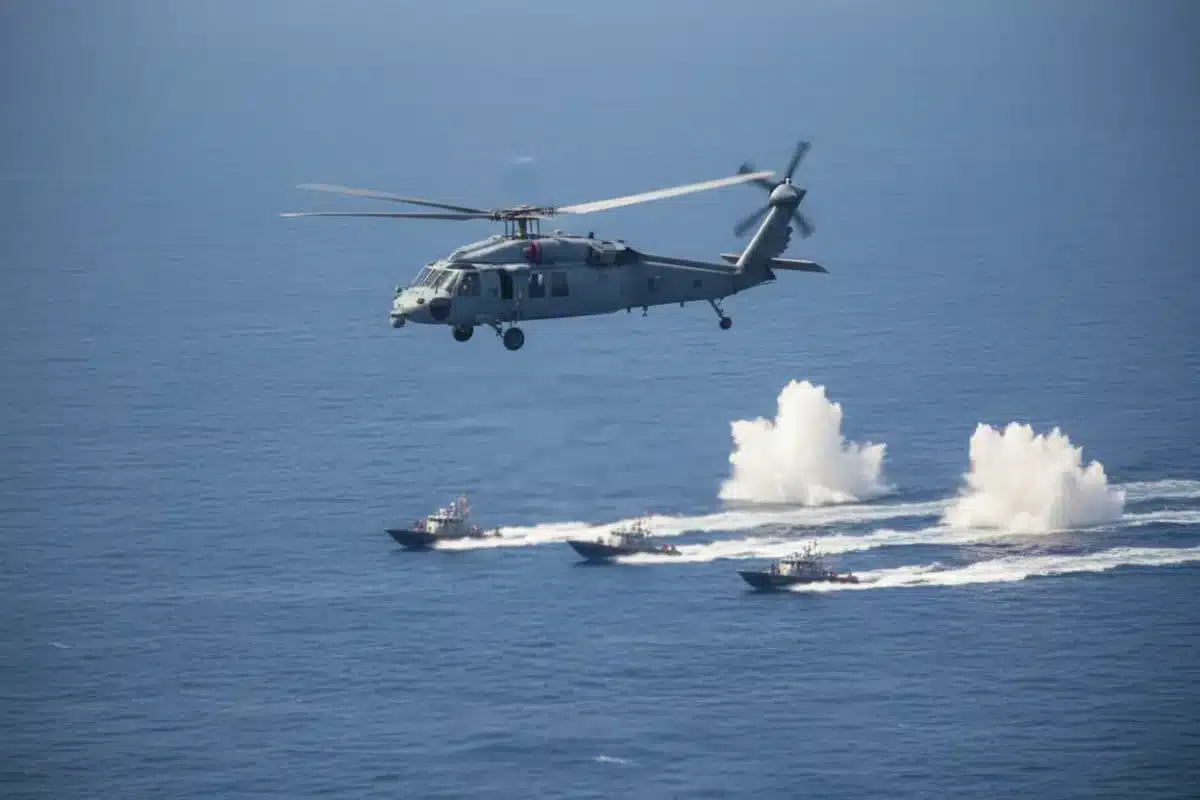
- Within just one hour, two U.S. military aircraft—a MH-60R Seahawk anti-submarine helicopter and an F/A-18F Super Hornet twin-seat fighter jet—crashed into the waters of the embattled South China Sea.
- Both incidents occurred during routine operations from the aircraft carrier USS Nimitz, as confirmed by the Pacific Fleet.
- The helicopter went down at 2:45 p.m. local time on October 26; about thirty minutes later, the fighter jet followed suit, splashing into the sea as well.
Now, while you might wonder if this was a case of the sky simply being too crowded, U.S. officials offered a less mysterious explanation. President Donald Trump, addressing reporters from Air Force One, calmly brushed aside any hints of foul play, stating, “No, they think it might be bad fuel. We’re going to find out. Nothing to hide. We’ll find out.” There’s honesty—then there’s White House-on-a-plane honesty.
Why the South China Sea Always Makes Headlines
The South China Sea is far from just a giant saltwater swimming pool. It’s one of the world’s busiest shipping lanes—vital to international trade and brimming with riches like oil, gas, and fisheries. No surprise then that everyone wants a piece of this aquatic pie. China lays claim to almost the entire stretch, yet its neighbors—Taiwan, Vietnam, the Philippines, Malaysia, Brunei, and Indonesia—all insist portions belong to them.
Anglo-Saxon burial reveals “unprecedented” secrets: experts stunned by 1,400-year-old grave mysteries
What Your Instinctive Tree Choice Reveals About Your Personality—Experts Explain
- Military exercises routinely disrupt the calm, especially from the U.S. and its allies like the Philippines.
- The Spratly Islands, a collection of reefs and rocks (and definitely not your ideal vacation spot), are frequent flashpoints in these territorial disputes.
Every time foreign military forces roam the sea—particularly the U.S.—China’s temper tends to rise faster than a fighter jet off a carrier. As one Chinese official stressed, “The U.S. is flexing its muscles and frequently sending military aircraft into the South China Sea. This is the root cause undermining regional peace and stability and maritime security.” In other words: please keep your warplanes off my (disputed) lawn.
Timing Is Everything: Diplomacy Amid Drama
Adding to the tension, the double crash conveniently (if that’s the word) coincided with President Trump’s arrival in Malaysia, kicking off an Asia tour. On this high-stakes trip, Trump is expected to hold his first meeting with Chinese leader Xi Jinping since returning to office in January. The two are scheduled to sit down in South Korea on Thursday. If you think air mishaps and contested waters might make for awkward small talk, you’re not alone.
More intrigue lies ahead: After South Korea, Trump and Xi will also find themselves in the same room at the Asia-Pacific Economic Cooperation forum. While trade will lead the agenda, security disputes—including the South China Sea and the status of Taiwan—are certain to be raised. Gently, one hopes.
Ripple Effects: What Now for the Region?
The crash of two U.S. aircraft in such a sensitive region is more than a headline—it’s a reminder of just how fragile peace and stability can be in waters where maritime claims overlap like a particularly aggressive game of Battleship. China points to the U.S. military’s presence as the root cause of regional instability, while Washington insists its operations promote security and freedom of navigation.
- U.S. Navy rehearses, China fumes.
- Allies like the Philippines challenge claims, China fumes some more.
- Two military aircraft crash, everyone wonders if it’s technical or tactical—or just a really bad day for jet fuel suppliers.
As leaders confer and crews investigate, one thing is certain: the South China Sea will remain a stage for both diplomacy and drama. Whether the next chapter features cooler heads or hotter tempers remains anyone’s guess.
If you’re tracking the currents of international tension, keep your binoculars trained on the South China Sea. And if you’re in charge of fueling military aircraft, maybe take an extra sniff at the next batch—just to be on the safe side.