
Show summary Hide summary
Trade tensions, tech showdowns, strategic soybean stand-offs—international politics isn’t for the faint-hearted. But this weekend, on the sidelines of the ASEAN summit in Malaysia, major players set aside the sharp elbows, at least temporarily, and hammered out a framework that may just have the world’s supply chains and TikTok dancers breathing easier.
Breakthrough on the Sidelines: A Tariff Time-Out
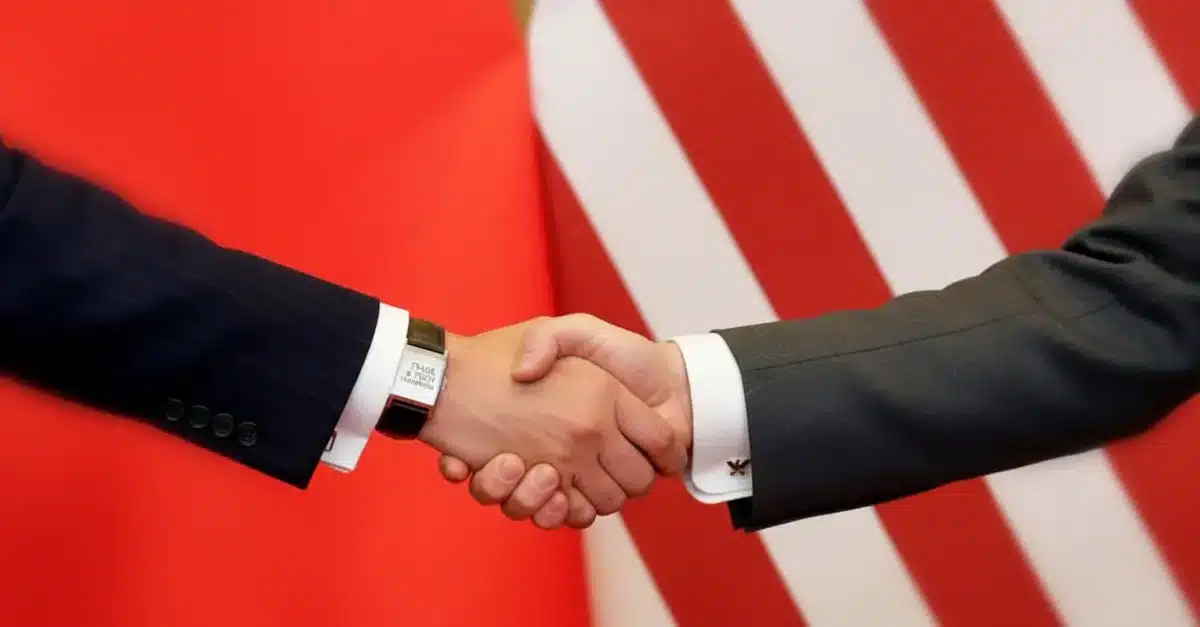
In a move that would have seemed improbable just a few weeks ago, US Treasury Secretary Scott Bessent announced a new agreement with China aimed at removing the threat of looming 100% tariffs on Chinese imports. The deal, brokered at the Association of Southeast Asian Nations (ASEAN) summit in Malaysia on Sunday, signals a pause in a rapidly escalating trade dispute.
This agreement could not have come at a better time, with the tariffs set to take effect on November 1. Bessent outlined that the framework includes a “final deal” regarding the sale of TikTok in the United States—a hot-button issue that has ricocheted through both tech and political circles. How many TikTok dances celebrate free trade? We might soon find out.
Anglo-Saxon burial reveals “unprecedented” secrets: experts stunned by 1,400-year-old grave mysteries
What Your Instinctive Tree Choice Reveals About Your Personality—Experts Explain
High-Level Diplomacy in Fast Forward
Sunday saw Trump’s arrival in Malaysia, kicking off a five-day Asia tour. The trip, which climaxes in a much-anticipated face-to-face with China’s Xi Jinping in South Korea on Thursday, promised plenty of backstage negotiation drama. Amid this, Bessent and US Trade Representative Jamieson Greer held their fifth round of discussions with Chinese Vice-Premier He Lifeng and Li since May.
“I think we have a very successful framework for the leaders to discuss on Thursday,” Bessent told reporters, underscoring the significance of these repeated high-level conversations.
Trade Rapprochement: Soybeans, Rare Earths, and Moves on Brazil
The trade friction had been heating up on multiple fronts. The US had faced stiff measures from China, including controls on exports of rare earth minerals—key for car components like electronic window and boot openings. Beijing further amped up the pressure by halting purchases of US soybeans, a sector where China traditionally serves as the biggest customer. In 2024, China accounted for half of America’s $24 billion in soy export business. The move stung; September saw China buying no soybeans from the US, instead turning to Brazil and Argentina for supply.
But there’s optimism sprouting among America’s soybean farmers. Bessent indicated he expects the tariff truce to stretch beyond the November deadline and anticipates that China will resume significant purchases soon. “US soybean farmers will feel very good about what’s going on both for this season and the coming seasons for several years,” Bessent told ABC. After a tense September, one might imagine a few sighs of relief—and a rush to polish up those combines.
- The US and China agreed to pause certain punitive actions.
- Both sides found a path forward for greater US access to rare earths from China.
- Efforts will be made to address trade deficits through increased sales of US goods to China.
Greer summed up the mood, calling it “a path forward where we can have more access to rare earths from China, we can try to balance out our trade deficit with sales from the United States.” Overnight, a new lexicon of cautious optimism permeated both camps.
Not Just China: US-Brazil Thaw on the Table
The Malaysian summit also provided space for another diplomatic dance: potential easing of US-Brazil tensions. President Luiz Inácio Lula da Silva described his meeting with Trump as “positive,” declaring on social media that their teams would start “immediately” to seek solutions surrounding tariffs and sanctions on Brazilian authorities. A mutually beneficial truce may be on the horizon here too—provided discussions stay on the happy side of “positive.”
Conclusion
As the dust settles, the world waits for the results of Thursday’s summit between Trump and Xi. For now, the threat of tariff escalation is on hold, TikTok’s fate is pivoting toward a resolution, and soybean farmers have reason to smile. Trade relations can be a game of inches, but this week, a few big steps were taken. If you’re in the business of soybeans, TikTok, or rare earth magnets, maybe it’s time to call your broker—cautiously, of course.