
Show summary Hide summary
Gaza’s ceasefire is hanging by a thread—again. Just as the ink on the historic peace agreement was barely dry, deadly clashes have thrown the region into uncertainty. Can the fragile peace deal survive, or are we doomed to another cycle of violence?
Escalation in Rafah: The Breaking Point?
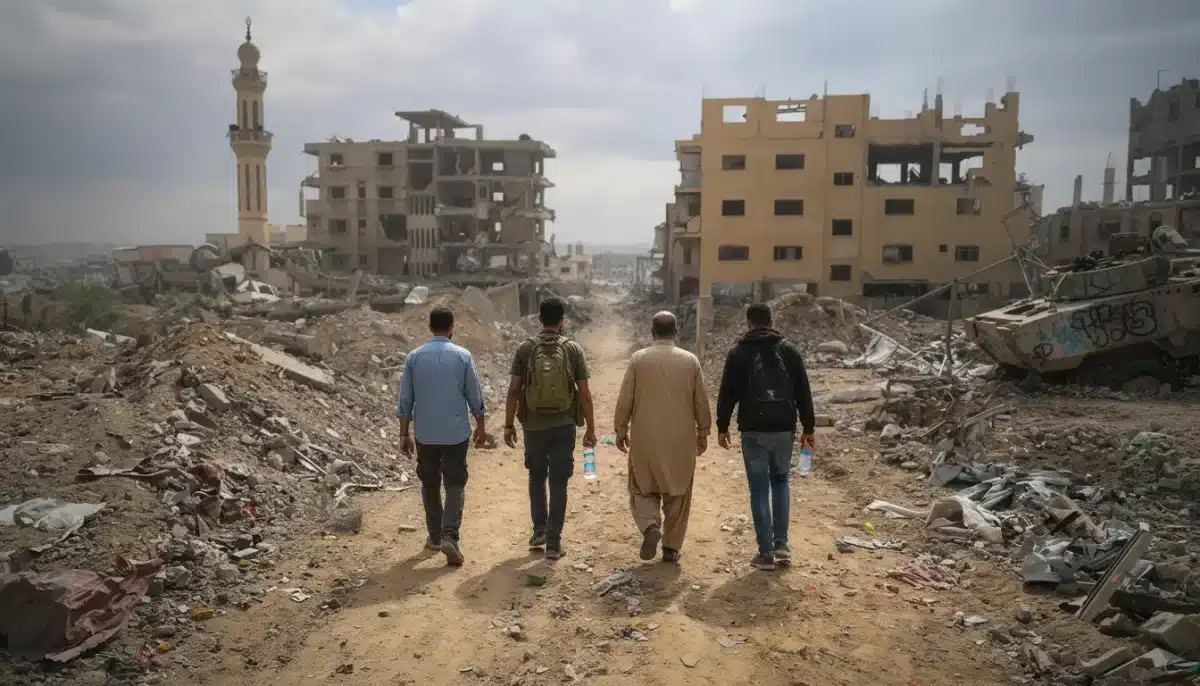
The reason everyone’s on edge is no mystery: the latest clashes represent the most serious escalation since the ceasefire began. On Sunday morning, local time, the Israeli Defense Forces (IDF) reported a harrowing incident in Rafah—a region still largely controlled by the Israeli military. According to the IDF, Hamas militants emerged from a tunnel and fired an anti-tank missile at an IDF vehicle. The result was grim: two Israeli soldiers lost their lives.
This violent episode wasn’t just another flash of chaos—it was exactly the sort of incident that officials on all sides had feared might unravel the hard-fought truce. After ten hours of fighting, the IDF later announced that, in accordance with political leaders’ directives and after a significant series of strikes, they would return to observing the ceasefire, which had been violated by Hamas.
Anglo-Saxon burial reveals “unprecedented” secrets: experts stunned by 1,400-year-old grave mysteries
What Your Instinctive Tree Choice Reveals About Your Personality—Experts Explain
Tenuous diplomacy: The Trump administration steps in
President Trump, addressing reporters from Air Force One on Sunday night, suggested that rogue Hamas militants might have been responsible for the attack in Rafah. The administration isn’t taking things lightly. The Gaza ceasefire agreement is considered a major diplomatic feather in Trump’s cap—an achievement that, frankly, he’d rather not see tumble down like a house of cards. That’s why the administration is ramping up efforts to prevent further incidents, deeply aware that this transition period is rife with potential pitfalls.
One U.S. official summed it up with candid clarity: Sunday’s clashes were just the kind of bumps they expected during this uneasy handoff. No one’s under any illusion that maintaining peace in Gaza is going to be smooth sailing.
Next steps: Who’s coming to town—and why it matters
It’s all hands on deck this week. Vice President Vance, along with Witkoff and Kushner, are scheduled to land in Israel. Their mission: push for the next phase of this delicate agreement. The focus? Implementation, plain and simple. According to U.S. officials, the goal is to have people on the ground who know the nuts and bolts of municipal management. Or, as one senior official put it (showing more candor than a plumber at a backed-up sewer), the real work starts now. There’s an urgent need for people skilled in running local governments and building, say, a water-sewer plant—and making sure it works. In other words, peace isn’t just about signatures on a page, but about fixing leaky pipes and keeping the lights on. It’s a huge challenge, to say the least.
- Implementation teams arriving in Israel
- Focus on municipal management and infrastructure
- Ongoing assessment of ceasefire violations
The bottom line: What happens if the truce snaps?
The U.S. is keeping its options open. A senior official indicated that, should Hamas further violate the ceasefire, America could support Israeli moves to regain control over sections of Gaza. The aim would be simple, but ambitious: give more Palestinians the opportunity to live in areas not ruled by Hamas.
The future of Gaza’s peace deal? As tense as a game of chess played on a rickety table. The international community has its work cut out—keep both eyes on Gaza, and perhaps keep a plumber or two on standby. The spotlight is now on whether diplomacy, determination, and a bit of practical know-how can keep hope—however fragile—alive in a deeply divided land.