
Show summary Hide summary
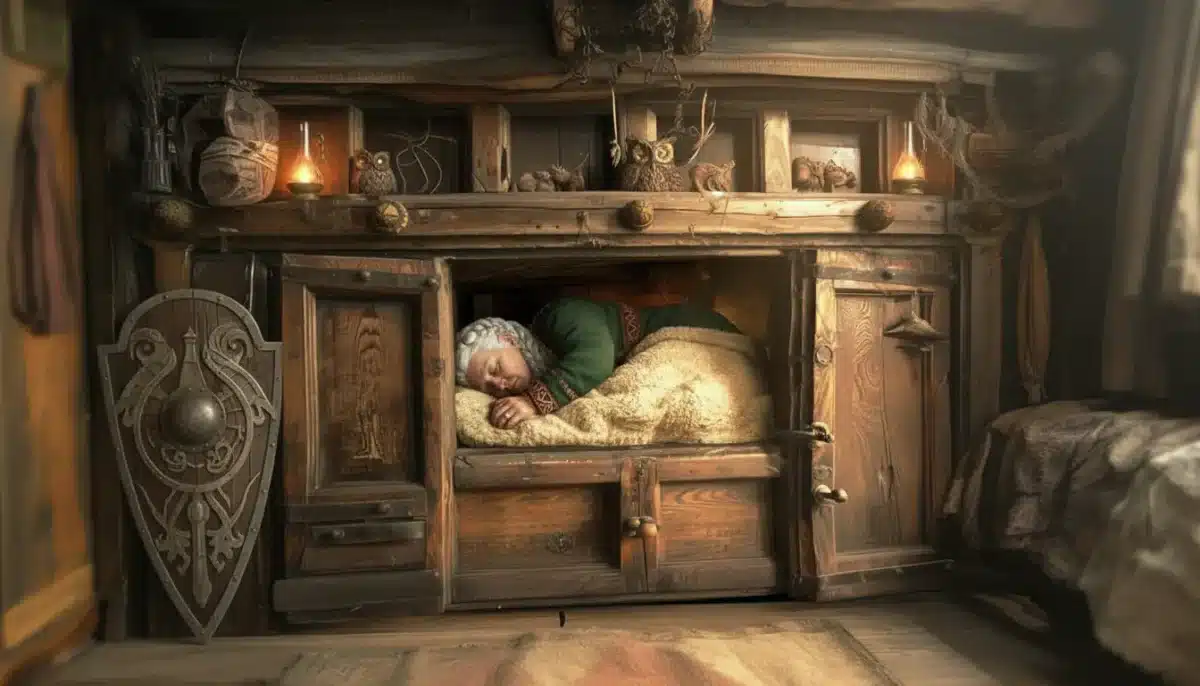
Picture this: it’s the dead of winter, the wind howls outside, and you’re about to turn in for the night… not in a plush king-sized bed, but snug inside a wooden box. Sounds like a scene from a quirky fairytale? Surprisingly, it was the norm for countless Europeans, from the Middle Ages right up to the early 20th century. Welcome to the fascinating, and surprisingly practical, world of the bed cupboard—an ingenious idea making a subtle comeback in the modern age.
From Curiosity to Comfort: Life Inside the Box
What exactly led people to trade open mattresses for what amounts to a personal wooden cocoon? To understand, we need to step back and see the world as medieval Europeans did. Imagine living in a small, drafty home, heated only by a central hearth that can barely take the edge off the chill. Winters were unforgiving and homes lacked even a hint of today’s insulation.
Within this context, sleeping in an enclosed wooden bed wasn’t bizarre—it was wise. Bed cupboards excelled at trapping precious body heat and shielding their occupants from frosty drafts. They created a mini microclimate, like a personal incubation chamber for warmth. If you’ve ever huddled under a mountain of quilts in an icy cabin, you’ll know exactly why people loved these things.
Anglo-Saxon burial reveals “unprecedented” secrets: experts stunned by 1,400-year-old grave mysteries
What Your Instinctive Tree Choice Reveals About Your Personality—Experts Explain
Versatility, Privacy, and the Multitasking Medieval Bed
But warmth was just the beginning of the bed cupboard’s appeal. These clever contraptions were the Swiss Army knives of the furniture world (long before owning multifunctional furniture meant buying something Scandinavian and difficult to pronounce). By day, they could fold or close, allowing for much-needed space in homes where every inch mattered. Come nightfall, they transformed back into snug retreats. For families sharing one cramped room, maximizing space was non-negotiable.
Some designs included built-in drawers and compartments, merging the duties of bed and dresser in one. In this way, bed cupboards were the original multifunctional furniture—not just serving as a spot to sleep, but also a place to store life’s odds and ends. Here’s what these beds brought to the table (or, well, the box):
- Efficient use of space in tiny homes
- Extra storage thanks to integrated drawers and nooks
- Day-night versatility: fold away by day, cozy up by night
And, perhaps most importantly, bed cupboards offered a rare luxury for the time: privacy. With doors that often closed—and sometimes even locked—these beds carved out a personal space for reading, prayer, or simply retreating from daily chaos. In an era when true private bedrooms were rare, even among the wealthy, both nobles and peasants prized this portable slice of solitude.
The Decline and Surprise Revival of a Clever Classic
With the march of progress—central heating, better insulation, and more spacious layouts—brick-and-mortar homes gradually rendered the bed cupboard obsolete. By the early 1900s, these wooden enclosures became relics, reminders of tougher times and simpler living.
Attitudes shifted too. What once felt like a cozy nest eventually began to feel restrictive, even less-than-sanitary by modern standards. Open, airy bedframes, along with new inventions like spring mattresses and lightweight duvets, nudged people toward larger, more expansive sleeping situations.
But here’s the twist: in today’s tightly packed urban centers, where every square meter carries a premium, the logic behind bed cupboards is making a comeback (albeit with a futuristic twist). Capsule hotels inspired by Japanese innovation and Murphy beds that disappear into walls have more in common with medieval sleeping boxes than you’d think. Modern versions are designed with style, smart features, and tech-savvy sensibilities, all for a new generation of city dwellers who crave both form and sheer functionality. Micro-apartments now feature modular beds you can tuck away—space saving, private, and unmistakably reminiscent of the medieval original.
Small Spaces, Big Ideas: Lessons From the Bed Cupboard
As we reevaluate how much space we really need to be content, the humble bed cupboard offers more than a charming historical anecdote. It stands as a testament to how necessity sparks innovation and how cleverly designed small spaces can deliver comfort, privacy, and function. The next time you find yourself marveling at a murphy bed (or eyeing up a capsule hotel online), remember: today’s hottest design trends are often centuries old, just waiting for their return to the spotlight.
If carving out a cozy corner in a tiny flat feels like a modern problem, medieval Europeans would beg to differ—after all, they wrote the book on compact comfort. Sometimes, the smartest solutions really do start in a box.