
Show summary Hide summary
In a world where threats are getting faster, smarter, and a whole lot scarier, the United States has just fired a signal flare into the sky: the future of missile defense is no longer science fiction. Buckle up as we dive into the details of the cutting-edge test that has defense insiders—and maybe a few would-be adversaries—paying close attention.
A Critical Leap: The Birth of Hypersonic Defense
You’ve probably heard the term “hypersonic missile” tossed around along with phrases like “game-changer” and “modern warfare’s nightmare.” These weapons travel at speeds five times that of sound—meaning if you blinked, you’d miss them. Their velocity and maneuverability make them notoriously tough to track and even tougher to stop. Traditional missile systems were simply not built for this kind of foe.
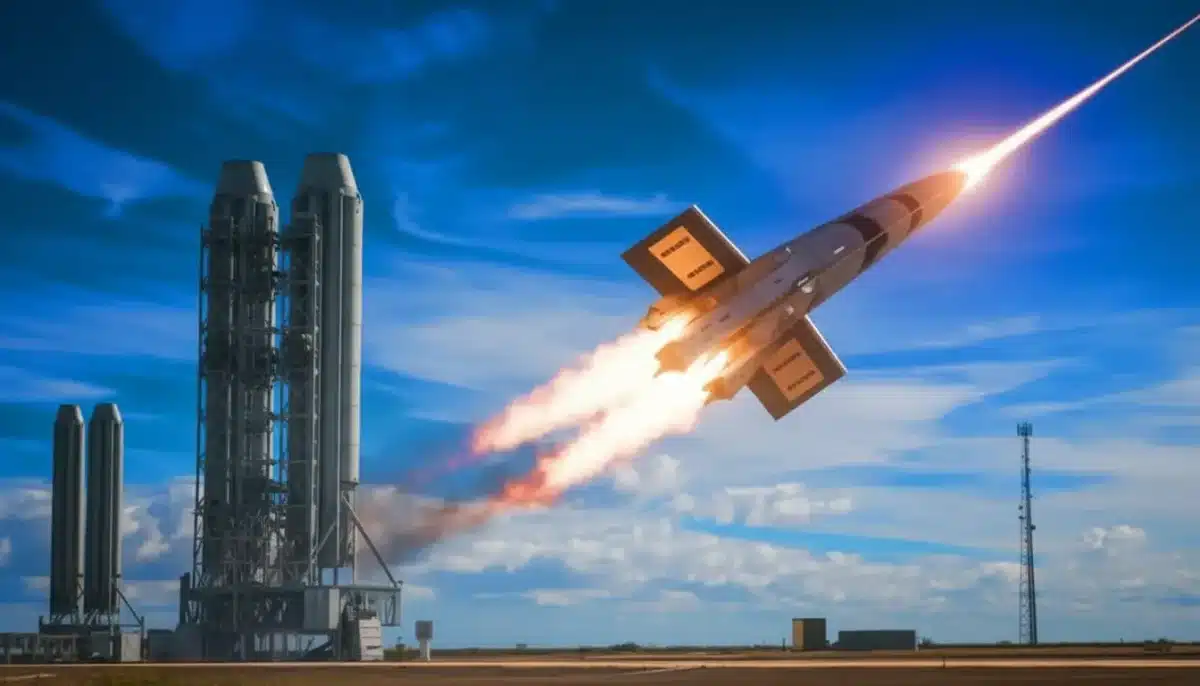
Enter the United States’ Missile Defense Agency (MDA) and the U.S. Navy. In a move marking a true leap forward, their team has just concluded a highly ambitious trial: Flight Test Other-40 (FTX-40), code-named Stellar Banshee. In this not-so-routine drill, a simulated Standard Missile-6 (SM-6) was launched at a target designed to do a spot-on impression of a real hypersonic missile threat.
Anglo-Saxon burial reveals “unprecedented” secrets: experts stunned by 1,400-year-old grave mysteries
What Your Instinctive Tree Choice Reveals About Your Personality—Experts Explain
But don’t let the simulated label fool you—this was no video game, nor was it just about who had the biggest firepower. What set this test apart was its emphasis on precision, integration, and—yes—communication among some of the most complex military systems out there, all cranked up to max stress.
The Tech Behind the Test: Eyes in the Sky, Brains at Sea
At the center of this high-stakes dress rehearsal was the Hypersonic and Ballistic Tracking Space Sensor (HBTSS). This nifty piece of space-based tech provided real-time tracking of the lightning-fast target. But tracking alone doesn’t win the day. The real magic happened when this sky-high data piped straight into a U.S. Navy ship’s Aegis Weapon System, knitting together space-age surveillance with next-level naval combat control. The result? Near-perfect synergy.
The simulation not only detected and tracked the simulated hypersonic menace but also successfully pulled off an intercept drill. This ability is more than a technical notch in the belt; it is fundamental to defending everything from the homeland to U.S. forces stationed across the globe.
Layered Defense: Building Confidence, Bit by Bit
Now, the test’s strength wasn’t in flashy missile launches alone. It was in the seamless choreography of multiple defense building blocks:
- Fire control systems
- Space sensors like HBTSS
- Aegis-equipped warships
This cross-platform coordination is not just impressive—it’s vital for creating truly layered missile shields, where no single system has to do all the heavy lifting.
FTX-40 wasn’t just a standalone act. It doubled as a risk-reduction test for even more advanced target technologies and served as a springboard for the upcoming FTM-43 test. These trials are the next chapters in a story that includes successes like FTM-32, where an SM-6 missile intercepted a medium-range ballistic missile—a feat many thought impossible not so long ago.
Behind the scenes, earlier tests such as Stellar Laelaps paved the way, boosting confidence in the SM-6 interceptor’s versatility against all flavors of airborne threats. Each test, each step, isn’t just stacking up numbers—it’s building real momentum, pushing U.S. missile defense closer to full operational readiness as new threats emerge at a breathless pace.
A Signal to the World—And the Road Ahead
The complexity of today’s military technology demands equally advanced solutions. Innovation is not just a buzzword; it’s the heart of effective defense. That’s why the U.S. is investing heavily in everything from space-based sensors to fluid cross-branch military communication. Reaction speed and pinpoint accuracy aren’t just nice-to-haves anymore—they’re must-haves.
As Lt. Gen. Heath Collins, Director of the MDA, put it: “Our ability to defeat maneuvering, hypersonic missiles is critical.” FTX-40 proves this ability is no longer just a dream—it’s becoming reality.
This isn’t just a technical win. It’s a clear message to allies, adversaries, and everyday citizens that the United States is ready to face evolving threats head-on, armed with technology tailored for the battles of tomorrow.
In an era of rising geopolitical tensions, building a defense against hypersonic missiles isn’t merely a military pursuit—it’s a national imperative. And with Stellar Banshee’s success, it’s safe to say: the future of defense has already begun to arrive.
Want to keep an eye on advances like these? Glass Almanac is your go-to for all things tech and entertainment—from augmented reality to groundbreaking science and, yes, headline-grabbing missile defense tests. Stay curious, stay informed, and never get left behind as technology meets everyday life.