
Show summary Hide summary
Imagine charging your device just once—and then having it run for 5,700 years. Sounds like the punchline to a sci-fi joke, right? Well, scientists at the University of Bristol and the UK Atomic Energy Authority (UKAEA) have brought this futuristic concept to life with the unveiling of the world’s first carbon-14 battery. Welcome to the new era of power, where battery anxiety could one day be as outdated as floppy disks!
What is a Carbon-14 Battery—and Why Should You Care?
Archaeologists have long known carbon-14 for its starring role in dating ancient bones and pottery shards. But thanks to a bold twist, this same isotope is being used not to unearth the past, but to power the future. The carbon-14 battery draws its energy from the natural radioactive decay of carbon-14, a process that unfolds over thousands of years—no plug, socket, or patience required.
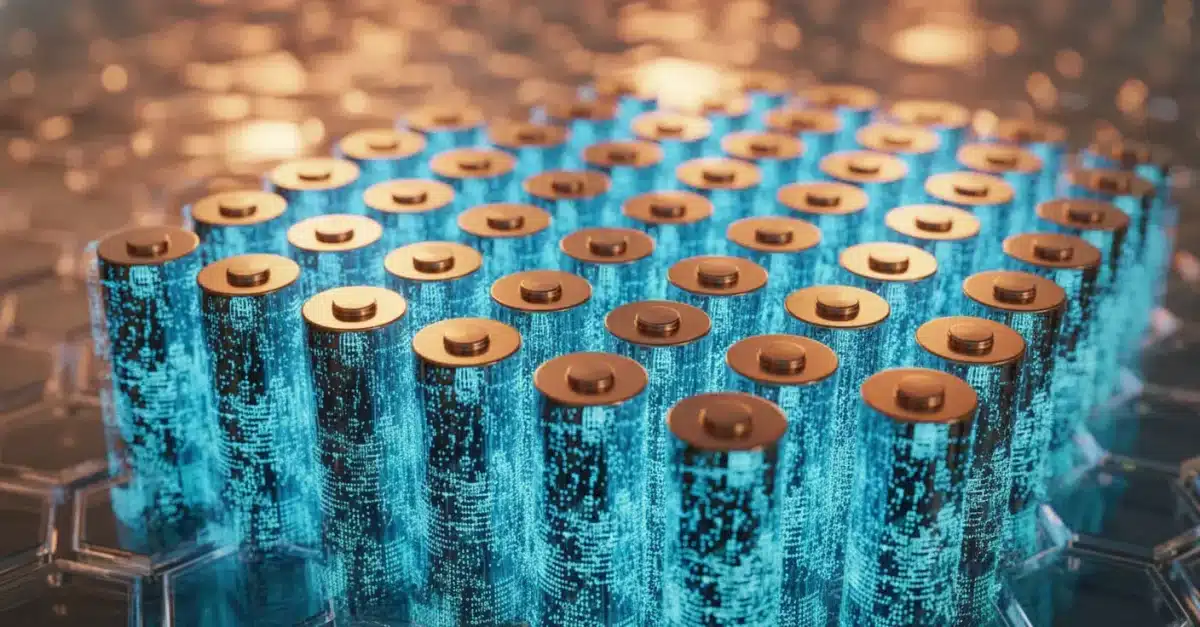
Encased in diamond—yes, actual diamond, one of the hardest materials known—this battery transforms radiation into electricity. Think of it as the ultimate glow-up from solar panels: instead of sunbeams, it’s the fast-moving electrons during carbon-14’s decay doing all the heavy lifting. The result? A battery with an almost mythical lifespan, whose energy only halves after 5,700 years. That is a number so staggering you’ll want to sit down (unless you’re already charging).
Anglo-Saxon burial reveals “unprecedented” secrets: experts stunned by 1,400-year-old grave mysteries
What Your Instinctive Tree Choice Reveals About Your Personality—Experts Explain
The Science: Tiny Power, Massive Impact
According to Sarah Clark, Director of Tritium Fuel Cycle at the UKAEA, “Diamond batteries provide a safe and sustainable way to generate continuous energy at the microwatt level.” While you won’t be charging your electric car with one just yet, these tiny powerhouses are designed for where reliability and endurance matter most.
- Half-life of 5,700 years means the battery keeps supplying power for millennia.
- Microwatt-level energy: ideal for low-power, long-lasting applications.
- Diamond casing safeguards users and the environment alike by trapping any radiation.
And when the battery finally calls it a day (in the year 7724, give or take), it’s easily recycled: just send it back for safe handling. Easy as it gets in the world of radioactive materials!
Sustainability: Cleaning Up Nuclear Waste, Powering the Future
Now, here’s where the carbon-14 battery goes from cool to planet-saving. The isotope used is harvested from graphite blocks—waste products from nuclear reactors. Instead of stacking up as radioactive junk, these blocks get a second lease on life as a core part of a revolutionary battery. So, not only do these batteries generate energy, but they also help reduce nuclear waste. It’s innovation meets eco-friendly action—a rare but beautiful thing!
The diamond shell doesn’t just shine for style points. It absorbs remaining emissions and ensures the battery’s energy stays safely contained for centuries. Even disposal is eco-conscious, with recycling managed by the manufacturer—no radioactive DIY kits required.
Endless Possibilities: From Healthcare to Space (and Beyond)
What makes the carbon-14 battery so intriguing is its potential to shake up fields where conventional batteries fall short.
- Medical devices: Imagine a pacemaker, hearing aid, or ocular implant powered for decades without a single battery swap. Fewer operations, less patient discomfort, and reduced risks—a prescription any doctor would endorse.
- Space exploration: Solar power is tricky far from the sun. These batteries could keep satellites and spacecraft humming along for decades, extending missions and slicing costs for the space industry.
Professor Tom Scott from the University of Bristol is already excited to collaborate across science and industry, hinting at a future rich with technological “firsts”—from healthcare breakthroughs to next-gen aerospace solutions.
The big picture? This battery is a bold step toward sustainable energy. Its near-immortal lifespan, environmental benefits, and clever repurposing of nuclear waste offer a glimpse into the cleaner, greener world we desperately need. In a battery landscape crowded with fleeting charge cycles, the carbon-14 battery could finally bring the stability we’ve been waiting for—one thousands-of-years-long cycle at a time.
Of course, it’s early days yet. The technology is new, and not every phone, car, or electric toothbrush will get a taste of radioactive diamond magic tomorrow. But if the carbon-14 battery lives up to its extraordinary promise, we may soon be entering a world where worrying about recharging is as old-fashioned as winding your watch. Now that’s a future with staying power!