
Show summary Hide summary
A Quick Guide to Famous Foot Shapes
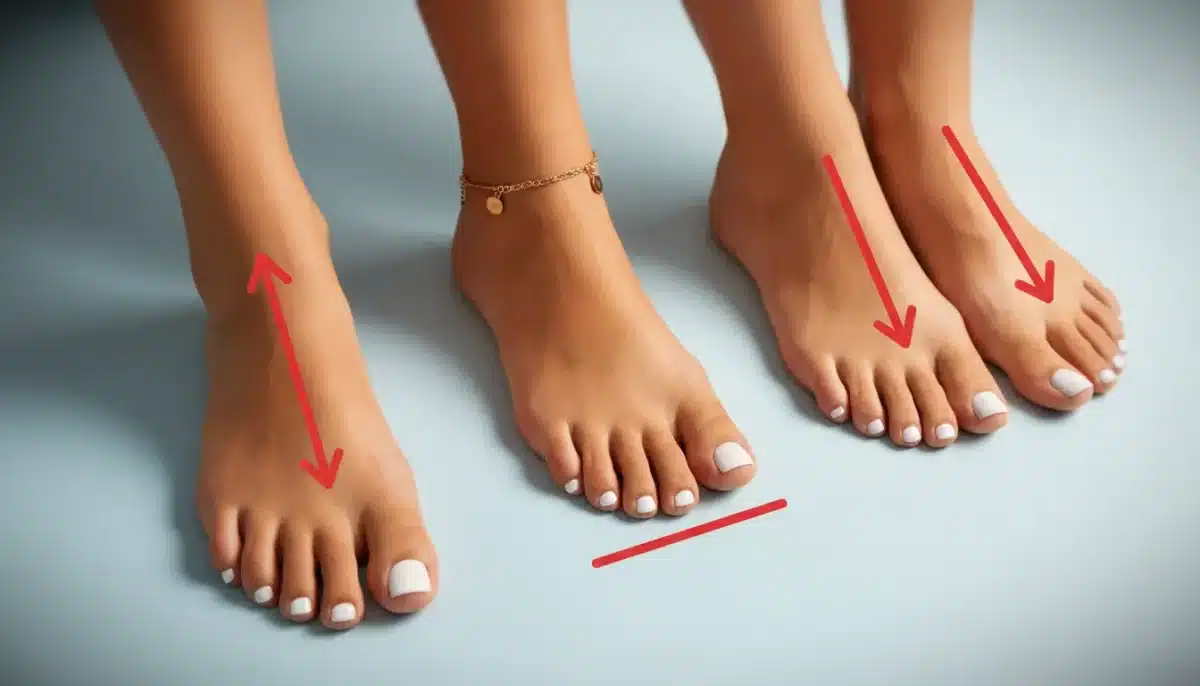
- Egyptian Foot: The big toe reigns supreme, with each successive toe sloping downward, creating a gentle, almost artistic angle of about 45 degrees. Sounds regal? That’s perhaps why it bears the ‘Egyptian’ name, but don’t assume it’s exclusive to the pharaohs’ descendants. According to podiatrists, an estimated 50% to 70% of the global population sports this foot type. The nomenclature is inspired by the ancient Egyptians’ quest for perfection – they loved illustrating feet from biggest to smallest toe, forming that neat descending slope we see today.
- Roman Foot: Picture a foot that’s sturdy and blocky. The first three toes are exactly the same length, while the last two are a tad shorter. There’s even a variant where the big toe edges ahead, but the other four toes share equal height, earning this style its ‘square foot’ nickname. The name harks back to the Romans who marched countless miles around the Mediterranean from 27 BCE to 476 CE. There’s also a clever nod to the ancient Roman unit of measurement: the foot. Today, roughly 25% of people worldwide have this robust foot shape.
- Greek Foot: This one is instantly recognizable—the second toe is the star of the show, longer than all the others. Structurally, this happens because the first metatarsal (the bone connecting the big toe to the back of the foot) is shorter, allowing the second toe to take the lead. Why the name? In Greece, this foot shape is especially prevalent; a 2015 University of Thessaloniki study found 46% of Greeks had it, compared to just 5% elsewhere. Still, it’s not exclusive to the land of ancient philosophers, and precise worldwide stats remain tricky to pin down.
The Perks—and Pitfalls—of Each Foot Shape
Egyptian feet may look ideal (at least to the ancient Egyptians), but there’s a catch: people with this foot type are more prone to developing hallux valgus (that’s podiatrist-speak for bunions). This happens when the big toe drifts toward the second toe, causing a painful bump on the inner side of the foot. Genetics play a role too, so thanks, family tree. For daily comfort and bunion prevention, it’s wise to skip tight shoes and always make sure your big toe has wiggle room.
Those with Roman feet face their own set of challenges. Shoe shopping can be tough, since it’s crucial to provide enough room for the first three toes. Narrow or pointy shoes? Not your friends. Instead, look for square-toed or rounded footwear, giving all toes ample space to avoid a day full of discomfort.
Anglo-Saxon burial reveals “unprecedented” secrets: experts stunned by 1,400-year-old grave mysteries
What Your Instinctive Tree Choice Reveals About Your Personality—Experts Explain
For Greek feet, the lengthy second toe can sometimes spell trouble. Because weight doesn’t distribute evenly, pain can crop up at the start of the plantar arch, right where the toes meet the rest of the foot. Here’s a pro tip: when choosing shoes, don’t judge by your big toe—fit should be gauged with your second toe, since it’s the longest and needs a little extra breathing room. If cramped, it can curl up in protest, leading to a notorious ‘hammer toe,’ and that’s a pain you definitely want to avoid.
In Conclusion: Toes of All Shapes, Comfort for All
No matter which foot shape you’ve inherited, the key is to treat your toes with respect and maybe just a hint of ancient admiration. Give them space, avoid torturous footwear, and let every toe—whether Egyptian, Roman, or Greek—live its best life. Trust us, your feet (and your ancestors) will thank you!