Show summary Hide summary
Mystery Containers in Manila Bay
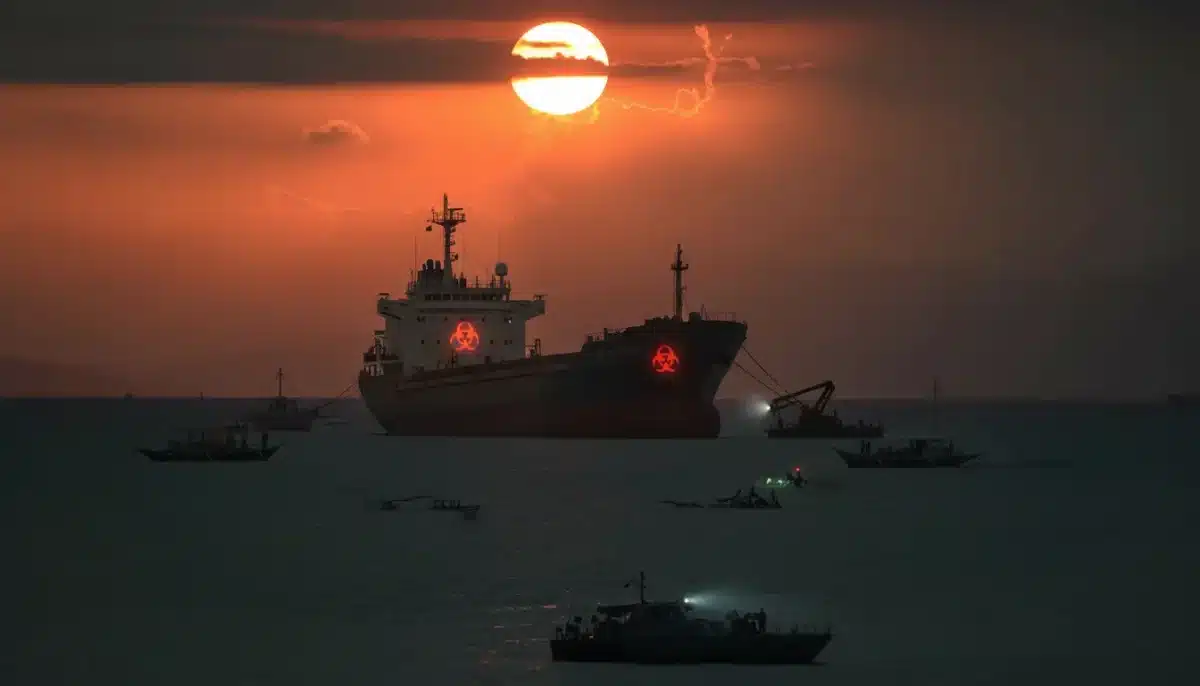
Since October 20, a shipment of radioactive zinc dust—more than 20 containers’ worth—has been stuck in Manila Bay. On October 31, a Filipino nuclear official called for an urgent solution to dispose of the containers, which nobody seems eager to claim. The saga began when traces of Cesium-137, a radioactive isotope, were detected inside 23 of the containers in Indonesia. Authorities there swiftly rejected and re-exported the cargo straight back to where it originally came from: the Philippines. That’s some serious return-to-sender energy.
According to a Jakarta official, the cargo was refused in Indonesia right when the country was dealing with a scandal about radioactive contamination found in several food products. Authorities there suspect that imports of scrap metal could be behind the pollution.
Anglo-Saxon burial reveals “unprecedented” secrets: experts stunned by 1,400-year-old grave mysteries
What Your Instinctive Tree Choice Reveals About Your Personality—Experts Explain
Business Disputes and Denials
Now, the containers sit anchored in Manila Bay while a standoff brews between the authorities and Zannwann International Trading Corp, the company accused of shipping the questionable cargo. The official overseeing the situation described it as a real “head-scratcher,” but was quick to downplay the risk, insisting:
“This is not a national emergency. It’s a problem that can probably be resolved.”
Still, the questions aren’t going away. The radioactive zinc dust is a byproduct of steel manufacturing. According to Mr. Arcilla, the contaminated dust was exported by Zannwann International Trading Corp, who’d sourced it from Steel Asia, a local metal recycling company.
Steel Asia hasn’t taken kindly to the accusations. The company announced it had temporarily suspended scrap metal recycling operations, but also condemned the Philippine Nuclear Research Institute’s (PNRI) findings as “baseless and unscientific,” maintaining that the cargo didn’t originate from them. Attempts to contact Zannwann International Trading Corp have so far gone unanswered—maybe their phones are suffering from radioactive interference?
Radioactive Fallout: Not Just in Metals
The timing of the Indonesian rejection wasn’t random. The country was in the throes of a food contamination scare, with radioactive materials found in various imported products. The U.S. Food and Drug Administration (FDA) recently announced a recall of frozen shrimp and cloves imported from Indonesia due to traces of Cesium-137 found in the goods.
- Frozen shrimp
- Cloves
The discovery of the radioactive isotope in food only heightened concerns—and suspicions—around how contaminated cargo like this continues crossing borders.
Cesium-137: Why the Fuss?
So, just how dangerous is Cesium-137? According to the FDA, even low-dose, long-term exposure increases the risk of developing cancer. Best known for its use in medical and industrial settings, Cesium-137 is nothing you want in your food—or your scrap metal. The ongoing investigation highlights how complex, and at times circular, the movement of contaminated materials can be.
For now, more than 20 radioactive containers are left bobbing in Manila Bay, with no one eager to take them in. It remains to be seen who’ll step up to untangle this radioactive mess, ensuring public safety isn’t left adrift.