
Show summary Hide summary
FAA’s Fresh Warning: Leave Your Bag Behind
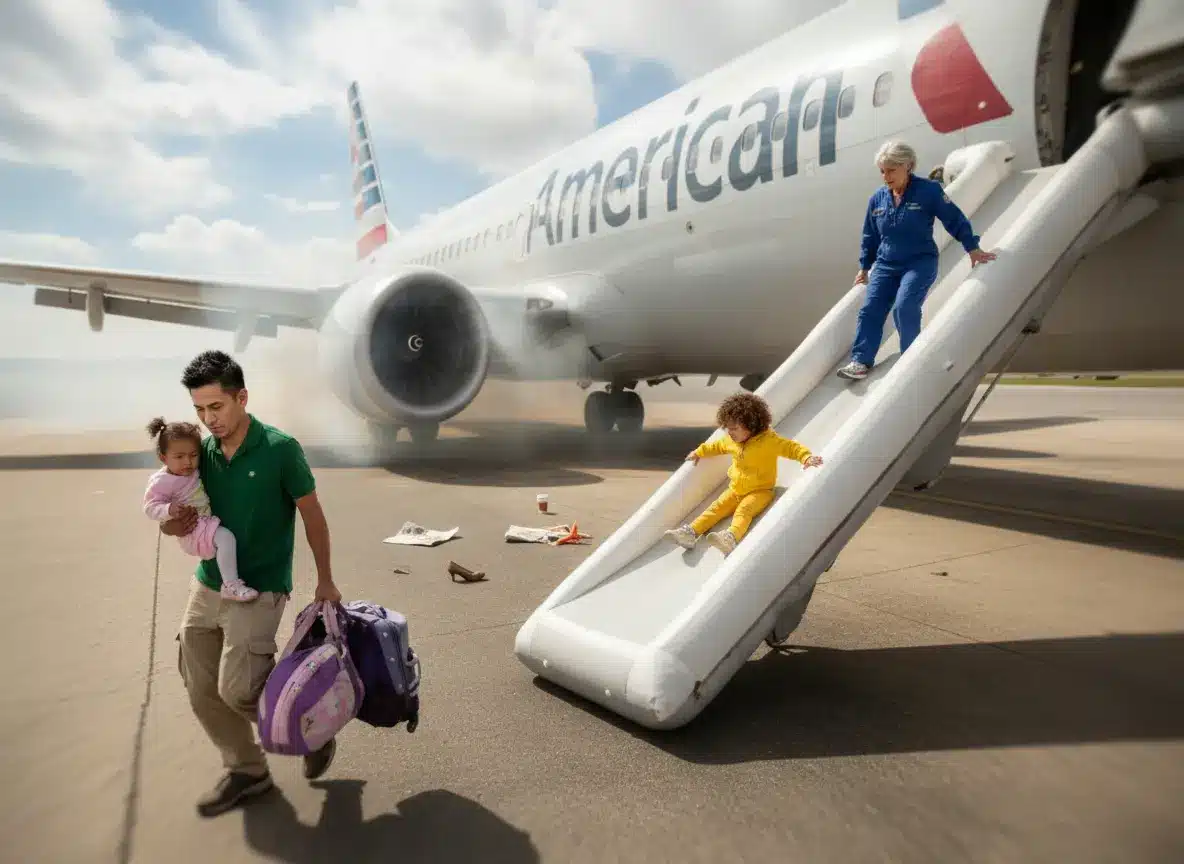
On September 16, 2025, the Federal Aviation Administration (FAA) issued a new Safety Alert for Operators (SAFO 25003) titled “Addressing Risk Associated with Passenger Non-Compliance and Retention of Carry-On Baggage and Personal Items During Emergency Evacuations.” The alert is more than just red tape—it’s a response to real problems. The FAA notes a pattern: passengers, even when instructed otherwise, regularly try to retrieve their personal belongings during evacuations. This not only delays the process but has also led to damaged emergency slides and, in the worst cases, has put lives at risk.
The Real Risks When You Reach for Your Bag
A follow-up FAA press release on September 19 emphasized the need for airlines to toughen up their procedures: stricter crew training, clearer safety announcements, and more forceful in-flight instructions, especially during evacuations. The agency is blunt: ignoring the leave-your-bags rule sharply increases the chance of the following:
Anglo-Saxon burial reveals “unprecedented” secrets: experts stunned by 1,400-year-old grave mysteries
What Your Instinctive Tree Choice Reveals About Your Personality—Experts Explain
- Blocked aisles and exits
- More frequent falls and accidents during escape
- Evacuation delays that can surpass the actual survival time available
- All of which lead to higher rates of injuries and—tragically—fatalities
It’s worth stressing that, while this new alert is not binding regulation, Safety Alerts for Operators (SAFOs) carry real weight among FAA inspectors and investigators, effectively pressuring airlines to act vigorously.
What Airlines (And Airports) Are Being Asked to Do
In the coming weeks, carriers are expected to adapt on several fronts. The FAA has highlighted these changes:
- Revise safety demonstrations and in-flight instruction cards
- Standardize and clarify recorded and live crew announcements
- Include scenarios in crew training where passengers grab their bags during simulations
- Ensure exit-row briefings are always effective and delivered every time
The FAA goes further, encouraging airports to step up as well: more signage, educational videos, clear graphics, and simple slogans—like “For everyone’s safety, leave your bags!”—should meet passengers long before they board.
From Global Disasters to Everyday Flights: Why This Issue Won’t Go Away
This isn’t a trivial warning. Investigations into recent emergency evacuations show the issue is widespread and deadly. The 2019 crash of a Sukhoi Superjet at Moscow Sheremetyevo Airport, which claimed 41 lives, saw passengers photographed escaping with suitcases in hand—a scene that reignited debates about safety instructions’ effectiveness. Similar incidents have been recorded in the United States, Europe, and Asia, proving the problem is not unique to any one country.
When there’s a real emergency, every tick of the clock matters. International rules (from ICAO) require that a plane can be evacuated in 90 seconds with only half the exits available. In practice, panic, chaos, and that seemingly irresistible urge to grab a bag mean even this short window is often missed. And—let’s be honest—few aviation problems can be fixed with a simple “just do this!”
Just imagine a lithium battery catching fire inside an overhead bin you can’t open because the seatbelt sign is on. Not exactly a stress-free scenario!
Some airlines (like Air France) are diligent, repeating the leave-your-bags rule before every takeoff and landing, but others slip. One can’t help but wonder: should taking your bag in an emergency count as reckless endangerment?
There are calls to increase deterrents—like in France, where ignoring safety rules can spell prison time and a hefty €15,000 fine (about $16,500). But some readers suggest simpler, more psychological incentives:
Instead of plastering safety messages everywhere—most people know the rule—maybe airlines should promise to reimburse all belongings lost in an evacuation. People who grab their bags aren’t ignorant; they just don’t trust the airline will help if things go wrong.
Or teach passengers to have a small emergency pouch—for essentials like a laptop, medication, phone, and documents—strapped to the front, leaving hands free and the aisles clear. Most cabin suitcases aren’t filled with irreplaceable items anyway, right?
And if all else fails, why not strictly enforce those fines and lifetime flight bans for repeat offenders? Maybe that peace of mind (and the threat of losing travel privileges) would make everyone a little calmer.
Bottom line: next time you fly, remember that leaving your bag behind in an emergency isn’t just polite—it might save someone’s life, maybe even your own.