
Show summary Hide summary
The Screen Era: One Panel to Rule Them All
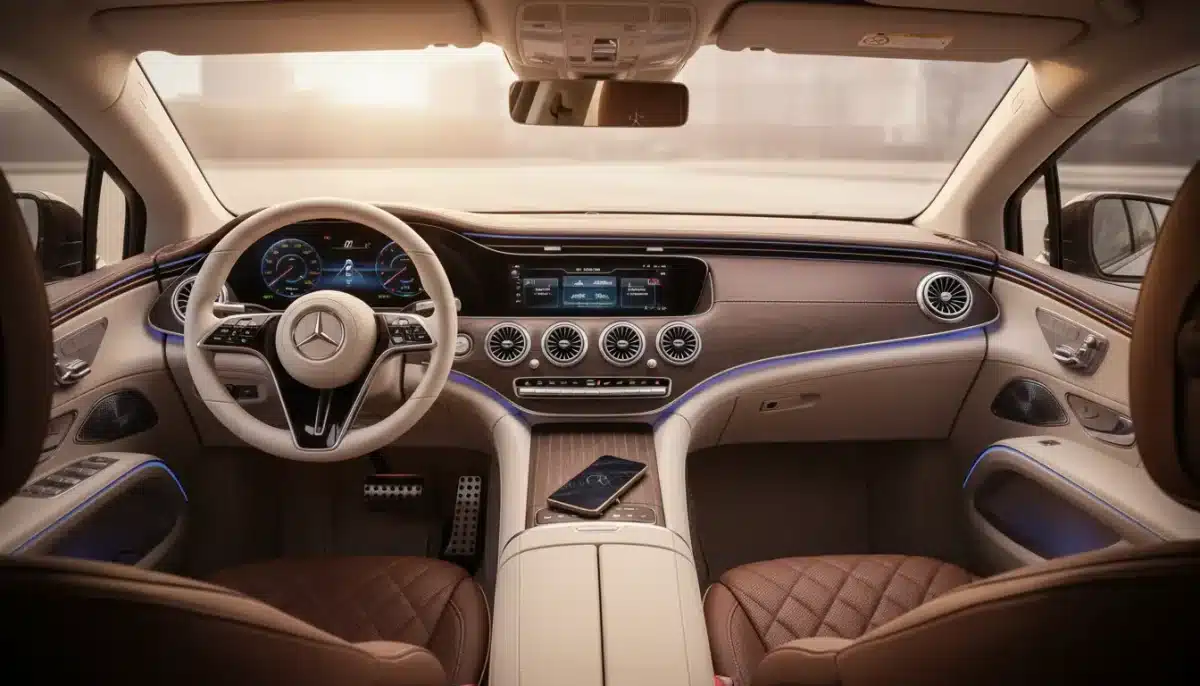
When Mercedes unveiled its MBUX Hyperscreen – a vast 1.41-meter (that’s about 4 feet 7 inches for the metrically challenged) display stretching across the entire dashboard – the company’s ambition was crystal clear: centralize virtually every function through a touch interface. Climate control? Check. Navigation? Of course. Need to adjust the radio while elbows-deep in drive-thru fries? Into the digital menus you go. Like many automakers, Mercedes chased this all-digital ideal, leaving traditional buttons to gather dust – or retiring them altogether.
Physical Buttons Strike Back
But, plot twist: with the arrival of the new GLC and CLA Shooting Brake, Mercedes is changing course. Steering wheels have been redesigned, now featuring old-school rotary dials, rollers, and, yes, genuine physical buttons. According to Magnus Östberg, Mercedes’ Chief Software Officer, the shift is rooted in real-world data:
Anglo-Saxon burial reveals “unprecedented” secrets: experts stunned by 1,400-year-old grave mysteries
What Your Instinctive Tree Choice Reveals About Your Personality—Experts Explain
“Buttons are better.”
He emphasizes that combining touch surfaces and physical controls is the most effective approach for both safety and ergonomics. Future Mercedes SUVs are set to feature even more physical controls, taking advantage of roomy interiors and responding to customer preferences. While some markets – like Europe – favor buttons, Mercedes notes that in Asia, customers show a stronger preference for large screens and voice control. In short: the button may be making a comeback, but the touchscreen isn’t headed for extinction just yet.
Industry Trends and Safety First
Mercedes isn’t alone in this rethink. Others, like Volkswagen, are also rolling back their all-touch obsessions. In Munich, VW revealed a new design language highlighting true physical controls, ditching the capacitive buttons that previously drew criticism for being, let’s be polite, “not so practical.”
- Safety organizations are chiming in, too. Euro NCAP, the major European safety body, has announced that top five-star crash ratings will now require physical controls for basic functions like turn signals and ventilation. So, corporate pride aside, safety arguments are seriously influencing these design choices.
But it’s not one-way traffic. Over in Japan, Mazda – long a champion of compact screens and tactile buttons – is heading in the opposite direction. With the upcoming CX-5 2025, Mazda is moving essential functions to a central, wide touchscreen, running counter to Mercedes’ return to physicality.
Coexistence or Competition?
Despite the glorious resurgence of the humble button, screens aren’t going anywhere fast. Gordon Wagener, Mercedes’ head of design, is quick to highlight the ongoing importance of sophisticated software, even dropping Apple as a benchmark for user experience. Mercedes plans to keep its whopping Hyperscreens up front and center, but now with the handy addition of physical buttons for the most frequently used features. So, expect a blend: tactile control for everyday driving, and touch-sensitive wizardry when you want to show off to your friends.