Show summary Hide summary
Appearances Can Be Deceiving
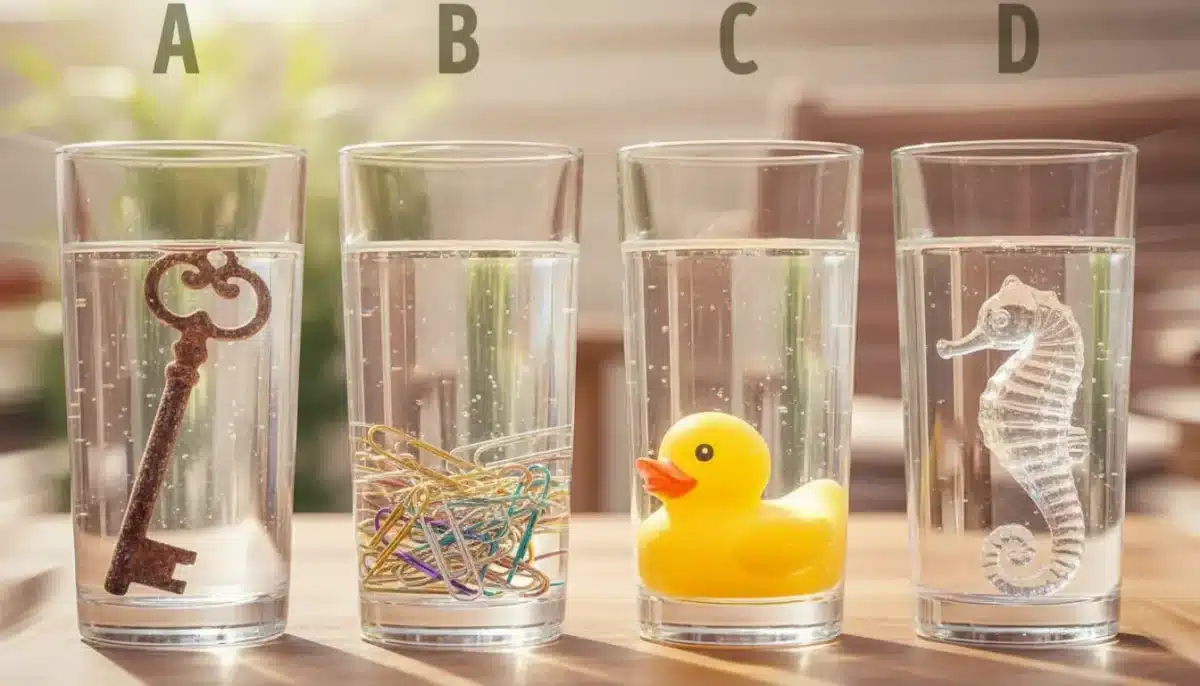
We’ve all had those slightly awkward moments when we pour too much water into a glass—or not quite enough. This puzzle is inspired by those everyday situations. In the illustration, each glass looks like it contains a certain amount of water, but look a little closer: some glasses have objects dunked in them—a spoon here, an ice cube there, a lemon wedge elsewhere. In other words, what looks full isn’t always so.
Look Past the Distractions
The goal here is to ignore the visual distractions and analyze, as objectively as possible, just how much water is actually in each glass. It’s exactly the kind of thinking that can be tricky when the clock is ticking—or after a late night.
Anglo-Saxon burial reveals “unprecedented” secrets: experts stunned by 1,400-year-old grave mysteries
What Your Instinctive Tree Choice Reveals About Your Personality—Experts Explain
Did you figure it out yet? If your eyes were fooled by appearances, don’t worry, that’s a totally normal reaction. In reality, it’s the glass with the fewest submerged objects that actually holds the most water. The other objects displace the liquid, creating the illusion of a bigger volume. It’s a simple application of Archimedes’ principle, which your gut might guess even if you never studied the name in physics class.
Tips for Sharper Visual Thinking
Here’s a little advice: the next time you’re up against a challenge like this, don’t trust appearances. Careful observation is your best friend. And if you managed to get the right answer in under seven seconds, you can probably brag about your keen visual reasoning skills.
These types of visual games are more than just a bit of fun: they exercise cognitive functions like perception, quick decision-making, and working memory. In other words, they give your brain a solid workout. Studies from the Institut Pasteur and Inserm (major French biomedical research institutes) have even shown that regular exercises like these help maintain mental agility and slow cognitive decline, especially in older adults.
On top of that, they’re a great excuse for shared moments with family or friends over a quick riddle. That’s actually how I managed to stump my 12-year-old nephew last weekend—and believe me, he still hasn’t gotten over it!
Why This Test Matters
This test is a perfect example of critical thinking applied to a simple situation. You look, you evaluate, you decide. No fancy math or obscure theorems required—just a bit of calm and logic.
If you’re a fan of these kinds of challenges, you’ll find plenty of other brain-training exercises online. If you’re the competitive type, grab a timer, go head-to-head with your friends or family, and see who really has the sharpest eye.
So, did you spot the elusive glass? If not, you’ve at least got a solid excuse to make yourself another cup of coffee and try again. And this time, don’t be fooled by the spoon.
Analytical mind and outstanding strategist, Thomas is the architect behind the core convictions at Minoritaires.com. A passionate follower of financial markets, fundamental analysis, and long-term strategies, he brings a clear-sighted, structured perspective to every opinion. Behind his calm exterior lies a formidable rigor and an insatiable curiosity, always at the service of the independent investor. With Thomas, reason always takes precedence over emotion, to better anticipate and understand the bigger picture.