Show summary Hide summary
The Sonic Universe of Pigs
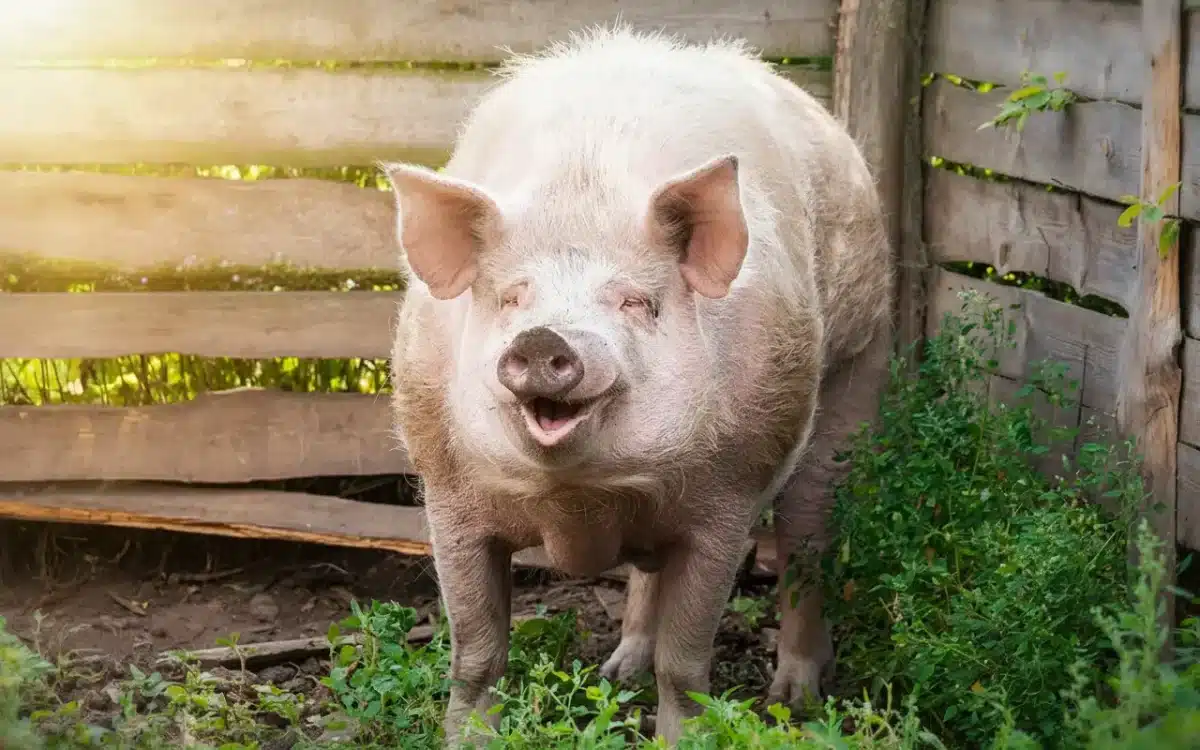
Pigs, much like cows that ‘moo’ and horses that ‘neigh’, have their own signature vocalizations. People say this farm mammal ‘grunts’ and ‘squeals.’ The sounds are guttural, deep, and sometimes even rough. But that’s only part of the story. The domestic pig isn’t limited to just two kinds of noises—in fact, it produces an entire symphony of vocalizations, with tones ranging from piercingly high to low, rumbling growls.
Researchers at France’s INRAE (National Research Institute for Agriculture, Food and Environment) have identified over twenty different pig vocalizations, depending on the emotion or situation: fear, pain, contentment, food searching, social play, and more. And when people say that pigs are loud, they’re not exaggerating at all. Their vocalizations have been measured at 115 decibels—the equivalent of a rock concert. That’s an impressive level of intensity for a farm animal!
Anglo-Saxon burial reveals “unprecedented” secrets: experts stunned by 1,400-year-old grave mysteries
What Your Instinctive Tree Choice Reveals About Your Personality—Experts Explain
Pigs Talk—But Not Like We Think
When we humans try to imitate a pig, we usually do something with the back of our throat, a bit like a nasal snort. But that’s not what happens inside the animal’s body at all. Pigs have a larynx and vocal cords not all that different from other mammals. The real secret behind their unique, sometimes deafening cries? The particular shape of their pharynx and the brute strength of their chest cavity. In other words, while a child’s “oink oink” never fails to entertain, the real pig’s voice is far richer and more complex than most people imagine.
When a pig is feeling negative emotions—like fear or pain—it emits long sounds that are more like screeches or high-pitched squeals. When things are fine, or in a normal social situation, you’ll hear shorter vocalizations: grunts or little barks. These sounds are often paired with body language:
- ears pointing forward,
- a tail beating or swinging.
Grunting isn’t always a bad sign, either: pigs grunt when searching for food, interacting socially, or just keeping in touch with the group. These subtleties prove that pig calls aren’t just senseless noise—they make up a genuine sound-based grammar.
Not Just Noise: An Animal of Surprising Intelligence
The pig’s sound language reveals a surprising range of behaviors and emotions. It would be limiting to see a pig as nothing more than a noisy belly or a curious snout. Behind all those grunts lies an animal of remarkable intelligence.
Several scientific studies have shown that domestic pigs can learn complicated tasks, remember them, and even solve problems. They can manipulate objects with their snout, recognize themselves in a mirror, distinguish symbols, or learn to use a joystick to move a cursor on a screen. These smarts put pigs right alongside dogs and even dolphins when it comes to clever mammals.
In 2022, scientists in the SOUNDWEL project developed an algorithm designed to analyze pig vocalizations. This tool uses 7,414 recordings from 411 pigs and creates a precise map of their sounds according to emotion and stage of life, from birth to slaughter.
The idea is simple, but in its own way, revolutionary: by analyzing a pig’s voice, you can read its emotions and general health. So, understanding a pig’s calls isn’t just a curiosity—it’s a practical issue for modern animal farming.
From Farm Management to Medical Science
On some experimental farms, sound sensors continually record the noises pigs make. By analyzing these, it’s possible to detect early signs of stress, respiratory illnesses, or feeding problems. What we often dismiss as just a grunt turns out to be a valuable indicator of animal well-being. This approach points to a more respectful relationship with livestock, where listening to their vocal signals becomes a tool for management and care.
What’s more, the similarity between a pig’s vocal apparatus and our own makes it a relevant subject for research. By studying pig breathing and the mechanics of their vocal cords, scientists can hone their understanding of human respiratory and vocal disorders. Some experiments even use pig tissues to test new treatments for vocal issues or for larynx transplants. Those loud piggy noises? They’re now keys to improving human health, too.
Beyond their voices, pigs are also models for cognitive science. Their ability to remember routes, distinguish symbols, recognize individuals, or cooperate to reach a goal has definitely caught the attention of researchers. In some studies, pigs have shown they can anticipate situations or even demonstrate a form of empathy by reacting to the stress of one of their peers. This intelligence, long underestimated, is changing the way people view the humble pig and raising important questions about the living conditions we give them.
If you mainly think of pigs as farm animals, you might be surprised to learn that some people do keep them as household pets. Certain miniature breeds, like the Vietnamese pot-bellied pig or the Göttingen minipig, have now found their way into homes. Their intelligence and social nature make them endearing companions, capable of recognizing their names, learning simple tricks, and forming a genuine bond with their owners.
But these adoptions shouldn’t be idealized: a pig, even a miniature one, is a demanding animal. It needs space, mental stimulation, and a suitable diet. Still, they serve as a wonderful reminder of one essential truth: behind those sometimes-thunderous grunts lies a sensitive, communicative, and inquisitive being.