
Show summary Hide summary
Talking to Yourself: What Modern Psychology Reveals
Modern psychology tells us that talking to yourself isn’t just normal—it’s actually beneficial. It may be a marker of strong mental clarity, an ability to solve problems on your own, or even a knack for managing your emotions better.
People who have a well-developed inner dialogue often share powerful traits such as creativity and self-discipline. So next time you catch yourself muttering your thoughts, just remember: it’s not an awkward moment of solitude. It might be a sign of hidden inner strengths.
Anglo-Saxon burial reveals “unprecedented” secrets: experts stunned by 1,400-year-old grave mysteries
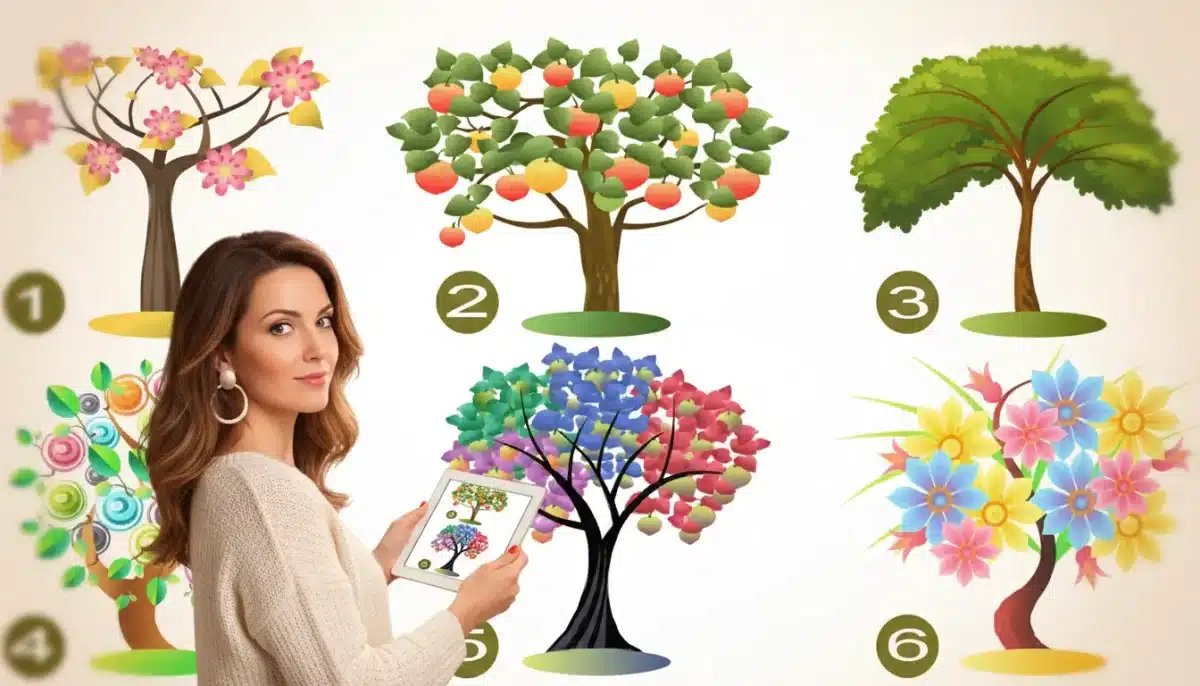
What Your Instinctive Tree Choice Reveals About Your Personality—Experts Explain
Self-Talk: A Secret Weapon for Confidence and Creativity
Ever found yourself giving a pep talk in the mirror before a big meeting or important presentation? If so, that’s not just a quirky habit.
“By talking to yourself, you’re self-coaching. You’re reinforcing your skills and your confidence, reminding yourself that you’re capable and ready for the challenge.”
And it’s not just for major occasions. Even on regular days, inner dialogue can become a powerful tool for boosting self-esteem and consolidating your belief in your abilities.
In fact, a 2009 study examined the effects of motivational self-talk on confidence, anxiety, and performance in young athletes, suggesting that self-talk can improve self-confidence.
Next time you’re gearing up for something important, don’t hesitate to give yourself a little encouraging speech. Your words have power—especially when they’re aimed at you.
I often start by explaining what I mean as if I were talking to someone else. And sure enough, ideas start to flow and the right words come, making it easier to work with better energy.
Internal dialogue then becomes a real tool for mental clarity and for generating new ideas—almost as if you always have a creative partner on standby. A 2023 study explored the relationship between frequent verbal self-talk, emotional intelligence, and creativity, suggesting that such dialogue may be linked to greater creativity.
If you’re stuck on a creative project, try talking it over with yourself. You just might be surprised by the solutions and original ideas that emerge.
Self-Talk: Your Everyday Motivator and Focus Tool
If you’re a regular at the gym, you may have noticed this already: when those last reps start to feel impossible, a little inner talk can help you pull through.
“Come on, you’ve got this!”
It sounds simple, but it works. For instance, a 2010 study identified interrogative self-talk as a crucial motivator for goal-oriented behavior, suggesting it can boost intrinsic motivation.
Hearing motivating words, even when they come from you, reinforces willpower and helps overcome challenges. Athletes use this technique to improve performance, but it also works for any situation where you need a boost.
A 1993 study delved into the relationship between self-talk and self-awareness, indicating that inner dialogue can be a key mediator in gaining information about yourself.
Boosting Self-Awareness and Solving Problems
I remember the first time I realized I was talking to myself. I was at my desk at home, facing a tough project. Frustrated, I caught myself asking:
“What am I doing wrong?”
That’s when it clicked: I was having a dialogue with myself. And guess what? That little exchange gave me perspective and helped me analyze the situation with more clarity.
According to psychology, talking to yourself is a marker of self-awareness—one of the pillars of emotional intelligence. By voicing my thoughts, I became aware of my mental processes and how they affected my actions.
Next time you notice yourself monologuing, don’t brush it aside. Listen to what you’re telling yourself and think about what it reveals about your own self-knowledge.
Going back to that tough project: after a bit of reflection, I started talking the problem out loud. To my surprise, I found a solution much more quickly than if I’d just thought about it in silence.
Speaking your thoughts out loud acts as a cognitive catalyst: it lets you sort, organize, and refine your ideas, almost like having a constructive exchange with yourself. In fact, a 2017 study suggests that inner dialogue can help improve focus and attentional performance while countering the negative effects of stress.
Psychology suggests that people who engage in self-talk often develop better problem-solving skills, as they can externalize their thoughts and examine them from different perspectives.
A 2011 study by psychologists Gary Lupyan and Daniel Swingley showed that talking to yourself can genuinely enhance focus and efficiency in everyday tasks.
In their experiment, participants had to find items in a supermarket. Those who repeated the name of the item out loud located it faster than those who didn’t. So, this inner dialogue acts as a guide, helping you stay focused on your goal. If you catch yourself murmuring instructions or reminders, it’s not weird—it’s just a natural strategy to keep your mind on track and get things done more efficiently.
Emotional Regulation and Hidden Strengths
When I feel upset or stressed, talking to myself helps me handle my emotions better. It allows me to step back, analyze what I’m feeling more clearly, and find calmer, more rational solutions.
Psychology confirms this. Self-talk can help with emotional regulation by offering a different perspective on a stressful situation. It’s almost like having an always-available therapist, ready to help you clarify your thoughts and emotions.
These seven traits—self-awareness, problem-solving ability, improved focus, self-confidence, boosted creativity, and higher motivation—often show up among people who maintain a regular inner dialogue.
So the next time you catch yourself having a conversation with yourself, remember: it’s neither ridiculous nor strange. On the contrary, it’s a beneficial habit that reveals surprising inner strengths.
I always knew I’d be a writer one day because it’s one of my passions. I started my working life with an apprenticeship in hospitality and earned my professional qualification as a waitress. I still take the occasional shift, but what truly excites me are human relationships and psychology. I also love drawing and painting. I’m passionate about advocating for women’s rights around the world and about the place women should have in society.