
Show summary Hide summary
The Incredible Slide of the Houxi Station
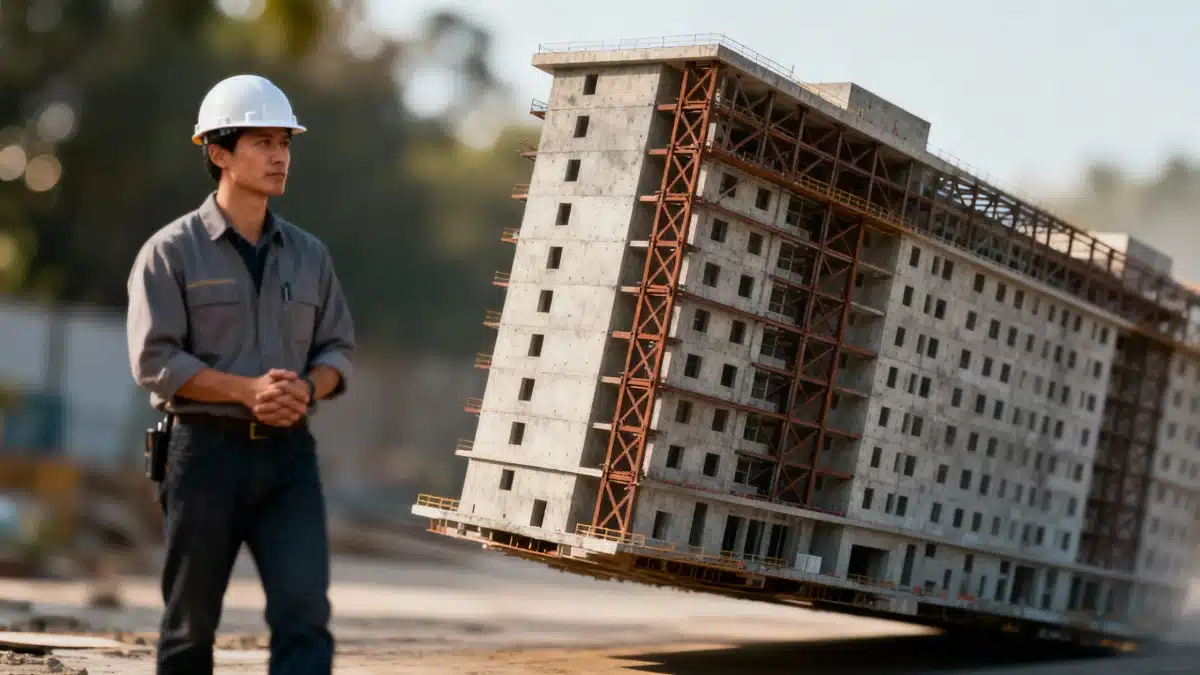
This is the extraordinary story of an engineering project that set a world record in the bustling metropolis of Xiamen. Local authorities in Fujian Province were faced with a challenge: to make space for a new high-speed rail line. Right in the path of the future tracks stood the brand new Houxi Long Distance Bus Station—utterly massive, fresh out of the box, and way too hefty for the usual relocation tricks.
How hefty are we talking? The station tipped the scales at 30,000 metric tons, which is roughly the weight of an aircraft carrier or, if it tickles your fancy, the equivalent of lining up 170 Boeing 737s. Rather than demolishing it, engineers made a bold choice: not a brick would be lost. Instead, the plan was to rotate the building on its axis and then have it glide almost 1,000 feet (approximately 300 meters), parking it at a new site—fully intact.
Anglo-Saxon burial reveals “unprecedented” secrets: experts stunned by 1,400-year-old grave mysteries
What Your Instinctive Tree Choice Reveals About Your Personality—Experts Explain
Engineering a Modern Marvel
To pull off this feat, the team pulled together a moving rail system and deployed 532 hydraulic jacks spread out under the building. The whole setup was run by computer, inching the station forward in tiny, perfectly synchronized steps. Half the jacks would lift, while the rest gently nudged the building forward. Then the roles would swap, step by careful step.
This strange ballet lasted for 40 days, averaging about 65 feet (20 meters) each day, and clocked in a new world record, officially recognized by Guinness World Records. To the naked eye, it was hardly spectacular—slowly creeping along. But with time-lapse footage, the station seemed to move like a living robot: steady, rhythmic, almost organic in its progress.
Technically, the process is known as “assisted structured translation.” Online, it went viral fast. A time-lapse video posted on Weibo (China’s equivalent to Twitter) racked up millions of views, showing the building gliding through the city on what looked like giant skates—not a puff of dust, not a whisper, not a hint of chaos.
Why Not Just Rebuild?
Very sensibly asked. The Houxi Bus Station had only opened in 2015 at a cost of around €36 million (about $40 million USD). Rebuilding it would have been even pricier—not to mention much more time-consuming, and let’s not forget the environmental toll of demolition and reconstruction.
The move itself cost about €7 million (roughly $7.75 million USD). True, that doesn’t come cheap, but for a job of such precision, one that preserved all existing infrastructure and saved an entire neighborhood from being gridlocked for months, it was, all things considered, a pretty economical tour de force.
A Lesson for the World
Today, this one-of-a-kind move is a subject of study in engineering schools around the globe. It demonstrates what’s possible when civil engineering meets boldness, technology, and imagination—proof that sometimes, you really can move mountains. Or at least incredibly heavy buildings.
“Very smart… this country is going to compete with the U.S., no matter what people say! Asian countries are pulling ahead, if only by sheer intelligence!!!”
“Back in the 1960s, the French company Sainrapt et Brice moved an 800-ton Egyptian temple 1.6 miles (2.6 km) during the construction of the Aswan Dam. That project can’t compare in terms of weight, but it was much more delicate given the distance and the fragility and historical value of the temple… and they used a similar technique: prestressed beams for support, rails and heavy hydraulic jacks.”
“True—and with the techniques of that era! But our journalists prefer to highlight the feats of other countries… Even for comparisons, they’d rather mention Boeing than Airbus. When you’re colonized in your way of thinking…”