
Show summary Hide summary
Should You Even Try Plugging a USB Stick into a Charger?
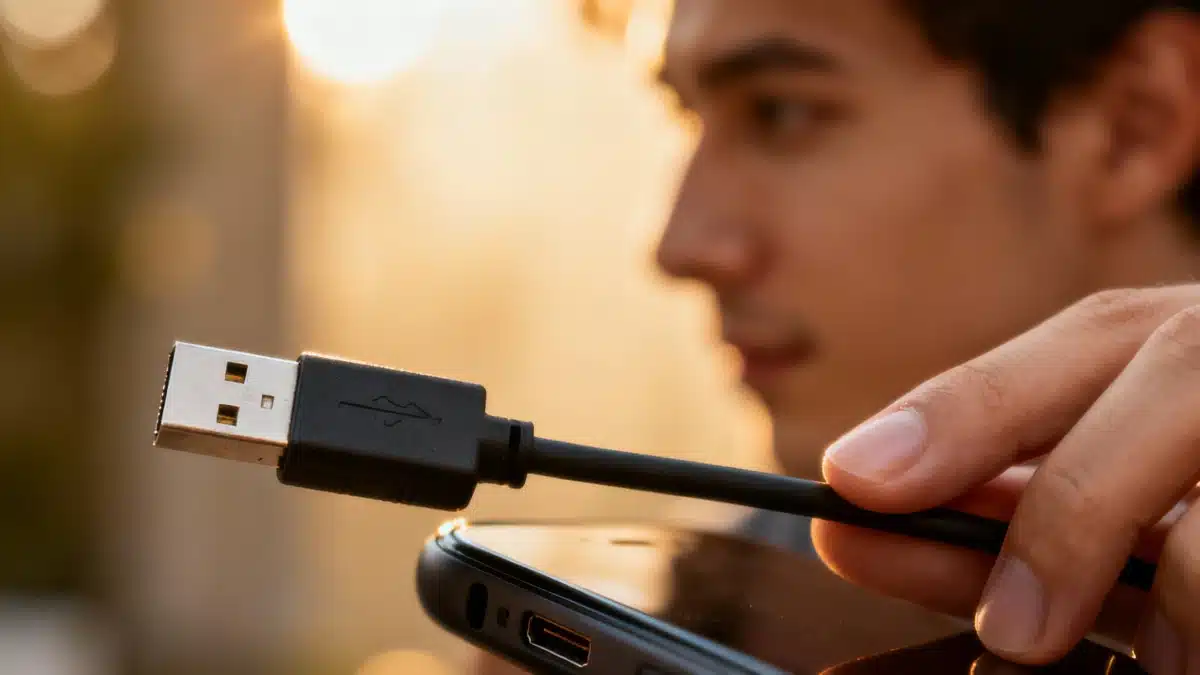
At first glance, it seems a bit like asking if peanut butter belongs in spaghetti—these two things just aren’t meant for one another. A charger’s job? Supply power to your devices. A USB stick’s job? Safely shuttle your digital files to and fro. If you’re imagining electrifying data transfers or a melting gadget, you’re not alone! But some scenarios—like a curious kid or a non-tech-savvy grandparent—aren’t completely out of the question.
Before going any further, I asked myself: can anything go terribly wrong here? Could I fry the stick, blow the charger, trip a breaker, or—worst-case scenario—cause a fire? With those rather alarming possibilities in mind, I took every precaution. (No need to turn my living room into a scene from a disaster movie.)
Anglo-Saxon burial reveals “unprecedented” secrets: experts stunned by 1,400-year-old grave mysteries
What Your Instinctive Tree Choice Reveals About Your Personality—Experts Explain
The Great Experiment: What Really Happened
For the test, I grabbed a classic old Samsung charger—the type that used to come packed in every phone box years ago, probably rated at 5 watts—and a trusty TDK USB stick loaded up with a few PDFs and a video file. I double-checked both devices to make sure they worked flawlessly beforehand.
I plugged the USB stick into the charger, then connected the charger to a regular wall socket. For peace of mind, I picked an outlet in an open hallway—well away from anything flammable, just in case things got a little too exciting.
- The USB stick didn’t heat up.
- The charger worked like nothing out of the ordinary was happening.
- No lights flickered and the home’s electrics suffered zero drama.
Once unplugged, I tested the stick in my computer. Every file was there, just as I’d left it. Even the charger went back to reliably powering up my smartwatch, as if nothing ever happened. No smoke, no sparks—frankly, not much excitement at all!
The Technical Reason: Why Nothing Explodes (or Happens At All)
This is where the geeky explanation steps in. When you connect a USB stick to a charger, it does indeed receive the 5 volts of power needed to start up. But that’s it. To actually transfer or process data, your USB stick needs a “host”—think computer, tablet, or smartphone—devices that know how to communicate using data signals. A basic phone charger is only built to deliver power and isn’t up to the job of talking to your USB stick.
Most phone chargers only activate the power pins on the USB connection; the data pins are left unused. That means your USB stick remains passive, simply sitting there waiting for information that never comes. No harm done—but also, nothing useful achieved!
“In short: yes, it’s safe. If you were to accidentally connect a USB stick to a charger, you wouldn’t cause any harm to either device or your electrical system. That said, it’s still not something you should make a habit of doing—it serves no purpose.”
Curiosity Satisfied: What to Remember
I’ll admit, the result was anticlimactic. But sometimes even a non-event can be an interesting experiment. I’m glad I finally have an answer to a question I didn’t know I had, and you can rest easy knowing your devices are designed to prevent dumb mistakes from turning into something worse. Turns out, USB sticks are a bit more intuitive than we give them credit for.
So, if you’re ever tempted—or if someone asks if it’s safe to plug a USB stick into their phone charger—here’s the verdict: Nothing bad will happen, but don’t expect sparks (or data) to fly either! Save your charger for your phone and your USB stick for your computer. That’s all, folks.
Want more helpful tips, in-depth reviews, or the latest news in gadgets, artificial intelligence, cybersecurity, or the wider tech universe? Stick around. Our team brings you honest analysis and practical guides to help you make sense of this ever-changing digital world.