Show summary Hide summary
- What happened on the stove: the viral clip that grabbed attention
- How so-called stainless steel cookware is actually constructed
- Why heat can force the layers apart: delamination in plain terms
- A welder’s step-by-step breakdown captured viewers’ imagination
- How electric stoves can make trouble more likely
- Everyday precautions to reduce the risk of cookware rupture
- Why this viral episode matters for consumers and cooks
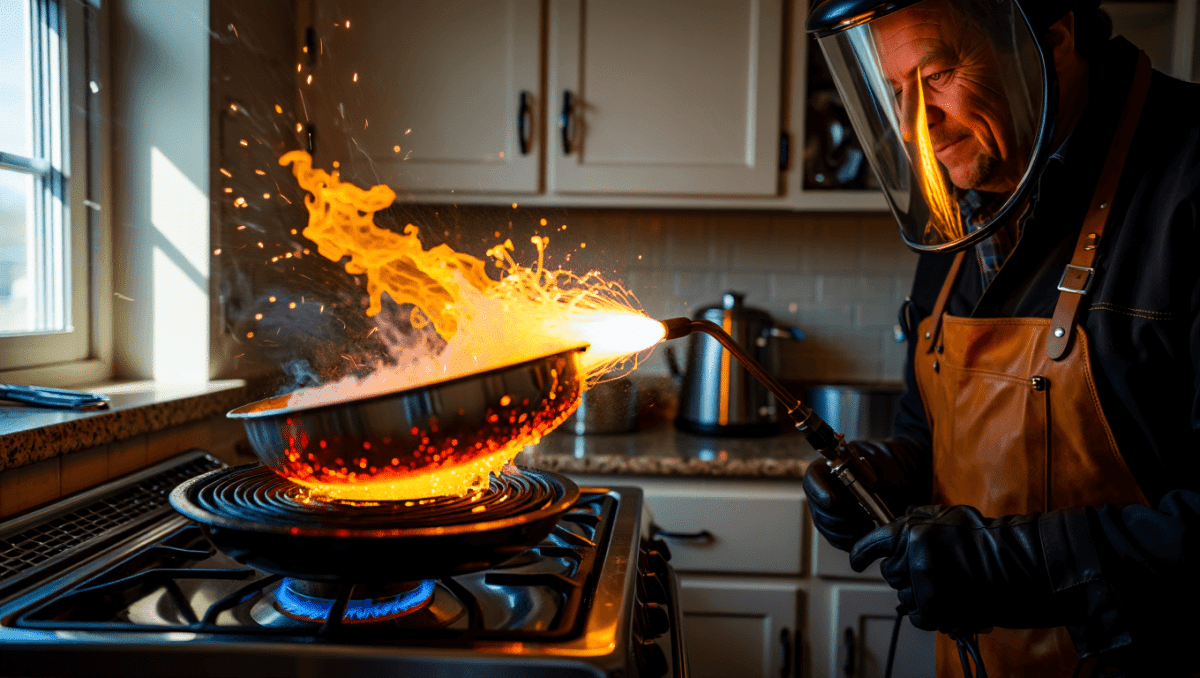
A routine cooking moment turned into a viral science lesson when a pan marketed as “stainless steel” ruptured on an electric cooktop, spewing molten metal and sparking a deep-dive explanation from a pro welder. The short clip ignited curiosity about how modern cookware is built and why extreme heat can make metal behave like lava.
What happened on the stove: the viral clip that grabbed attention
A TikTok user filmed a pan failing catastrophically while cooking. Molten metal flowed across the glass-top range.
Anglo-Saxon burial reveals “unprecedented” secrets: experts stunned by 1,400-year-old grave mysteries
What Your Instinctive Tree Choice Reveals About Your Personality—Experts Explain
That clip drew a long reply from Anne, a Pennsylvania welder who goes by @highergroundwelding. Her video unpacked the materials science behind the dramatic failure.
The explanation resonated. The response clip gathered hundreds of thousands of views and brought metallurgy into everyday conversation.
How so-called stainless steel cookware is actually constructed
Many consumer pans are not a single metal. Manufacturers bond a soft, conductive core to tougher outer shells.
- Aluminum core: thin, lightweight, and excellent at spreading heat.
- Stainless steel exterior: durable, corrosion-resistant, and food-safe.
- These layers are often bonded at microscopic scales to combine the best traits of both metals.
Think of the pan like a candy with a gooey center and a firm shell. The pairing improves performance, but it also introduces potential failure modes not present in single-metal cookware.
Why heat can force the layers apart: delamination in plain terms
When a layered pan is exposed to extreme temperatures, the aluminum core can reach its melting range while the stainless shell remains solid.
Delamination occurs when the bond between layers breaks down. Melted aluminum can pool and migrate to weak spots in the outer steel.
On an electric range, heat can focus in small areas. That concentration, combined with a compromised surface, raises the risk of a localized melt-through.
As liquid aluminum finds gaps, pressure can build between layers. At a critical moment, the trapped material forces its way out, creating a sudden rupture.
Common warning signs that a pan may be in danger
- Visible discoloration or blistering of the metal surface.
- Warping or uneven contact with the burner.
- A sudden, very bright red glow on the cooking surface.
- Unusual noises, popping, or a bulging seam along the base.
A welder’s step-by-step breakdown captured viewers’ imagination
In a roughly 12-minute reply, Anne walked viewers through the sequence she believes led to the failure. She described overheating, layer separation, and eventual pressurization.
Her talk mixed practical welding knowledge with clear visuals. Viewers praised the methodical approach and the way she made complex ideas accessible.
The exchange highlighted how niche expertise can illuminate everyday risks, especially when materials are engineered rather than homogeneous.
How electric stoves can make trouble more likely
Glass-top electric ranges can create hotspots when a coil or element transfers intense heat to a small area.
Factors that raise failure risk:
- High heat settings maintained for long periods.
- Poor contact between pan and cooktop, causing uneven heating.
- Scratches or damage to the pan base that expose seams or weaken bonds.
Everyday precautions to reduce the risk of cookware rupture
- Use moderate heat: Avoid running layered pans on maximum settings for long spans.
- Match pan to burner size: Ensure even contact with the heat source.
- Inspect regularly: Look for warping, separation lines, or unusual discoloration.
- Avoid dry-heating: Do not heat an empty pan to very high temperatures.
- Replace damaged pans: Compromised bonding or deep dents warrant retirement.
Why this viral episode matters for consumers and cooks
The incident underscores a simple point: modern cookware blends materials to balance performance and cost. That engineering works well most of the time.
Yet when cookware is pushed beyond its design limits, the behavior of bonded metals can surprise users. Awareness and sensible use cut risk.