Show summary Hide summary
- Why one tiny image has created a storm
- How the online conversation split
- What appeared in the collage and why it matters
- Grimes’ place in the culture wars and artistic history
- Public reactions: sample perspectives and themes
- Grimes speaks about AI’s role on the record
- Industry and ethical implications being debated
- What to watch next as the album rollout continues
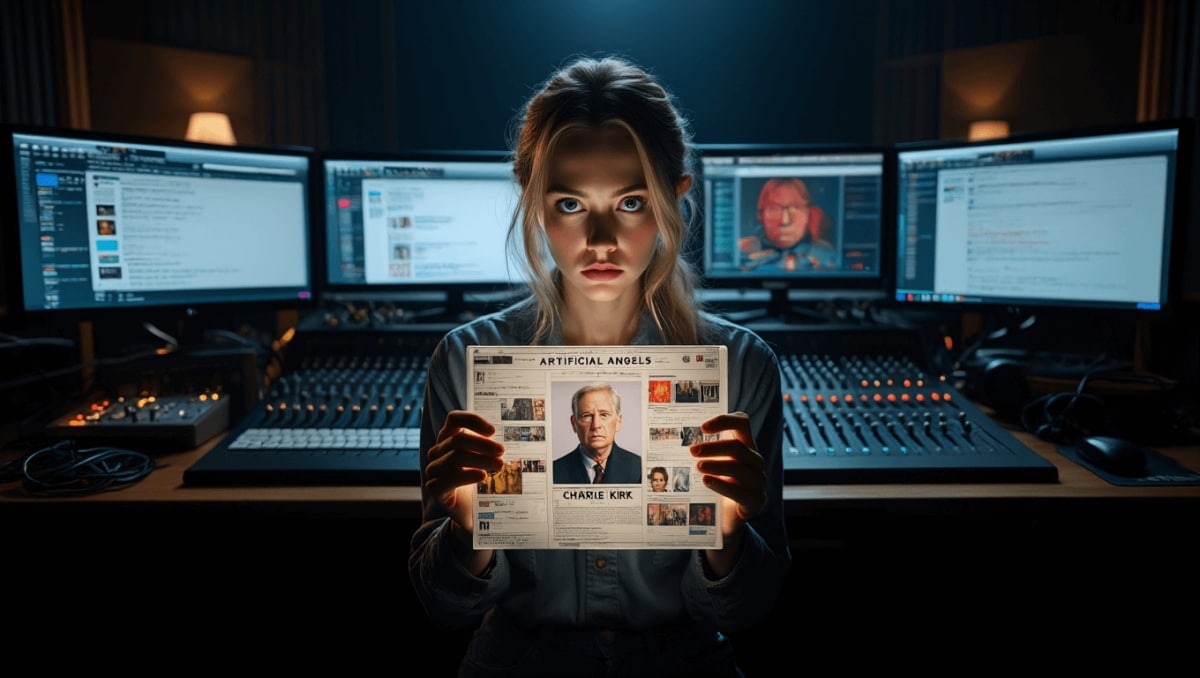
When Grimes published the cover for her forthcoming album, Artificial Angels, she set off a fierce online debate. The collage-style image mixed internet detritus with a small photo of the late conservative activist Charlie Kirk, and that choice quickly dominated reactions across social platforms.
Why one tiny image has created a storm
The album art is a layered, scrapbook-like montage. Screenshots, clipped text, and fragmented memes sit side by side. Tucked into the top right was a small portrait tied to a so-called “memorial coin.”
Anglo-Saxon burial reveals “unprecedented” secrets: experts stunned by 1,400-year-old grave mysteries
What Your Instinctive Tree Choice Reveals About Your Personality—Experts Explain
- The coin drew attention because traders reportedly profited millions after minting a meme cryptocurrency linked to his name.
- Other elements included a reference to a Ukrainian refugee who was murdered in the U.S., a fact that many found jarring next to the Kirk image.
- Short, provocative phrases appear across the collage, suggesting self-aware provocation rather than simple tribute.
Critics said the mix felt tone-deaf. Supporters argued it could be artfully critical. Either way, the tiny image became the focal point for larger arguments about taste and intent.
How the online conversation split
Responses arrived within hours. Reactions clustered into distinct camps.
- Outrage: Many users called the inclusion disrespectful and insensitive to grieving communities.
- Defense: Some fans read the collage as social commentary and urged viewers to look beyond shock value.
- Speculation: Others suspected deliberate provocation, or an attempt to court controversy to boost attention.
Comments ranged from blunt condemnation to nuanced defenses. Several critics labeled the artwork attention-seeking, while a subset insisted the imagery was intended to spark discussion.
What appeared in the collage and why it matters
The cover combines pop culture clutter with darker references. That contrast is part of what unsettled people.
- A political figure’s image, attached to a trending crypto tale.
- A mention of a murdered refugee, which raised moral questions about juxtaposition.
- Snippets of text that read like preemptive provocation or ironic self-critique.
The result is a visual that forces interpretation. For some, that is art. For others, it is careless use of real tragedies and current events.
Grimes’ place in the culture wars and artistic history
Grimes has long mixed futurism, internet aesthetics, and controversy. Her body of work often invites debate.
Artificial Angels is billed as her sixth studio album since her debut in 2010. Over the years, her public profile rose further because of a highly publicized relationship with Elon Musk and the three children they share.
That relationship has complicated public readings of her art. Fans and critics alike probe whether her creative choices are independent of her private associations.
Public reactions: sample perspectives and themes
Across platforms, commentators focused on tone and intent. Common themes emerged.
- Taste and timing: Many said the art lacked empathy given recent events tied to the images.
- Art vs. provocation: Some viewers defended Grimes as a provocateur using collage to critique media.
- Commercial calculation: A faction argued the controversy could be engineered to drive attention to the release.
Fans who supported her urged deeper reading of the collage. Opponents said the visuals crossed a line.
Grimes speaks about AI’s role on the record
Amid the cover drama, Grimes clarified how she used artificial intelligence in the music itself.
She explained that only a small AI-generated voice appears at the beginning and end of a track. She also expressed skepticism about mainstream AI music tools.
- She said many apps remove the unique artifacts that make AI interesting.
- Grimes called AI useful for experimental sound design and technical fixes, like background noise removal.
- She warned that much current AI output feels sloppy rather than innovative.
Her stance is nuanced: she accepts AI as a creative tool in limited, deliberate ways, not as a replacement for human-led composition.
Industry and ethical implications being debated
The episode touches on several larger debates in music and media.
- Where does artistic freedom end and ethical responsibility begin?
- How should artists handle images of real people and recent tragedies?
- What standards should exist for using AI in creative work?
Labels, platforms, and listeners are watching closely. The conversation around the cover has already shaped expectations for the album’s release.
What to watch next as the album rollout continues
Reactions to the art may affect press coverage and streaming chatter. Upcoming moves to monitor:
- Any formal statement or revision from Grimes or her team about the artwork.
- Press previews, singles, or visuals that may clarify artistic intent.
- Responses from advocacy groups or people linked to items depicted in the collage.
As the release date approaches, attention will likely stay fixed on both the music and the message embedded in its imagery.