
Show summary Hide summary
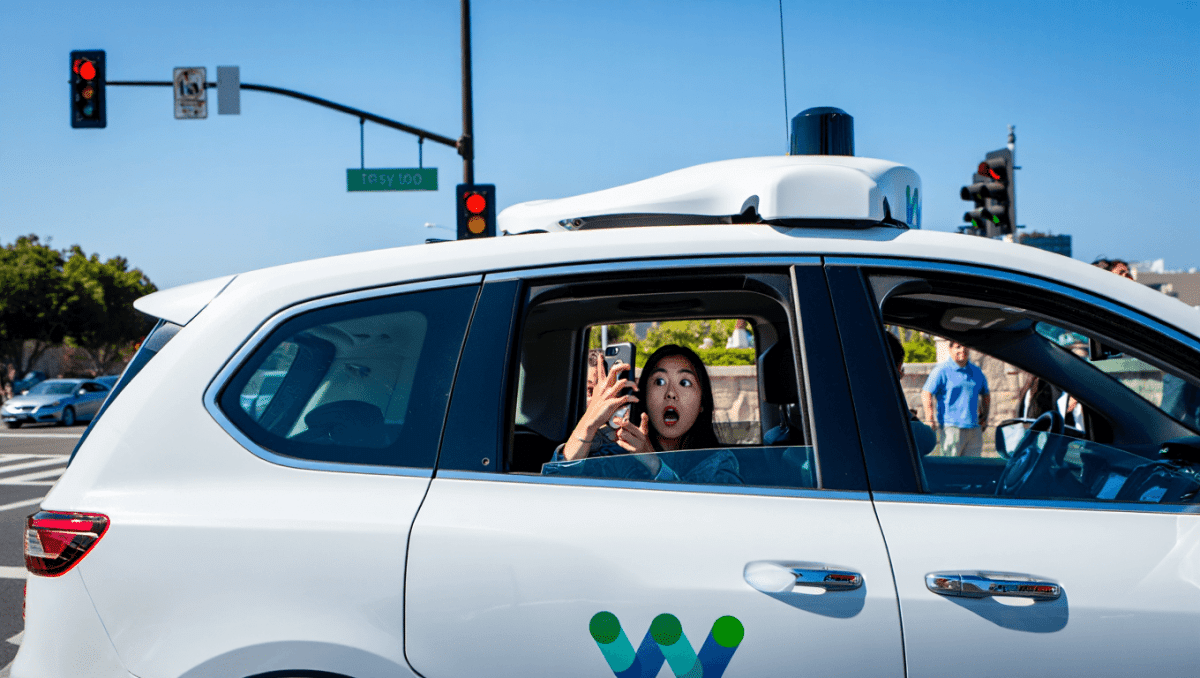
A viral TikTok shows a Waymo autonomous taxi crossing an intersection after the signal turned red, startling its passengers and reigniting debate about self-driving safety. The short clip, shot by producer and actress Mikayla Petrilla, has circulated widely and prompted fresh questions about how these vehicles decide whether to stop or proceed.
What the video reveals about the incident
Petrilla’s clip, posted on TikTok under @heyitsmikayy, runs just a few seconds. It captures the car approaching a light as it flips from green to yellow, then keeps moving as the signal changes to red. Inside, passengers shout in alarm.
Anglo-Saxon burial reveals “unprecedented” secrets: experts stunned by 1,400-year-old grave mysteries
What Your Instinctive Tree Choice Reveals About Your Personality—Experts Explain
The footage appears to show the vehicle had ample distance to stop but chose to continue into the intersection. That split-second decision is at the center of public concern and online discussion.
- Location: The video tags suggest the encounter happened in Los Angeles, California.
- Action: The car accelerated or held speed during the yellow phase.
- Reaction: Occupants responded vocally and posted the clip, which quickly drew attention.
How California law frames yellow and red lights
Traffic rules differ between states. In some places, drivers may enter an intersection on yellow if already too close to stop safely. California’s rules are stricter.
According to the state’s motor vehicle guidelines, drivers should stop at a yellow light if it is safe to do so. That policy is meant to reduce risky crossings and protect other road users.
In other words, a safe stop on yellow is the expected choice in California. Observers argue the Waymo vehicle in the video should have slowed instead of proceeding.
Not an isolated complaint: other rider reports and incidents
The TikTok clip reopened a thread of rider accounts describing awkward or unsafe behavior by autonomous vehicles. Several users described instances that suggest pattern-level problems.
- One commenter recounted a Waymo that accelerated through a yellow, crossed on red, and made abrupt lane changes inside the intersection.
- Another said their vehicle circled a roundabout repeatedly before choosing a path.
- Passengers frequently urge these vehicles to take the most cautious option when the situation is unclear.
These anecdotes feed a broader narrative about trust and predictability in self-driving systems. Riders expect a conservative approach in ambiguous traffic moments.
Past recalls and operational troubles involving Waymo
Waymo’s fleet has faced regulatory and technical scrutiny in recent months. The company issued fixes and then faced further action, according to public records.
A recall impacting more than 1,200 vehicles was implemented earlier this year after an earlier patch failed to fully resolve the issue. That sequence has raised questions about testing, deployment, and post-deployment monitoring.
Beyond software fixes and recalls, local incidents in California have sometimes left Waymo cars blocking lanes or interfering with protests and public events. Those episodes have amplified friction between residents and autonomous vehicle operations.
Rider expectations vs. autonomous decision-making
Many riders say they want Waymo to err on the side of caution. When a vehicle approaches an intersection as lights change, humans often brake to avoid risk. People expect the same behavior from autonomous taxis.
Passengers often ask for clearer rules: should a self-driving car prioritize stopping or maintain momentum to avoid sudden maneuvers? The video shows how confusing split-second choices can be.
What riders say they want
- More conservative driving logic at yellow lights.
- Transparent incident protocols for collisions or near-misses.
- Accessible customer support and clear guidance after a traffic event.
Responses, accountability, and next steps
Petrilla has said she filmed the experience to highlight safety worries and to ask what the protocol would be if a collision occurred. She questioned whether passengers would even know how to report an incident.
Waymo and other autonomous operators face multiple pressures: public trust, regulatory oversight, and the technical challenge of handling rare or ambiguous road situations.
Industry watchers note that autonomous systems must show consistent, conservative behavior to win broader acceptance. Technical fixes and recalls matter, but so does how companies communicate with riders and regulators.
The Daily Dot and other outlets have attempted to contact the TikToker and Waymo for additional comment and clarification on the sequence of events and the company’s internal protocols.