Show summary Hide summary
- City raccoons are showing measurable facial changes
- Why shortened noses matter for domestication
- Trash, tolerance, and evolutionary pressure
- Other physical trends beyond the nose
- Could raccoons become pets? The practical hurdles
- Online reaction and historical lessons
- What scientists say and what remains unclear
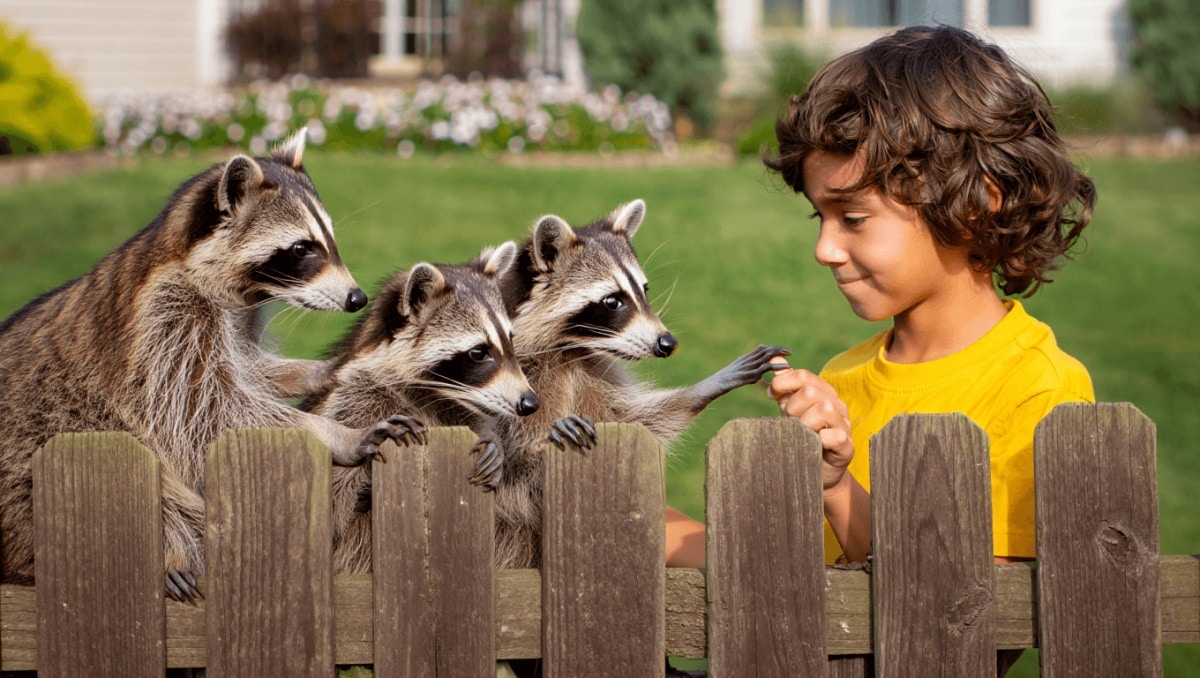
A new analysis of raccoon photos has reignited the debate over whether urban raccoons are beginning to show early signs of domestication. The findings point to subtle but consistent facial changes in city populations, and the idea has captured social media and scientific attention alike.
City raccoons are showing measurable facial changes
Researchers compared photographs of raccoons from urban and rural environments. They report a consistent shortening of the snout among animals living near people. Urban raccoons had about 3.6% shorter snouts than their rural counterparts.
Anglo-Saxon burial reveals “unprecedented” secrets: experts stunned by 1,400-year-old grave mysteries
What Your Instinctive Tree Choice Reveals About Your Personality—Experts Explain
That change mirrors patterns seen when wild species adapt to life near humans. Shorter muzzles and rounder faces are common indicators in early domestication stages.
Why shortened noses matter for domestication
Scientists use facial shape as one clue to long-term behavioral shifts. Shorter snouts often accompany a suite of traits called the “domestication syndrome.”
- More juvenile facial features
- Reduced fear of humans
- Changes in coat color and ear shape
Animals that tolerate human presence may gain an advantage near food sources. Over generations, those tolerant individuals can become more common.
Trash, tolerance, and evolutionary pressure
Human waste creates new food resources. That resource hub favors animals that are bold enough to approach people and their refuse.
Raffaela Lesch, a member of the research team, told Scientific American that human-generated waste creates strong selection pressure. Animals that can coexist with humans survive and reproduce more often.
Historic examples include wolves attracted to camp scraps evolving into dogs, and mice flourishing around human settlements drawing cats in close.
Other physical trends beyond the nose
Observers and the study point to additional shifts in urban raccoons. These include:
- Shorter legs in some city populations
- Greater variation in fur color
- A tendency toward more juvenile facial proportions
Social media clips and short-form science summaries have highlighted these traits, fueling public curiosity.
Could raccoons become pets? The practical hurdles
Public fascination with tame raccoons is growing online. Still, experts warn that domestication does not equal suitability as a pet.
Why raccoons are tricky as companions
- Highly dexterous paws: They can open containers and doors.
- Strong wild instincts: Misbehavior and destructiveness are common.
- Legal and welfare issues: Many places restrict keeping raccoons.
- Lifespan and commitment: Captive raccoons can live for two decades.
- Irreversible impacts: Pet raccoons often cannot be released to the wild.
These factors make keeping a raccoon a serious long-term responsibility.
Online reaction and historical lessons
Reactions online have been mixed. Some users celebrate the idea of a raccoon companion. Others warn from experience.
Reddit posts recall past attempts to introduce raccoons as pets in other countries, which sometimes led to invasive populations. Critics on social platforms also question the methods behind the new study.
At the same time, short videos and viral posts keep the topic in public view. That attention shapes both opinion and policy discussions about wildlife in cities.
What scientists say and what remains unclear
Researchers caution that facial shortening is only one signal. Long-term genetic studies are needed to confirm a true domestication pathway.
Some biologists argue the phenomenon could reflect flexible adaptation rather than permanent domestication. Others see it as an early step on a longer trajectory when animals repeatedly exploit human environments.
More data across time and geography will be essential to determine whether urban raccoons are undergoing lasting evolutionary change.