
Show summary Hide summary
- Why experts are uneasy about AI-driven videos for toddlers
- How these videos spread so quickly on platforms
- What the data shows about kids and screens
- Voices from educators and child psychologists
- Is this a global experiment on child development?
- Platform responses and the limits of moderation
- Practical steps parents can take right now
- What researchers want to study next
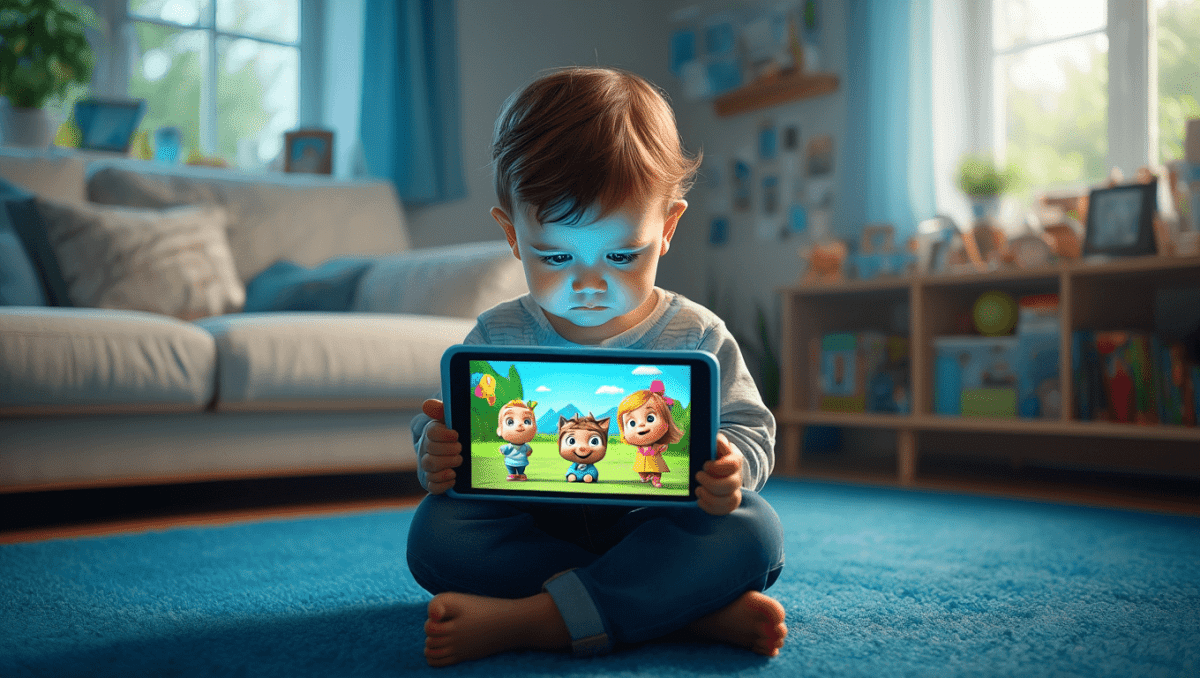
Toddlers are increasingly encountering AI-made videos that blur the line between imagination and reality. Child development specialists warn these clips could reshape how young minds learn to separate fact from fiction, at the same moment their brains form vital neural pathways.
Why experts are uneasy about AI-driven videos for toddlers
Tools that generate video from simple prompts have lowered the bar for producing content. Creators can stitch together visuals and voices in minutes, often copying elements from other clips. The result is a flood of cheaply produced videos aimed at young viewers.
Anglo-Saxon burial reveals “unprecedented” secrets: experts stunned by 1,400-year-old grave mysteries
What Your Instinctive Tree Choice Reveals About Your Personality—Experts Explain
Young children lack the experience to judge what’s real on screen. Their brains are in a sensitive stage of growth, and repeated exposure to distorted or impossible imagery may affect early concepts of the world.
How these videos spread so quickly on platforms
Recommendation algorithms favor watch time and engagement. That dynamic helps fast, formulaic videos gain visibility—especially when parents hand a device to a tired child.
- Creators use templates and automation to mass-produce clips.
- Some tutorials promise easy revenue from AI content, increasing output.
- Even when monetization rules change, low-quality videos can still dominate suggested feeds.
What the data shows about kids and screens
Surveys indicate screen exposure is common among young children. Roughly nine out of ten kids under 12 have at least some screen time. For infants and toddlers, many are exposed to platforms like YouTube, and a significant share view clips daily.
As screen use rises, experts worry that AI-generated material fills much of what young children see.
Voices from educators and child psychologists
Early childhood teachers and psychologists emphasize pacing, clear language, and intentional learning experiences. They say many AI-created videos lack those qualities, offering rapid visuals and muddled messaging instead.
One early-childhood program director explained that a child’s developing sense of truth is shaped by first experiences. If those experiences are dominated by distorted AI imagery, it could influence their mental models.
Another child development specialist noted that young learners need predictable structure and human-guided interactions. Automated videos frequently fail to meet those needs.
Is this a global experiment on child development?
Observers on social media describe the trend as an unprecedented, uncontrolled social experiment. They warn that the generation growing up with algorithmic feeds and ubiquitous AI content may face unforeseen cognitive effects.
These concerns mix scientific uncertainty with alarm: long-term consequences won’t be measurable for years, yet exposure is happening now.
Platform responses and the limits of moderation
Major video services have adjusted policies to limit low-quality material. Platforms argue that mass-produced spam is discouraged by their monetization and recommendation systems.
Still, moderation has not fully prevented the spread of dubious content. Enforcement lags behind creators’ ability to produce new clips, and automated systems can misclassify content aimed at children.
Practical steps parents can take right now
Caregivers can reduce risk and shape healthier media habits by choosing content deliberately and setting clear boundaries.
- Prefer human-made, educational videos with clear pacing and intent.
- Limit duration of unsupervised viewing for toddlers.
- Watch with children and talk about what they see.
- Use parental controls and curated apps designed for young learners.
What researchers want to study next
Scientists are calling for longitudinal studies to track how early exposure to algorithmic, AI-mixed media affects cognition and social learning. They want better data on attention, language development, and reality testing in children raised with such content.
Until those studies provide answers, experts urge caution and active curation of what young children watch.