Show summary Hide summary
- Why a viral video set off alarm bells about bread safety
- What rope spoilage is and which bacteria cause it
- How to spot bread affected by rope spoilage
- Health risks: what eating contaminated bread can cause
- Immediate steps if you find rope spoilage in store-bought or homemade loaves
- How to reduce risk when baking and storing bread
- Advice for businesses and foodservice operators
- Consumer takeaways and practical habits
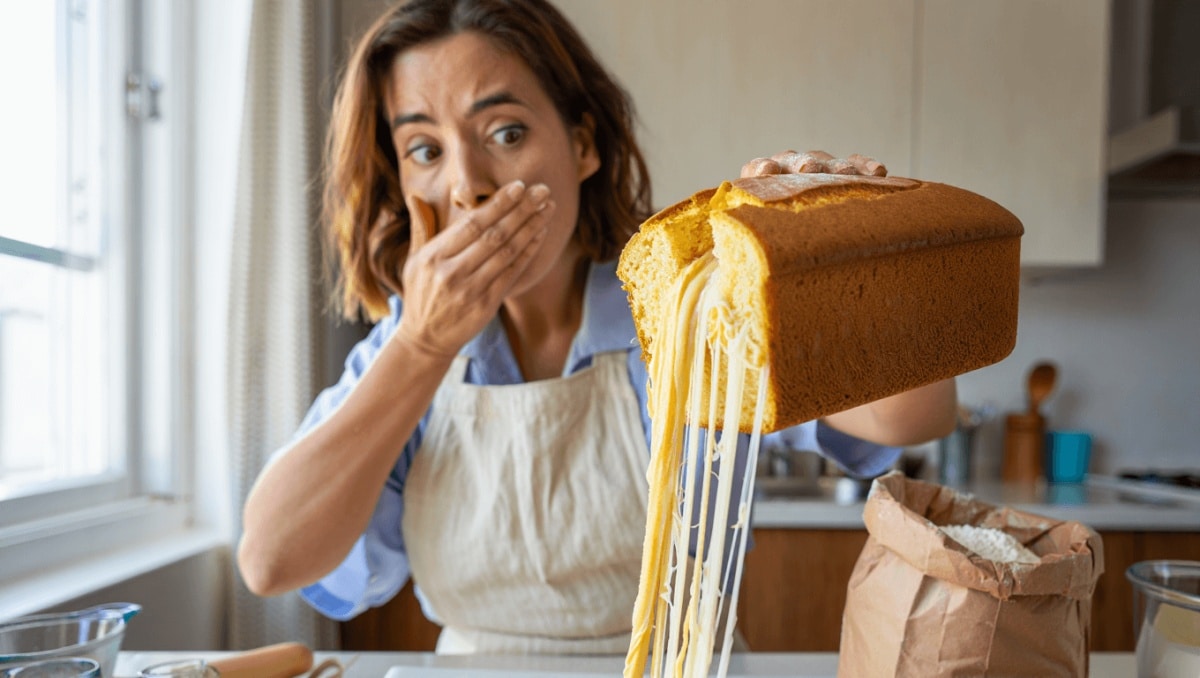
A short TikTok clip that shows slimy, string-like strands inside cornbread has sent shoppers and home bakers double-checking their loaves. The footage, shared widely this week, highlights a lesser-known form of contamination called rope spoilage. Health experts and food-safety advocates say the issue is real, and that recognizing the signs can help prevent foodborne illness.
Why a viral video set off alarm bells about bread safety
The video’s creator demonstrated what looked like threads of mucus when pulling apart a piece of cornbread. The post quickly gained traction, prompting thousands of comments and shares across platforms. Viewers reacted with disbelief, while some admitted they had likely eaten similar bread before.
Anglo-Saxon burial reveals “unprecedented” secrets: experts stunned by 1,400-year-old grave mysteries
What Your Instinctive Tree Choice Reveals About Your Personality—Experts Explain
Public concern grew because rope spoilage is not obvious until a loaf is torn open. That hidden nature makes the condition particularly unsettling for consumers. Food-safety specialists emphasize that awareness, not panic, is the best response.
What rope spoilage is and which bacteria cause it
Rope spoilage is caused by certain spore-forming bacteria, most often species of Bacillus. These microbes can survive the heat of baking because their spores tolerate high temperatures. After baking, if conditions are warm and humid, the bacteria can germinate and multiply inside the bread.
How contamination starts
- Dry ingredients such as flour or cereal mixes may carry Bacillus spores.
- These spores are resilient and can survive mixing and baking.
- Post-bake storage in a warm, moist environment encourages bacterial growth.
How to spot bread affected by rope spoilage
When rope spoilage advances, it changes both smell and texture. Early detection can prevent eating spoiled product. Look for these warning signs:
- Unusual sweet or fruity odor, sometimes compared to overripe fruit or pineapple.
- Sticky, gummy, or stringy crumb that pulls apart in filaments.
- Soft, collapsing texture where the loaf feels unusually tacky.
Not all moldy or stale bread shows these traits. Rope spoilage lacks the fuzzy spores common to mold. Instead, it produces a sliminess and a distinct smell.
Health risks: what eating contaminated bread can cause
Bacillus species linked to rope spoilage are associated with foodborne illness. Symptoms typically include vomiting and diarrhea. In most healthy adults these effects are short-lived, but they can be severe for children, the elderly, and people with weakened immune systems.
Do not taste questionable bread to verify spoilage. Smelling or handling is safer than eating a sample you suspect is contaminated.
Immediate steps if you find rope spoilage in store-bought or homemade loaves
If you discover stringy, sticky strands or an odd smell, take practical action rather than ignoring the problem.
- If the product is homemade, discard the remaining loaf and inspect dry ingredients.
- For store-bought items, return the product or contact the retailer to report the issue.
- Do not eat the affected bread or baked good. Throw it away in a sealed bag to prevent accidental consumption.
How to reduce risk when baking and storing bread
Simple hygiene and storage steps cut the chance of rope spoilage. Bakers and food handlers can follow routines that limit contamination and slow bacterial growth.
- Store flour and dry mixes in airtight containers in a cool, dry place.
- Clean and sanitize baking surfaces and equipment regularly.
- Cool baked goods quickly to room temperature, then refrigerate or freeze if not eaten soon.
- Avoid storing bread in warm, humid locations like unventilated counters near heat sources.
Advice for businesses and foodservice operators
Retailers and bakeries should monitor ingredient supplies and rotate stock. If rope spoilage appears in products, operators must act to protect customers and brand trust.
- Inspect flour and other dry goods for signs of contamination before use.
- Pull suspected batches from shelves and notify suppliers.
- Document complaints and steps taken to investigate, including microbiological testing when needed.
Consumer takeaways and practical habits
Rope spoilage is uncommon, but it is preventable. Consumers can protect themselves with a few habits that fit easily into daily life.
- Check the crumb and smell of baked items before eating.
- When in doubt, discard suspect products rather than risk illness.
- Keep dry goods sealed and stored in cool, dry cupboards.