Show summary Hide summary
The hit adaptation of Rachel Reid’s Game Changers novels has stirred a heated debate about how queer intimacy is shown on screen. What began as praise for a popular sports romance quickly turned into a conversation about authenticity, representation, and who gets to tell certain stories.
What Heated Rivalry is and why viewers care
Heated Rivalry is a Crave Original drama now streaming on HBO Max in the U.S.
Anglo-Saxon burial reveals “unprecedented” secrets: experts stunned by 1,400-year-old grave mysteries
What Your Instinctive Tree Choice Reveals About Your Personality—Experts Explain
The series follows two pro hockey players — Shane Hollander from Canada and Ilya Rozanov from Russia — whose on-ice rivalry hides a secret relationship.
The show adapts one of the most beloved pairings from the Game Changers book series. Fans gravitated to its enemies-to-lovers tension and sports backdrop.
Jordan Firstman’s critique that ignited the debate
Comedian and actor Jordan Firstman publicly questioned the show’s depiction of gay sex in an interview.
He argued the intimate scenes felt staged and did not reflect his view of authentic gay intimacy. His comments suggested the show leaned toward a dramatized version of men in a closet.
Firstman contrasted Heated Rivalry with his own work, saying certain portrayals of queer life feel more lived-in and familiar to him.
Key lines that got attention
- He questioned the realism of the sex scenes and said there are few mainstream shows that portray gay intimacy candidly.
- He implied some writers miss the nuances of gay camaraderie when scripting sex and relationships.
How the series’ stars answered the criticism
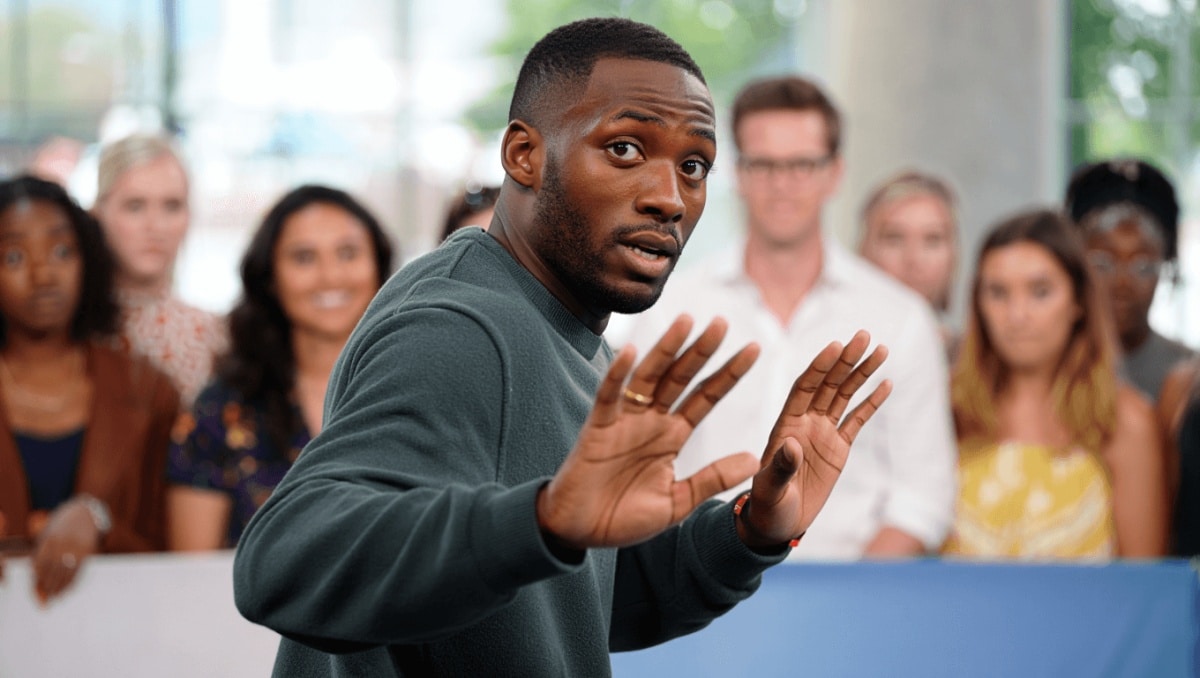
Actors Hudson Williams and François Arnaud publicly responded after Firstman’s remarks circulated online.
Arnaud pushed back in a comment that asked whether there is only one valid way to depict gay sex on TV.
Williams shared Arnaud’s remark and chose a cordial tone, encouraging readers to watch Firstman’s own show.
Timeline of the responses
- Firstman criticizes the sex scenes in an interview.
- Fans and media amplify the comments on social platforms.
- Arnaud replies directly, questioning expectations about authenticity.
- Williams reposts and offers praise for Firstman’s work as a gracious counter.
- Firstman posts an Instagram note saying he loves the show and will be more measured in future comments.
Context: creators, casting, and representation questions
Jacob Tierney, an openly gay writer-director, adapted the novels for TV.
François Arnaud has previously discussed his bisexuality publicly. Yet the dispute centers on whether representation requires one uniform template.
Critics and defenders raised several points:
- Authenticity vs. dramatic needs: TV often compresses or stylizes sex scenes.
- Who counts as an authority: fans, queer creators, or commentators?
- Genre expectations: a sports-romance may emphasize plot and tension over explicit realism.
These threads feed a broader industry debate about how queer intimacy should be shown and who should shape those portrayals.
What this fight means for TV and queer storytelling
The exchange highlights an appetite for more nuanced queer representation.
It also illustrates how rapidly a single critique can spark wide discussion in the age of social media.
Industry observers say the moment may push creators to balance authenticity with narrative choices.
For viewers, the controversy has prompted renewed attention to the series and to conversations about visibility on screen.