Show summary Hide summary
- How one Bumble match raised alarm
- What viewers reported in response
- Common visual signs of AI-generated dating photos
- Behavioral clues to watch for in messages
- Practical steps to verify a profile
- Wider implications for online dating safety
- How platforms and users can respond
- Stories from people who discovered fake matches
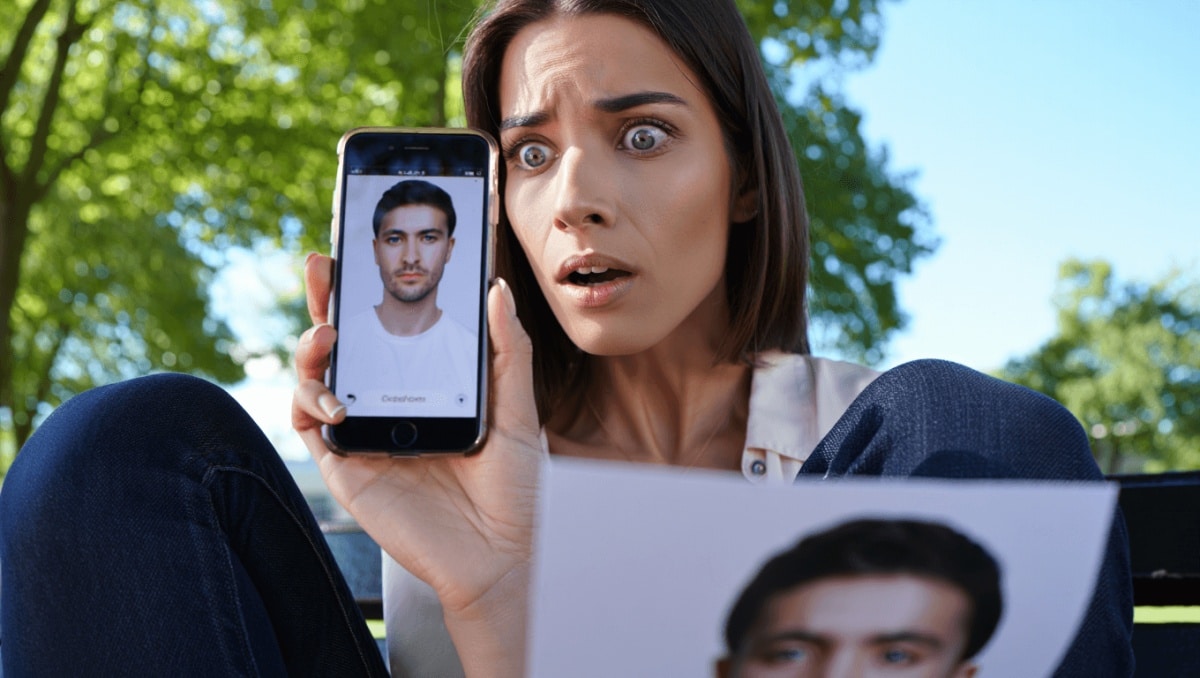
She almost showed up for a date before noticing something odd: the man’s profile photos looked uncanny, like they’d been generated by software. A short TikTok clip from creator Cas Jerome exposed the mismatch and ignited a wider conversation about AI images on dating apps.
How one Bumble match raised alarm
Jerome posted a video on Dec. 13, 2025, after reviewing a Bumble profile she had been excited about. Most pictures seemed too polished and inconsistent. Only a single photo and a brief video felt genuine.
Anglo-Saxon burial reveals “unprecedented” secrets: experts stunned by 1,400-year-old grave mysteries
What Your Instinctive Tree Choice Reveals About Your Personality—Experts Explain
She told a friend the photos had a strange smoothness and that the subject looked different across images. That inconsistency made her suspicious enough to cancel the date.
The clip quickly gained traction, drawing thousands of views and comments from people who said they face similar issues on dating platforms.
What viewers reported in response
TikTok users echoed Jerome’s concerns, sharing stories of fake or bot-run profiles. Many described messages that read like they were produced by a chatbot.
- Some people said they matched with accounts that replied with oddly worded messages.
- Others noted excessive emoji use and repetitive phrasing as signs of automation.
- A few users claimed they went as far as arranging dates with profiles that later felt bot-like.
Those reactions highlight a growing worry: profiles may combine AI-crafted photos with AI-generated conversation to appear convincing.
Common visual signs of AI-generated dating photos
Spotting a synthetic image often means paying attention to small, telltale glitches. Scammers and bots rely on convincing visuals to earn matches.
- Overly smooth skin or unnatural texture that looks like a filter, not realistic photography.
- Faces that change subtly between shots — different jawlines, eye shapes, or skin tones.
- Background inconsistencies, such as mismatched lighting or repeated patterns.
- Odd reflections, missing earrings, or warped fingers in close-ups.
- Single real-looking video among several suspicious photos.
Behavioral clues to watch for in messages
Beyond images, message style can reveal automation.
- Replies that don’t follow prior context or that restart topics unexpectedly.
- Repetitive sentence patterns and unusual punctuation.
- Generic compliments or overly flattering statements early in chat.
- Answers that avoid simple, verifiable details about life or job.
Users reporting bot encounters have described conversations that feel scripted, then suddenly stall when asked for specifics.
Practical steps to verify a profile
If a match seems off, these tactics can help confirm authenticity fast.
- Do a reverse image search to see if pictures appear elsewhere online.
- Ask for a short, live video call or a voice note before meeting.
- Request a photo holding today’s newspaper or showing a simple pose.
- Check for consistent details across platforms like LinkedIn or Instagram.
- Report suspicious accounts to the app and block them.
Wider implications for online dating safety
Comments on Jerome’s post highlight a mix of annoyance and alarm. People say scammers, crypto promoters, and fake accounts are crowding dating apps.
Some worry AI will make deception easier and faster. Others say they’ve already seen profiles that combine AI visuals with scripted replies.
Experts and users alike are calling for better detection tools and clearer reporting systems from platforms to protect singles.
How platforms and users can respond
Dating apps must adapt policies and technology. Users can take simple, practical steps now.
- Platforms can invest in image forensics and anomaly detection tools.
- Apps might offer identity verification badges or optional video verification.
- Individuals should prioritize early video calls and independent checks.
- Community reporting and moderation must be faster and easier to use.
Stories from people who discovered fake matches
Several users described matching with profiles that later revealed bot-like behavior. One said the account responded strangely to the job description she gave. Another said the messages used odd phrasing and too many emojis.
Comments ranged from resigned to alarmed, with a few people saying they simply logged off their apps after repeated bad experiences.