Show summary Hide summary
- What the viral post showed and why people were unsettled
- Online reactions: skepticism, driver pushback, and tech questions
- How the alleged scam could be pulled off
- Evidence and limits: why some still doubt the account
- What drivers and customers should know about app rules
- Other reports and image-based disputes in delivery apps
- Practical steps users can take if they suspect a fake delivery
- Where the discussion leaves DoorDash and the industry
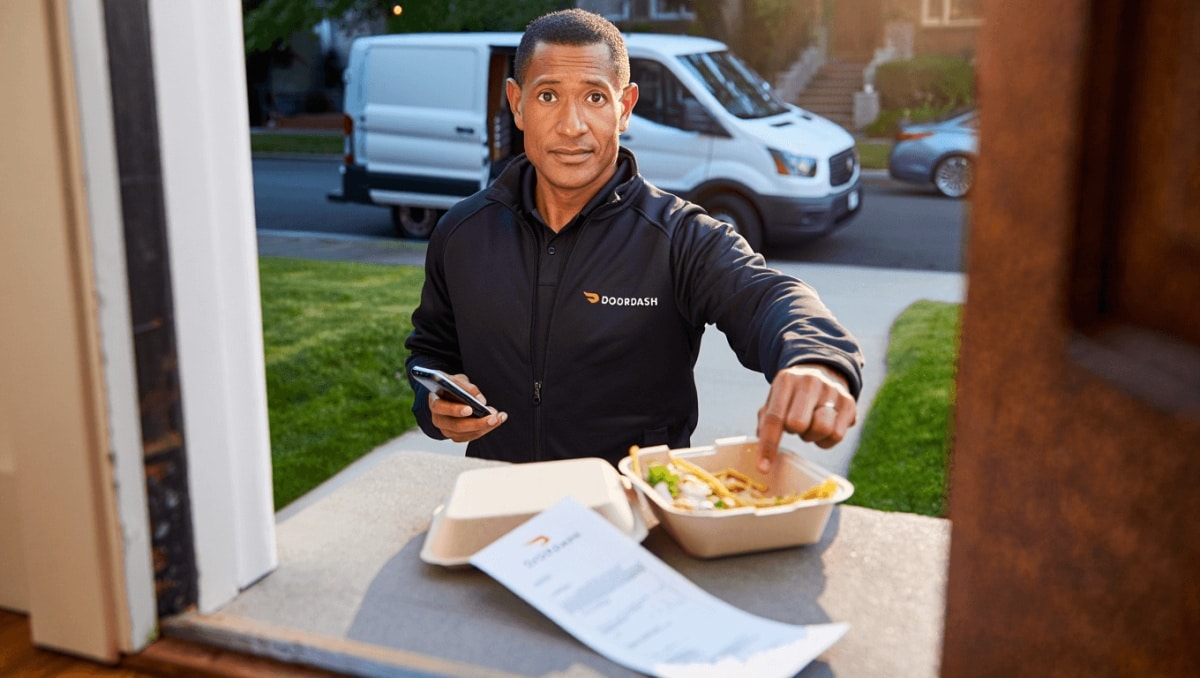
A social post that went viral late December alleges a DoorDash driver marked a delivery as complete by uploading an AI-created photo of a doorstep instead of actually leaving the food. The claim has sparked fast debate online about app rules, driver behavior, and whether AI can now fake proof of delivery.
What the viral post showed and why people were unsettled
The original post included a side-by-side comparison. One image was the proof the driver reportedly submitted. The other showed the customer’s real front door. Viewers found the fake image disturbingly close to reality.
Anglo-Saxon burial reveals “unprecedented” secrets: experts stunned by 1,400-year-old grave mysteries
What Your Instinctive Tree Choice Reveals About Your Personality—Experts Explain
People were startled by how convincing the AI image looked. That detail made many suspect the driver had no need to visit the address.
In follow-up posts, the customer said DoorDash sent a replacement order and refunded him. He also shared a later photo of the actual delivery, posted with a tongue-in-cheek note about an AI glitch visible in the image.
Online reactions: skepticism, driver pushback, and tech questions
Responses split into several camps. Some believed the story could not be true because of app safeguards. Others — including drivers — said it was entirely possible.
- Critics argued the DoorDash app forces drivers to take live photos, not upload from a camera roll.
- Some drivers countered that photos can be uploaded from saved images or through modified tools.
- Observers raised the odd detail that the fake image matched a unique front door, which made the incident feel targeted.
Comments from drivers on social platforms went in opposite directions. One account insisted the app requires live capture and proximity to mark items as picked up. Another claimed drivers can retrieve previously uploaded images the moment they accept an order.
How the alleged scam could be pulled off
The person who posted the claim offered a theory about the technique behind the incident. It combined several technical tricks that would let a driver appear to complete a delivery without physically going there.
Possible tools and tactics
- Jailbroken or hacked phones that bypass app restrictions.
- Modified camera apps that submit images without using the app’s live-capture flow.
- Reused photos from earlier deliveries or shared image libraries.
- GPS spoofing to fake the driver’s location during pickup and drop-off.
He suggested the scammer could fake the trip, upload or send an image, then mark the order complete and cash out quickly. That scenario would let a bad actor avoid contact and still collect payment.
Evidence and limits: why some still doubt the account
The poster acknowledged the story was easy to question. Internet posts can be manufactured. He said readers should remain skeptical while noting a second user reported a similar episode in another city.
- Duplicate reports from different areas increase plausibility.
- But refunds and replacement orders are also easy to show and could be faked in screenshots.
- The technique requires technical skill, so it likely isn’t widespread among the average driver.
What drivers and customers should know about app rules
Public debate revealed uncertainty about how DoorDash’s proof-of-delivery system works in practice. Drivers and customers gave conflicting descriptions.
Common claims about the app
- Some say the app enforces live photos and proximity checks.
- Others report they can access prior photos or upload from their camera roll in certain setups.
- Receipt-photo requirements at pickup vary by restaurant and market.
The inconsistency in reports suggests both technical gaps and uneven enforcement across drivers and devices.
Other reports and image-based disputes in delivery apps
This case was not unique. In recent months, customers and drivers have both accused one another of manipulating images to gain refunds or cover mistakes.
- Some customers edit photos to exaggerate damage or poor presentation.
- Some drivers have claimed customers staged or altered images to request credits.
- Companies have struggled to build reliable automated checks that catch manipulated media.
Practical steps users can take if they suspect a fake delivery
Whether the viral case is an isolated exploit or part of a wider problem, customers can take actions to protect themselves.
- Keep timestamps and screenshots of the delivery screen.
- Report suspicious images and request support immediately.
- Ask the platform for details on the driver’s GPS trail and photo metadata.
- Use app chat to require driver confirmation when needed.
Documenting the issue promptly increases the chance of a refund or corrective action, and it helps platforms identify patterns.
Where the discussion leaves DoorDash and the industry
The episode has put renewed pressure on delivery platforms to tighten image verification and location checks. It also highlights how AI-generated media can complicate trust between customers and drivers.
Security experts warn companies to consider metadata validation, stronger proximity enforcement, and anomaly detection for images. Drivers argue that most of them follow rules and that a few bad actors should not define the workforce.