
Show summary Hide summary
A viral TikTok has renewed debate about retail markups after a shopper walked through a Staples and compared in-store tags with much lower prices on Amazon. The video sparked wide discussion about how big-box chains price everyday office and hobby supplies in the age of online shopping.
How a single TikTok exposed steep markups at Staples
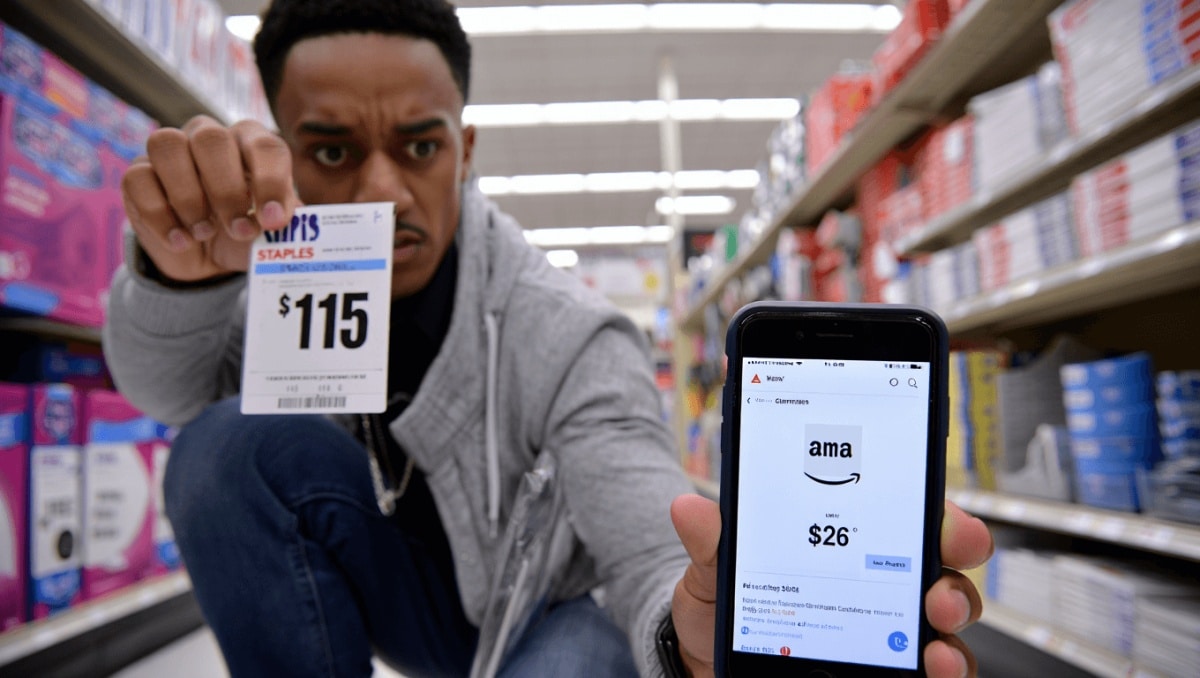
The clip, posted by @bigbodyofficial, drew roughly a quarter-million views and fast reactions. In it, the creator films price tags on shelves, then shows cheaper listings found online. The contrast is sharp and meant to shock.
Anglo-Saxon burial reveals “unprecedented” secrets: experts stunned by 1,400-year-old grave mysteries
What Your Instinctive Tree Choice Reveals About Your Personality—Experts Explain
- Small business “open” sign: marked around $115 at the store versus about $26 on Amazon.
- Paper shredder: priced near $180 in-store yet available for under $30 online.
- Electric pencil sharpener: on clearance for over $25 while comparable Amazon listings sit near $17.
The video’s tone mixes disbelief and humor. The creator calls out the gap and says he won’t pay the higher in-person prices.
What shoppers and employees are saying about in-store prices
Comment threads filled with personal examples. Users compared Staples to other chains like Best Buy and craft stores. Many reported similar sticker shock when shopping offline.
- Shoppers noted cheap Amazon alternatives for common items.
- Some employees explained how corporate and business sales keep stores afloat.
- Others described high return volumes of online purchases that arrive back at stores.
One employee pointed out that bulk corporate accounts and seasonal spikes — such as back-to-school — produce most of a store’s revenue. That revenue can offset lower demand for small, everyday purchases.
Behind the prices: why sticker shock happens at big-box retailers
Several factors explain higher retail tags. Overhead, staffing, and the cost of running physical locations play a role.
Common reasons prices differ
- Operating costs: Rent and payroll add to shelf prices.
- Business-to-business sales: Companies often pay premium rates for convenience and bulk ordering.
- Private-equity ownership: Some buyers prioritize short-term returns, which can change pricing strategies.
- Inventory mix: Stores keep slow-moving items at higher margins to cover losses elsewhere.
How customers react and what they do instead
Social media users offered practical responses. Many vowed to buy online when possible. Others suggested shopping around local stores for competitive deals.
- Comparison shopping via apps or web searches before heading to the store.
- Using store rewards, coupons, or corporate accounts to reduce costs.
- Buying essentials online in bulk to avoid retail markups.
Some shoppers said they only visit brick-and-mortar stores for immediate needs or when they want hands-on inspection.
What retailers might change — and what keeps them going
Experts say retailers face pressure to adapt. Many blend in-store experience with online convenience to stay relevant.
- Investing in exclusive in-store services and events to draw customers.
- Adjusting inventory to focus on higher-margin categories and business clients.
- Enhancing loyalty programs and targeted coupons to retain repeat buyers.
Despite online competition, physical stores still rely on corporate sales and seasonal cycles to remain profitable. That mix explains why some prices seem out of step with marketplace listings.