
Show summary Hide summary
- How a TikTok clip became a viral safety question
- Where is this McDonald’s? Viewers guessed U.S. cities
- Why the location mix-up mattered to viewers
- Comments sparked debates about race, class and assumptions
- What McDonald’s says about local security measures
- How this video highlights global differences in retail safety
- Questions the clip leaves open for customers and managers
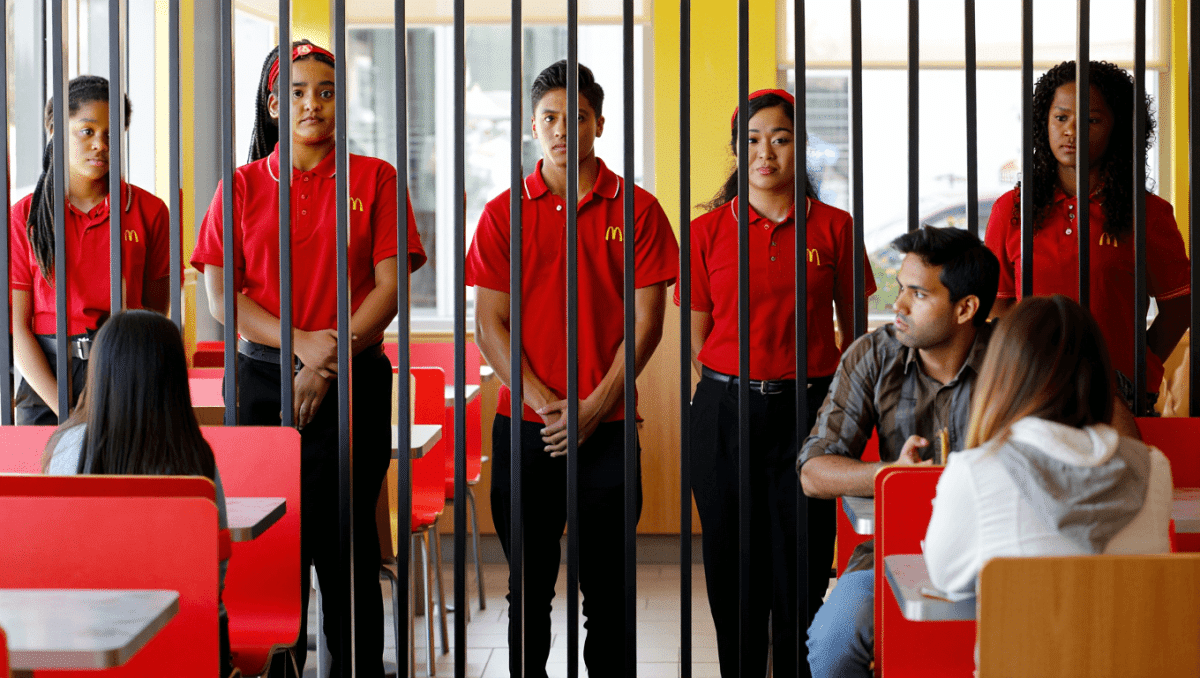
A short video showing McDonald’s employees standing behind metal bars has ignited a heated online debate about safety and place. The clip spread fast on TikTok. Viewers argued about whether the scene meant the restaurant was dangerous or simply following local rules.
How a TikTok clip became a viral safety question
The footage was posted on Dec. 30, 2025, by creator @travel2wealthh. It shows horizontal metal bars separating staff from diners. Onscreen text and a casual soundtrack ask if the barrier signals danger.
Anglo-Saxon burial reveals “unprecedented” secrets: experts stunned by 1,400-year-old grave mysteries
What Your Instinctive Tree Choice Reveals About Your Personality—Experts Explain
The post drew rapid attention. It racked up 1.2 million views and thousands of comments. The creator even tagged McDonald’s and joked about getting a free double cheeseburger meal.
Where is this McDonald’s? Viewers guessed U.S. cities
Many viewers assumed the restaurant was inside the United States. Comments named cities like Detroit, Chicago, and Atlanta.
- Some commenters insisted it looked like Detroit.
- Others mentioned Chicago or Atlanta as likely spots.
- A few dismissed each other’s guesses without checking location clues.
Those guesses missed an important detail. The original post tagged Johannesburg and South Africa. Screenshots shared in replies showed prices listed in South African rand. That evidence shifted the location from U.S. states to an international context.
Why the location mix-up mattered to viewers
Once the post identified Johannesburg, many reactions changed tone. Some people retracted U.S.-focused claims. Others used the error to highlight broader narratives about crime and urban safety in America.
- Some commenters argued the barrier reflected local crime patterns.
- Others said people apply political or racial talking points too quickly.
- Several viewers noted the difference between local security choices and national stereotypes.
Comments sparked debates about race, class and assumptions
Conversations quickly shifted from curiosity to pointed cultural critique. A number of users read the clip through the lens of American race and class tensions.
Some posts suggested such security measures are seen only in certain neighborhoods. Others questioned whether the public jumped to stereotypes without evidence.
The exchange highlighted how a short video can become a proxy for sensitive social issues. People brought up historic inequalities, local policy, and how perception shapes outrage.
What McDonald’s says about local security measures
McDonald’s corporate materials explain that safety tactics vary by market. The company has described this as taking a “local approach” to security and operations.
In a public statement, the brand noted its scale in the U.S. alone: roughly 800,000 employees serving nearly 25 million customers across about 14,000 communities. Their logic is simple. If an event is one-in-a-million likely, it can still happen many times across that scale.
That idea is often summarized like this: a one-in-a-million risk can become routine across millions of interactions. The company says that reality drives tailored safety steps at some locations.
Typical security tactics used by fast-food chains
- Physical barriers at counters or drive-thrus.
- Timed cashless registers and locked tills.
- Enhanced lighting and cameras in problem areas.
- Staff training and local safety protocols.
These measures aim to protect employees, reduce liability, and maintain customer service. They are meant to be practical responses to local crime trends, according to corporate guidance.
How this video highlights global differences in retail safety
The clip demonstrates how a single image can be read very differently across countries. Security setups that seem alarming in one place can be routine elsewhere.
For brands operating globally, the balance between safety and customer perception is delicate. Managers must weigh visible protections against the message they send to patrons.
Online, short videos accelerate judgment. Viewers often fill gaps with assumptions. This case underlines how quickly local reality becomes a national story on social platforms.
Questions the clip leaves open for customers and managers
Viewers are left asking practical and ethical questions about visible security at restaurants.
- Do barriers make employees and customers safer?
- When do visible protections harm a brand’s image?
- How should multinational chains adapt to different local risks?
Managers must balance safety, costs, and community relations. Customers will likely keep debating what such scenes mean.