Show summary Hide summary
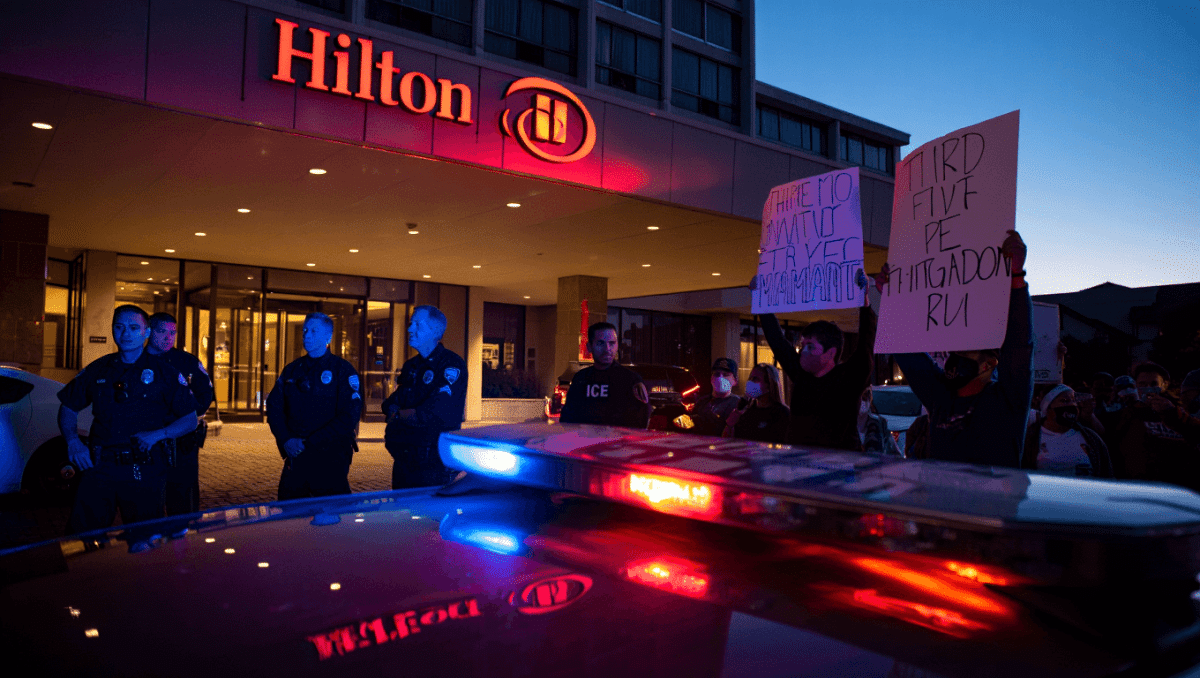
A Minneapolis Hilton franchise ignited a heated national conversation after refusing to accommodate immigration agents. The episode drew a sharp rebuke from the Department of Homeland Security and pushed the rarely cited Third Amendment into the headlines. What began as a local booking dispute quickly escalated into brand fallout, viral videos, and legal debate.
How a single hotel booking turned into a national spat
Federal officials published screenshots and accused Hilton of canceling reservations made with official government emails. The Department of Homeland Security framed the action as part of a broader refusal to host its personnel.
Anglo-Saxon burial reveals “unprecedented” secrets: experts stunned by 1,400-year-old grave mysteries
What Your Instinctive Tree Choice Reveals About Your Personality—Experts Explain
Hilton’s corporate team responded by saying the Minneapolis property is independently owned and operated. They also told DHS the situation had been fixed. Local footage and social media posts, however, suggested the problem persisted.
Within hours, the company moved to disaffiliate the franchise operator. Hilton removed the hotel from its reservation system and said it had revoked the right to use the brand name.
Why the Third Amendment suddenly resurfaced
The Third Amendment bars the government from quartering soldiers in private homes without consent. The clause is seldom litigated and rarely mentioned in modern news cycles.
Yet critics and commentators immediately linked the hotel’s refusal to host ICE agents to that amendment. The connection is imperfect.
- ICE agents are civilian law enforcement, not uniformed soldiers.
- No declared wartime powers are at play here.
- Still, the amendment’s language about forced housing struck a chord online.
Legal scholars noted that invoking the Third Amendment in this setting is more rhetorical than doctrinal. But in social conversations, symbolism matters.
Social media amplified the dispute
Short videos and screenshots spread quickly. One commentator filmed a visit to the Minneapolis hotel and claimed the ban continued after the hotel’s public apology.
Other users reacted with memes, historical jokes, and references to James Madison. Some posts treated the moment as legal trivia come to life. Others framed it as an attack on federal officers.
- Viral clips accused the hotel operator of lying to Hilton corporate.
- Memes and historical screenshots framed the debate around the Third Amendment.
- Opponents of the administration said the DHS was misusing an official account to shame a private business.
Voices from both sides
Supporters of the agents called the hotel’s move unpatriotic and dangerous. Opponents said private businesses should be free to refuse service to government agents.
Some local voices asked whether front-desk staff were confused and whether a clerk’s error became a public relations crisis.
Political and legal reactions mount
Democrats accused DHS of weaponizing its official account to punish a private company. Critics demanded congressional oversight and public accountability.
Legal commentators emphasized that the matter raises multiple issues unrelated to the Third Amendment. Those issues include:
- Whether a franchisee can independently refuse service under state and federal nondiscrimination laws.
- Whether an official federal social account can publicly denounce a private business in this manner.
- How corporate brand governance should respond to franchise missteps.
What is clear about the incident
The dispute started with canceled reservations and escalated when DHS framed the cancellations as deliberate refusals.
Hilton corporate acted quickly to separate the brand from the franchise operator.
Beyond those facts, many details remain murky. It is unclear whether cancellations were a policy decision by hotel management or the result of miscommunication at a single property.
Practical fallout for travelers and brands
For travelers, the episode underscores how local franchise decisions can affect national brands. For corporations, it highlights the reputational risk of franchise governance.
- Guests may now check franchise ownership before booking major-brand hotels in politically charged cities.
- Franchisors may tighten controls and auditing over operators who handle sensitive bookings.
- Federal agencies may change booking procedures to avoid similar disputes.
Questions lawyers and lawmakers will likely pursue
Expect inquiries into whether federal accounts followed guidelines when posting about the hotel. Lawmakers may also examine the legal grounds for refusing government guests.
Meanwhile, the Third Amendment will remain a cultural reference point in this debate. It provides symbolic weight, even if it is not the decisive legal doctrine in this case.