
Show summary Hide summary
A viral cabin video has reignited a debate over shrinking legroom and stripped-back seating on modern planes. Passengers on a recent WestJet flight shared footage of cramped basic-fare seats that left an older couple barely able to extend their legs. The clip spread quickly online and prompted a fresh round of criticism about the airline’s new interior layout.
How the viral clip captured public attention
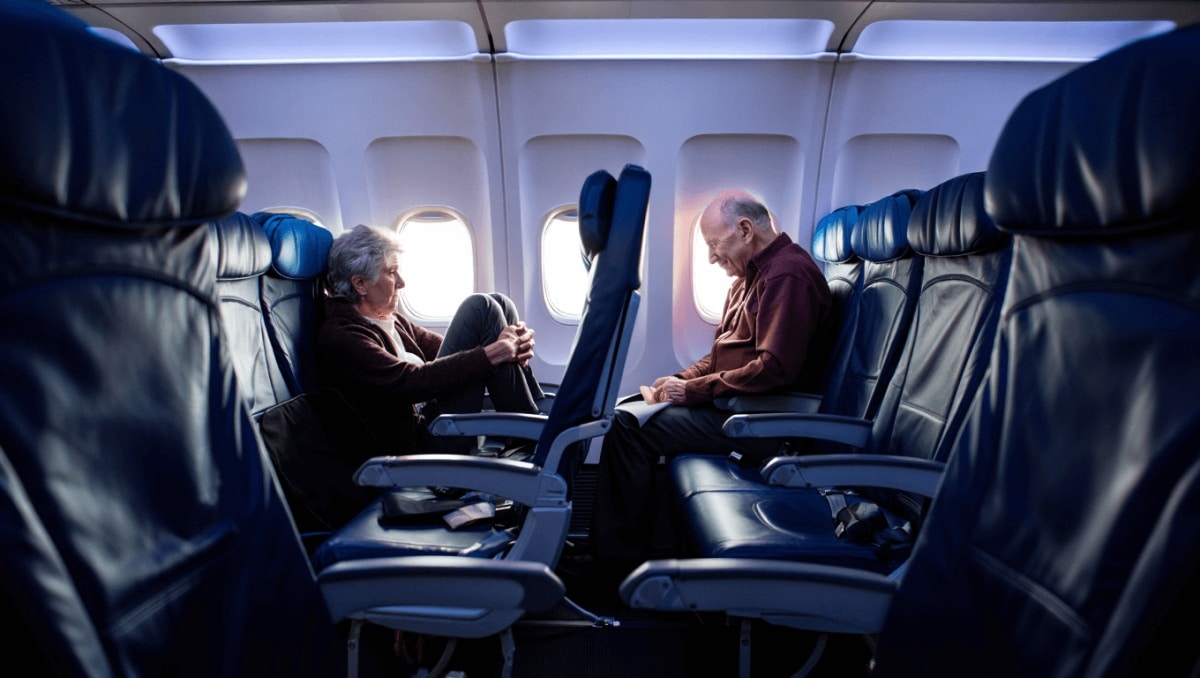
The footage, posted by a passenger’s family member, shows two travelers squeezed into the airline’s economy “basic” seats. Their knees are tucked close to the seat ahead, and the pair struggle to get comfortable without the option to recline.
Anglo-Saxon burial reveals “unprecedented” secrets: experts stunned by 1,400-year-old grave mysteries
What Your Instinctive Tree Choice Reveals About Your Personality—Experts Explain
- The video went viral across social platforms within hours.
- Viewers flagged the seats as unusually tight even for budget economy.
- Many commenters compared the experience to paying for a ticket but not for comfort.
Light-hearted banter from the family in the clip underscored the awkwardness, while captions noted that reclining was available only to passengers who purchased an upgraded seat. The post framed the change as part of WestJet’s broader cabin redesign.
WestJet’s reasoning for the cabin redesign
Airline leaders describe the refit as a move to modernize aircraft and offer more fare tiers. The updated cabin reportedly allowed the carrier to add an additional row, increasing overall seating capacity.
In defending the decision, executives said the new layout aims to provide a range of price points and service levels. They framed the change as a purposeful choice to balance affordability with different passenger needs.
What passengers gain and what they lose
- Gain: Slightly lower ticket prices on bare-bones fares.
- Lose: Reduced legroom and the default ability to recline.
- Trade-off: More passengers per flight versus less space per traveler.
Critics say the cost savings are small compared with the loss of comfort. Many travelers feel charged for essentials that used to be part of a standard fare.
Passenger reactions and social media backlash
Responses online ranged from sarcastic to angry. Some users vowed to avoid the carrier, while others joked about preferring a road trip over sitting in the new seats for hours.
Social posts raised practical worries, such as how cramped seating affects sleep, leg circulation, and basic comfort on longer flights.
- “I’d rather drive,” wrote one user summarizing a common sentiment.
- Others mocked the incremental fees: pay for the fare, then pay again to recline.
- Some passengers said the rollout was uneven across the fleet, calling the experience a “lottery.”
Health and safety concerns highlighted by passengers and experts
Beyond comfort, several commenters and aviation observers voiced safety concerns. They asked how passengers could assume recommended crash positions when space is so constrained.
Experts warn that severely reduced legroom may complicate emergency procedures and increase the risk of injury in extreme events. Passengers also reported anxiety about circulation and joint strain during long flights.
Selected public worries
- Difficulty performing the crash-landing brace position.
- Higher risk of leg injuries or facial impact if a sudden stop occurs.
- General discomfort that can exacerbate health issues on long journeys.
How this fits into a wider industry trend
New seat designs are not unique to one carrier. Over decades, many airlines have reduced the space between rows to add seats and cut costs.
Aviation analysts say average legroom on U.S. carriers has fallen by a few inches since the 1980s. Today, mainstream carriers often provide about 31 inches of seat pitch, while some low-cost operators go as low as 28 inches.
When regulators sought public input on seat space, they received tens of thousands of critical responses. Those comments focused on safety and health effects linked to compressed seating.
What travelers can do now
Passengers who want more space have a few options when booking or at the gate. Consider paying for seats labeled as extra legroom or choosing fare classes that include recline and additional pitch.
- Check seat maps and choose seats with extra pitch.
- Compare fare inclusions before purchasing—recline may be a paid add-on.
- Arrive early to request comfort upgrades if available.
Advocacy groups and some travelers continue to call for clearer disclosures about seat dimensions and for industry standards that protect passenger health.