
Show summary Hide summary
- How the confrontation unfolded and what was captured on video
- The suspended employee’s account and his reasoning
- Employer discipline, union rights and possible consequences
- Political and public reaction across social media
- Legal and free-speech perspectives on public protest
- Why the Epstein files continue to spark strong reactions
- What to watch next as the situation develops
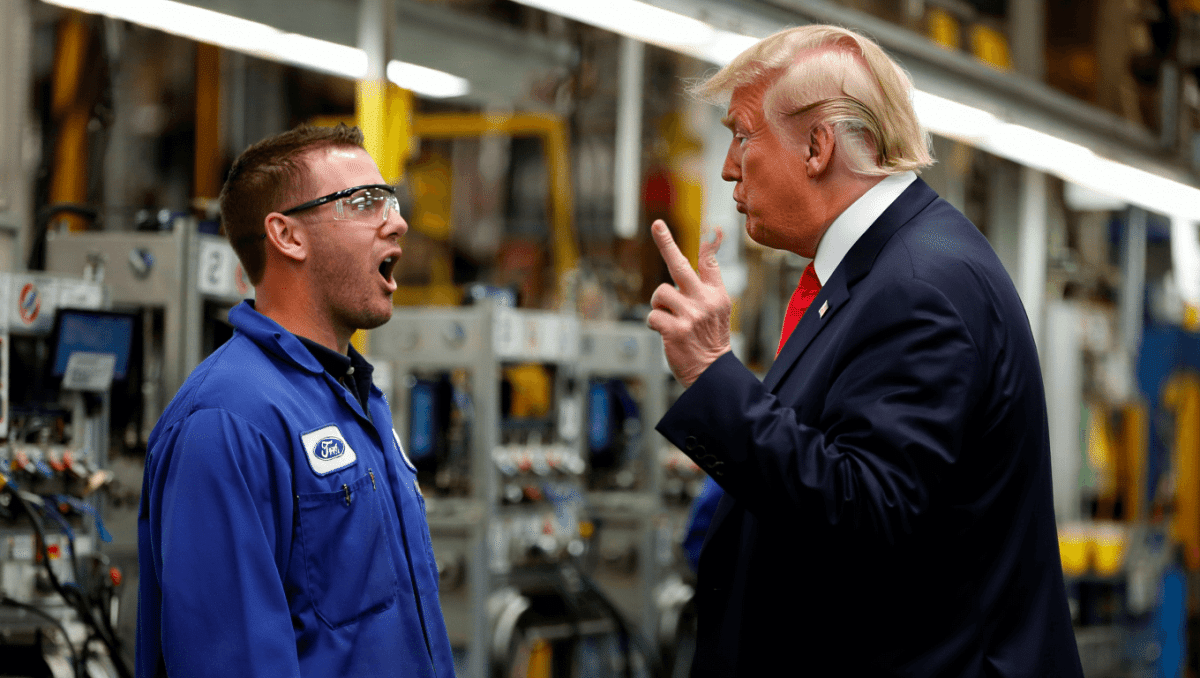
A tense exchange between a presidential figure and a factory employee turned into a viral moment that is still reverberating. A Ford worker shouted about the release of files tied to Jeffrey Epstein, drawing a crude response from the politician. The worker has since been suspended and says he stands by his actions, framing the incident as a rare chance to speak out.
How the confrontation unfolded and what was captured on video
Footage circulated quickly after the incident, showing the worker shout a complaint about the Epstein files as the politician passed by. The politician responded with a raised middle finger, an image that was widely shared on social platforms.
Anglo-Saxon burial reveals “unprecedented” secrets: experts stunned by 1,400-year-old grave mysteries
What Your Instinctive Tree Choice Reveals About Your Personality—Experts Explain
The exchange lasted only seconds, but it triggered intense debate online about civility, accountability and public protest.
The suspended employee’s account and his reasoning
The employee, now suspended by his employer, defended his choice to speak up. He told reporters he felt compelled to raise the issue in a public setting.
“I don’t feel as though fate looks upon you often. And when it does, you better be ready to seize the opportunity,” he said, describing why he interrupted the event.
He said he has no regrets and that the suspension has not changed his stance. He emphasized the importance of drawing attention to documents tied to the Epstein investigation.
Employer discipline, union rights and possible consequences
- Companies often cite conduct and public image when disciplining employees.
- Union representatives may get involved if the worker files a grievance.
- Disciplinary outcomes can range from a warning to prolonged suspension or termination.
Employment experts note that actions taken off the clock but in public settings can still violate workplace policies. The exact outcome often depends on company rules and any union contract that covers the employee.
Political and public reaction across social media
Online responses split along predictable lines. Some users condemned the politician’s gesture as unbecoming. Others praised the worker for speaking out.
- Critics said the gesture showed a lack of respect for the public.
- Supporters argued the worker’s interruption was inappropriate for the setting.
- Observers raised questions about transparency around the Epstein files and accountability for powerful figures.
Media coverage and the viral spread
Short clips of the exchange were shared by major outlets and independent accounts. The footage fed opinion pieces and social posts, amplifying the dispute beyond the original setting.
Legal and free-speech perspectives on public protest
Legal analysts say public speech can be protected, but employers retain the right to impose discipline for conduct they deem disruptive.
- Protected speech typically applies to government censorship, not private-employer discipline.
- Union contracts can provide added protections or procedures for appeal.
- Context matters: where the interruption happened and whether it violated safety or policy.
Why the Epstein files continue to spark strong reactions
The Epstein case remains charged because it touches on alleged abuse, powerful people and questions about how investigations and records are handled. New or disputed documents often renew public outrage.
Calls for transparency and accountability have kept the subject in the news for years, which explains why a brief public interruption could spark such intense interest.
What to watch next as the situation develops
Observers will track whether the employer changes the worker’s status, and whether the politician or his team issues any formal response.
The exchange has become a flashpoint in broader conversations about protest, workplace rules and the public’s right to demand answers about high-profile investigations.